

HR’s AI Maturity Curve: A Framework Worth Taking Seriously—With Caveats
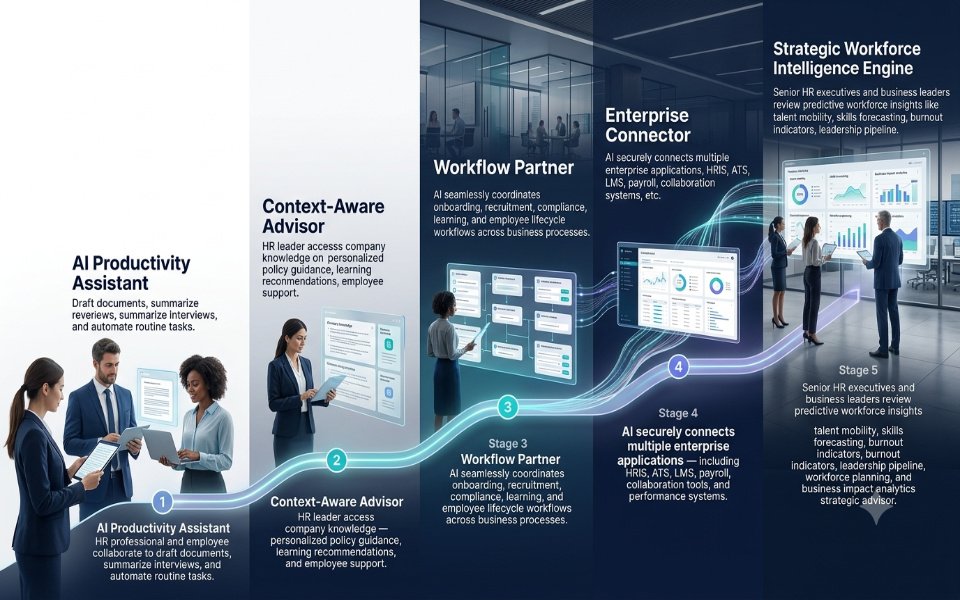
Nasscom’s five-stage AI maturity model for HR is, on its surface, a reasonable framework for helping HR leaders orient themselves in a genuinely confusing landscape. It progresses logically from AI as individual productivity assistant through context-aware advisor, workflow partner, enterprise connector, and finally strategic workforce intelligence engine. The scaffolding is clean. The vocabulary is accessible. And the underlying argument—that AI adoption is a journey requiring data governance, systems integration, and cultural readiness, not just tool acquisition—is correct and important.
But frameworks like this are also where enterprise AI discourse tends to go soft at precisely the moment it should go hard. So let’s stress-test it.
What the Framework Gets Right
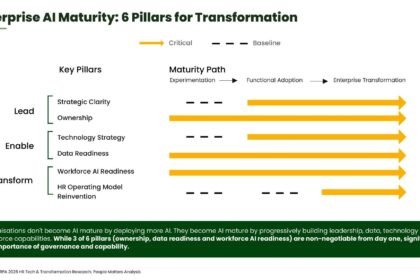
The most analytically honest moment in the entire piece is buried in the “What Determines AI Maturity?” section: “Moving from one stage to the next is not simply about adopting more AI tools.” This is the thesis that matters, and it directly contradicts how most enterprise software vendors are currently selling AI to HR departments—as a feature upgrade, not an organizational capability.
The framework’s identification of Stage 4—AI as Enterprise Connector—as a discrete and necessary phase is particularly valuable for CHROs and CDOs. The fragmentation problem in HR technology is severe and systematically underappreciated. Recruitment data in one ATS, learning records in an LMS, performance data in a separate platform, payroll in yet another system: this isn’t a technology problem, it’s an organizational and architectural debt problem. The framework correctly identifies that AI cannot deliver Stage 5 strategic intelligence without Stage 4 integration. You cannot generate actionable workforce analytics from siloed, unreconciled data, regardless of how sophisticated your models are. That sequencing is right.
The reference to Model Context Protocol (MCP) as an emerging interoperability standard is also a signal worth flagging for CIOs and CTOs specifically. MCP is gaining genuine traction as a mechanism for enabling AI agents to securely retrieve information across authorized enterprise systems. Its inclusion here isn’t just name-dropping—it points toward a real architectural shift in how enterprise AI will operate. HR technology buyers evaluating platforms in 2025 and 2026 should be asking vendors directly about MCP compatibility.
Where the Framework Goes Soft
Here is the central problem: the framework describes the stages of AI maturity but largely avoids the hardest question—what actually prevents most organizations from progressing?
The listed prerequisites (high-quality data, integrated systems, clear governance, digital skills, cultural readiness) are accurate but presented as a checklist rather than a constraint hierarchy. In practice, these are not equally weighted blockers. Data quality and governance are foundational in a way that digital skills training is not. An organization with excellent AI literacy but poor data governance will produce fast, confident, wrong decisions at scale. That’s a worse outcome than moving slowly. The framework nods at this but doesn’t force the uncomfortable prioritization conversation that HR leaders actually need to have with their CIOs and CDOs.
Stage 5—AI as Strategic Workforce Intelligence Engine—is also the stage where the framework is most aspirational and least operational. Questions like “which critical skills are becoming scarce?” and “which teams are showing early signs of burnout?” are genuinely valuable if answerable. But answering them requires longitudinal, integrated, high-fidelity workforce data that most enterprises simply do not have. The gap between where HR data actually lives (fragmented, inconsistent, poorly tagged) and where it needs to be to support Stage 5 intelligence is not a gap that closes with a platform purchase. It closes over years of disciplined data stewardship. The framework would be stronger if it said so plainly.
The Vendor Neutrality Problem
The industry perspective section—citing Deloitte, McKinsey, Microsoft, and LinkedIn—reads as corroborating evidence but functions more as authority stacking. Each source has a commercial interest in the narrative of inevitable AI maturity progression. Microsoft’s “Frontier Firm” framing, for instance, is a positioning concept tied directly to Microsoft 365 Copilot sales motion. LinkedIn’s emphasis on AI literacy and internal mobility conveniently aligns with LinkedIn Learning and LinkedIn Talent Solutions product lines. This doesn’t make the underlying data wrong, but CHROs and CLOs should read these citations with that context in mind.
A more rigorous version of this framework would also engage seriously with the failure modes at each stage. What does a Stage 2 implementation that erodes employee trust look like? (Answer: an AI policy chatbot that gives confidently wrong answers about benefits eligibility, which then creates legal exposure and destroys confidence in HR systems broadly.) What does a Stage 3 workflow automation that increases rather than decreases manager burden look like? These failure modes are common, and ignoring them makes the framework feel promotional rather than analytical.
The Governance Question Is the Real Story
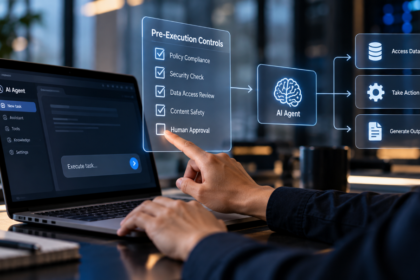
For CISOs specifically, Stage 4’s enterprise connector vision deserves careful scrutiny alongside the enthusiasm. Enabling an AI assistant to “securely retrieve relevant information from multiple authorized systems” is architecturally elegant in theory. In practice, it dramatically expands the attack surface and creates new categories of data exposure risk. If an AI assistant can retrieve compensation data, performance records, and health-related absence patterns across integrated systems, the authorization, audit, and data minimization requirements become significantly more complex. The framework mentions governance but treats it as an enabler of maturity rather than a potential brake on speed—which, from a risk management perspective, is sometimes exactly what it should be.
This is not an argument against Stage 4 integration. It’s an argument that CISOs should be in the room when HR and CDO teams are mapping their AI maturity roadmap, not brought in after the architecture decisions are made.
What HR Leaders Should Actually Take From This
The nasscom framework is a useful starting point for an internal conversation, not a deployment plan. Its real value is diagnostic: it gives HR leadership teams a shared vocabulary for assessing where they are and a directionally correct map of where they’re going. That is not nothing. Many organizations are making AI investments without any coherent model of progression, which means they’re accumulating point solutions that will become integration debt at exactly the moment they want to move from Stage 3 to Stage 4.
But the framework’s optimism about progression speed should be calibrated down. The organizations that will genuinely reach Stage 5—where AI supports anticipatory, strategic workforce decisions—are not the ones that buy the most sophisticated tools fastest. They are the ones that made unglamorous investments in data governance, HR data architecture, and cross-functional technology leadership starting several years ago. For organizations that haven’t done that work, the honest answer is that Stage 5 is three to five years away at minimum, and that’s only achievable with sustained executive commitment to the foundational infrastructure, not just the AI layer on top of it.
The future of HR will be shaped by AI. But it will be shaped most decisively by which organizations treat data quality and systems integration as strategic priorities rather than IT back-office concerns. The maturity model is right about the destination. It’s optimistic about the road.
Based on reporting from The Enterprise AI Maturity Model for HR: 5 Stages Every Organization Will Go Through | nasscom, originally published 2026-07-10 02:52:00.