
Share with your CDO
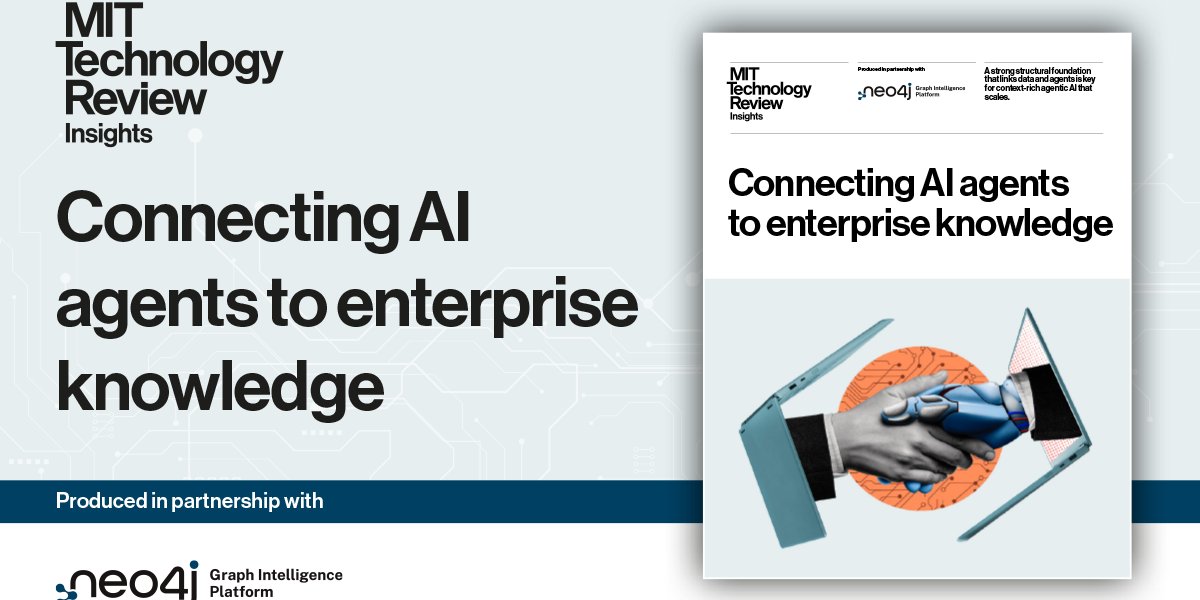
Only 34% of enterprise agentic AI projects reach production, according to a 300-executive survey from MIT Technology Review Insights and Neo4j. The culprit isn’t model quality or compute, it’s knowledge access. Data fragmentation tops the barrier list at 55%, while a small cohort of “production leaders,” organizations getting 61% of agent projects live, share one distinguishing trait: stronger semantic knowledge capabilities, meaning their agents actually understand what enterprise data means, not just where it lives. Investment priorities point toward knowledge graphs, RAG pipelines, and AI-ready APIs.
What this means for your business
The two-thirds failure rate is where this report earns attention. If your organization is running pilots that never graduate, the bottleneck almost certainly isn’t the model vendor, it’s how well your data infrastructure can hand an agent the right context at the right moment. The production leaders in this survey aren’t distinguished by budget size or cloud provider. They’ve built what the report calls a knowledge layer, a structured bridge between raw enterprise data and the agents that consume it, and that gap is what separates a pilot graveyard from a working deployment.
It’s worth being clear-eyed about the frame here. Neo4j sells graph database technology, and this report, produced by MIT Technology Review’s custom content arm rather than its editorial team, lands with a tidy conclusion that knowledge graphs deserve investment priority. That incentive tilts the findings toward structural data solutions and away from competing approaches like fine-tuning or better prompt engineering. The underlying data point, that semantic knowledge capability correlates with production success, is credible and consistent with what practitioners report. The specific prescription toward graph technology is where the vendor’s thumb is on the scale.
The finding that production leaders worry more about security and privacy (72%) while laggards worry about fragmentation (55%) is the sharpest signal in the report, and it’s the one most worth sitting with. Organizations still fighting data fragmentation are one problem class behind. If your data estate isn’t unified enough for agents to query confidently, you’re not yet in the game where security and governance become the binding constraint. That gap won’t close with another model upgrade. It closes with data architecture decisions that most CDOs have been deferring in favor of faster, more visible AI experiments.
Concept deep-dive: Semantic knowledge
Semantic knowledge is an AI agent’s ability to understand what data means, not just retrieve it. A database can store “customer churn rate: 18%” without knowing that churn connects to contract renewal cycles, sales territory assignments, or product usage signals. Semantic knowledge, often encoded in knowledge graphs or ontologies (formal maps of how concepts relate), gives agents that relational context. Without it, agents answer narrow questions accurately and broader questions badly, which is exactly the production failure pattern this survey documents.
Based on reporting from Connecting AI agents to enterprise knowledge, originally published 2026-10-05 11:47:00.