
Share with your CHRO
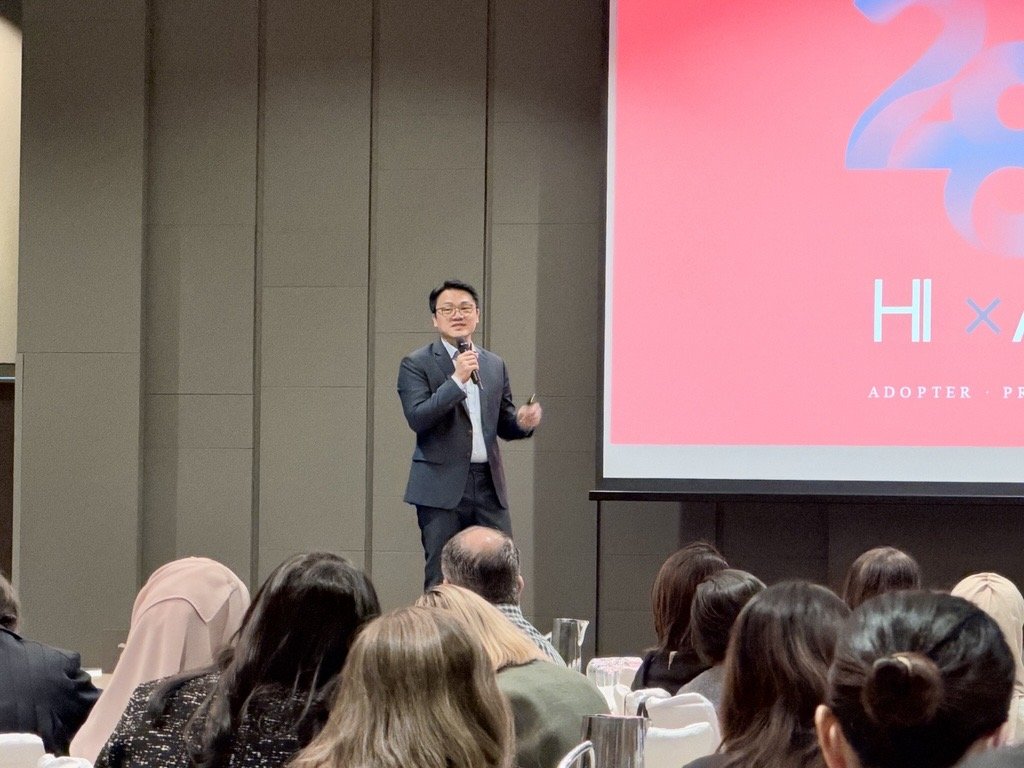
The CHRO Series Singapore 2026 opened with a provocation from Singtel’s Soon Eng Sing: when AI compresses a three-bullet email into 1,500 words and the recipient’s AI compresses it back to three bullets, productivity hasn’t happened, theater has. Across a full day of panels, HR leaders from UOB, Match Group, and Meta interrogated where AI time savings actually land, what junior-employee skill formation looks like when the repetitive work disappears, and why a 15-point gap between what HR leaders and employees score on trust and culture indicators should be kept in the language CFOs and CEOs actually read.
What this means for your business
The trust gap is the number that should stop CHROs cold. Cornerstone OnDemand’s Culture and Capability Index put HR leaders in Singapore at 71.8 on a composite culture and capability score; employees at the same organizations put it at 56.5. A 15-point delta isn’t a communication problem, it’s a signal that the AI transformation narrative is landing inside HR’s head but not outside it. If your organization is in the two-thirds that have an active AI initiative underway, the relevant question isn’t whether the initiative is well-designed. It’s whether the people living inside it believe it’s designed for them.
The skill atrophy argument deserves more weight than it typically gets in AI workforce conversations. Erik Brynjolfsson’s finding that generative AI lifted novice customer-support productivity by 34% reads as a win until you pair it with the Stanford data showing a 13% relative employment decline among 22- to 25-year-olds in the most AI-exposed roles since late 2022. The mechanism isn’t hard to follow: the tasks AI handles best are exactly the repetitive, low-stakes assignments that build judgment over time. A senior analyst who spent three years reviewing contracts before being trusted with negotiation strategy learned something irreplaceable in those reviews. Remove the reviews and the pipeline to “senior analyst” doesn’t just slow, it breaks. UOB’s internal mobility program, which moves roughly 300 people a year into new roles with an 80% success rate, is one structural response, but it addresses redistribution, not formation. The harder problem is that no one has a clean answer for how expertise compounds when the practice reps are automated away.
The who-captures-the-dividend question will define which organizations actually get stronger from AI and which just get faster. If every hour AI frees becomes an hour of additional throughput demanded by management, the workforce hasn’t been augmented, it’s been repriced. The leading indicator to watch is whether learning and development budgets are growing in proportion to AI investment. If AI spend is climbing and L&D is flat or shrinking, the organization is consuming its own future capability. That’s the budget line worth defending in the next planning cycle, not because it feels right, but because UOB’s own talent math, filling 70 to 80 percent of senior needs from within, only works if the internal pipeline is being fed.
Concept deep-dive: Skill atrophy
Skill atrophy in the AI context means that capabilities degrade not because people lose access to training, but because the work that used to build those skills quietly disappears from their job. Think of it like a muscle that’s never loaded: the gym membership is still valid, but if the exercise never happens, strength declines anyway. The business risk is latent and delayed, which is exactly what makes it dangerous. Organizations feel productive now and discover the capability gap only when senior talent exits and there’s no one ready to replace them.
Based on reporting from CHRO Singapore 2026: Time saved, skills at risk, trust on the line, originally published 2026-10-12 20:35:00.