
Share with your CTO
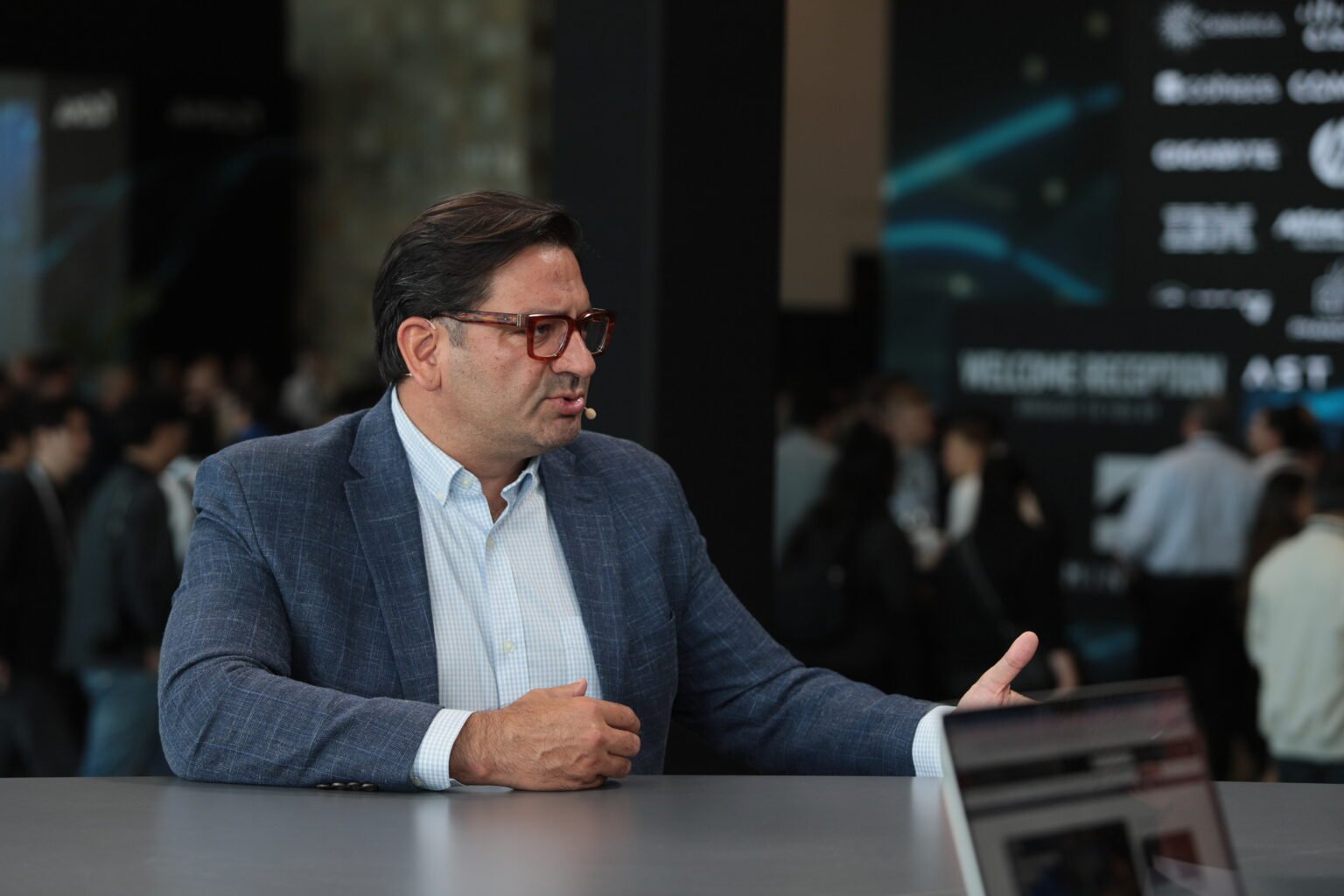
AMD is betting that the next cost crisis in enterprise AI won’t be solved in the cloud. At its Advancing AI event, Rahul Tikoo, SVP and GM of AMD’s Client Business Unit, made the case that enterprise AI PCs running local inference are becoming a strategic node in hybrid AI architecture. The hook is tokenomics: agentic AI, where autonomous agents execute multi-step tasks on a user’s behalf, generates far more token consumption than simple chatbots, and that cost lands directly on the P&L. AMD’s Ryzen AI Halo platform, with up to 128GB of unified memory, is designed to run 9B-to-24B parameter models locally and keep those inference costs off the cloud bill.
What this means for your business
The CIOs currently shocked by their agentic AI cloud bills are the audience AMD is pitching, and they’re a real constituency. Agentic workloads aren’t like static API calls; each reasoning loop generates cascading token sequences, and an agent managing a software developer’s workflow can easily consume 10x to 100x the tokens of a simple query-response exchange. Whether this story is about you depends on one variable: how close your organization is to deploying agents at scale rather than experimenting with them.
The analytical claim worth scrutinizing is whether a 9B or 24B parameter model running locally actually delivers frontier-quality output for enterprise agentic tasks, not just benchmark equivalence. AMD’s Tikoo asserts quality parity, and the direction is broadly correct given how fast smaller models are improving, but “as good as frontier models” is doing heavy lifting here. For coding agents, document processing, or structured reasoning on private data, a well-tuned Llama-class model on local hardware is genuinely competitive. For open-ended multi-agent orchestration requiring deep reasoning chains, the gap to GPT-4-class frontier models isn’t closed yet. The architecture choice, local versus cloud inference per task type, matters more than a blanket swap.
The sharper signal is what AMD is actually selling with the Ryzen AI Halo announcement: an endpoint that doubles as a private inference node, not just a faster laptop. If that positioning sticks, the enterprise PC refresh cycle stops being a commodity procurement decision and becomes an infrastructure architecture call. CTOs who treat the next PC refresh as a standard hardware renewal are the ones who’ll discover mid-cycle that their endpoint estate could have been offsetting six-figure monthly inference bills. The budget to watch isn’t the PC line, it’s whether your cloud AI spend has a local offload option priced into the next device contract.
Concept deep-dive: Tokenomics
Tokenomics in the AI context refers to the economics of token consumption, where a token is roughly a word fragment that a language model processes when generating a response. Cloud AI providers charge per token, so the more reasoning steps an agent takes, the more it costs. A single agentic loop, one agent spawning sub-tasks and synthesizing results, can consume thousands of tokens where a chatbot query uses dozens. Running that inference locally eliminates the per-token charge, replacing it with a one-time hardware cost.
Based on reporting from Enterprise AI PCs cut agentic AI costs, originally published 2026-07-24 07:43:00.