
Share with your CTO
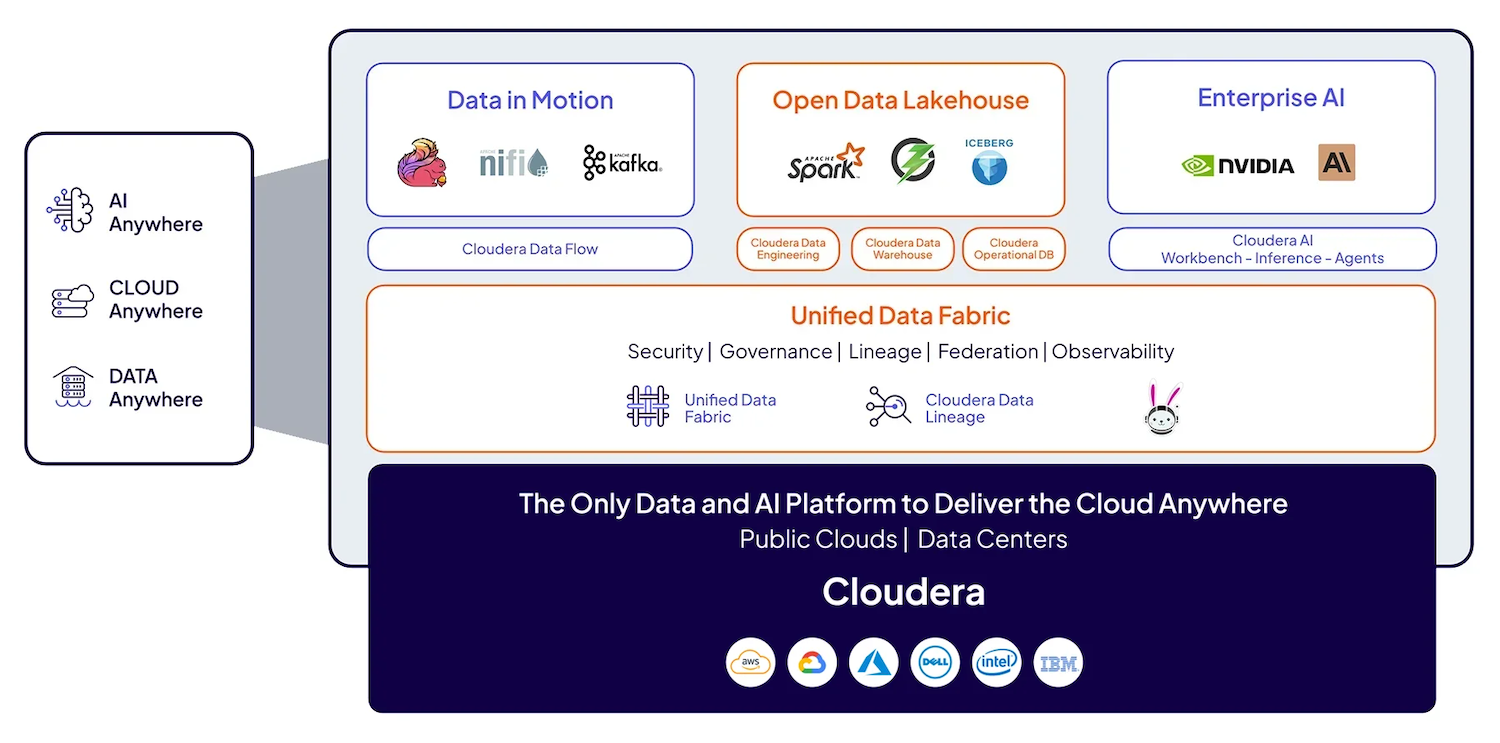
Cloudera and VAST Data are betting that GPU starvation, the chronic idle-compute problem where expensive accelerators wait on slow data pipelines, is the defining bottleneck in enterprise AI right now. Their joint AI factory stack pairs Cloudera’s containerized lakehouse services with VAST’s Disaggregated Shared Everything storage architecture and NVIDIA’s AI Data Platform reference design, targeting continuous training, inference, and analytics workloads across on-premises and hybrid cloud. Together the two vendors claim 60 exabytes of customer-managed data across their installed bases, giving the partnership meaningful enterprise reach from day one.
What this means for your business
The organizations most exposed here are those that bought GPU clusters in 2023 and 2024 to chase AI capacity, then discovered their data infrastructure was the actual ceiling. If your utilization telemetry, the system data showing how much of your GPU capacity is actually processing versus waiting, sits below 60 percent during training runs, this partnership is describing your problem. If you’re still in design mode for private AI infrastructure, it’s describing the constraint you haven’t hit yet but almost certainly will.
The architectural argument Cloudera and VAST are making is credible, even if they’re obviously incentivized to frame the storage layer as the hero. The real pattern they’re naming is one that plagued big data a decade ago, when organizations over-invested in compute and under-engineered the pipes feeding it. The VAST DASE architecture scales to exabyte-level storage while maintaining low-latency access, which matters because training pipelines and inference serving have fundamentally different I/O profiles, and most legacy storage wasn’t built to serve both simultaneously. Layering Cloudera’s governance and data engineering on top addresses the compliance requirements that make fully cloud-hosted AI a non-starter for regulated industries like financial services and healthcare.
The NVIDIA dependency woven through this stack cuts both ways. NVIDIA NIM microservices for inference, cuVS for vector indexing, cuDF for Spark acceleration, all of it tightens the coupling to a single silicon vendor at a moment when NVIDIA’s pricing power is near its peak. That’s not a reason to reject the architecture, but any CTO signing a multi-year private AI infrastructure contract built on this stack is implicitly making a long-term NVIDIA bet. I’d revisit this calculus if AMD’s ROCm ecosystem closes the software gap meaningfully by mid-2026, because the storage and lakehouse layers here are portable in ways the accelerator layer is not.
Concept deep-dive: GPU Starvation
GPU starvation happens when a graphics processing unit, the specialized chip that does the heavy computation in AI training and inference, sits idle because the data pipeline feeding it can’t deliver information fast enough. Think of it like a factory assembly line where the machinery runs at full speed but the parts conveyor belt is too slow, so the line stops and waits. At GPU rental costs often exceeding $30,000 per chip per year, idle accelerators are a budget problem disguised as an engineering one.
Based on reporting from Cloudera and VAST Data Take Aim at GPU Starvation With Joint AI Factory Stack, originally published 2026-07-15 13:46:00.