Share with your CTO
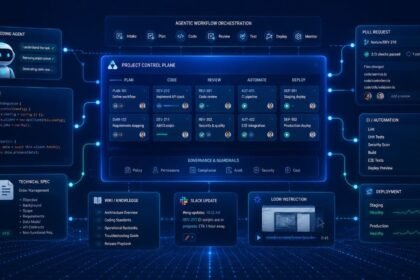
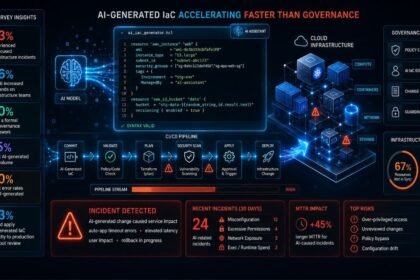
Augment Code has published a detailed technical framework for harness engineering for AI coding agents, the discipline of designing environments, constraints, and feedback loops that make agents reliable at scale. The piece draws on data from Apiiro (10,000+ new security findings per month from AI-generated code by June 2025, a 10x increase from December 2024), DORA research linking higher AI adoption to both greater throughput and greater instability, and Spotify’s Honk system, which has merged 1,500+ AI-generated PRs since mid-2024. The core framework: three reinforcing layers of constraint harnesses, feedback loops, and quality gates, structured around a Plan-Execute-Verify architecture.
What this means for your business
The DORA finding is the one to hold onto: AI adoption simultaneously increases delivery speed and delivery instability. That means teams capturing throughput gains are often also accumulating hidden reliability debt. The verification bottleneck is real. If your engineering org has deployed coding agents without wiring deterministic CI gates, the time saved generating code is being silently re-spent on auditing it. That’s not a productivity gain. It’s a cost shift with worse traceability.
The conceptual move Augment Code makes here is worth taking seriously: telling an agent to “follow coding standards” in a prompt is probabilistic compliance. Blocking the PR when standards are violated is deterministic enforcement. These are not equivalent. Any team treating rules files or system prompts as their primary constraint mechanism is operating one layer short. The piece cites GitHub’s analysis of 2,500+ repositories to make this explicit: rules files alone are insufficient without hard CI gates beneath them.
The signal worth watching is the AGENTS.md standard. Released in August 2025 and now adopted across OpenAI, Google, Cursor, Factory, and others, it represents the early emergence of cross-tool constraint portability. OpenAI’s own repository uses 88 AGENTS.md files across subcomponents. If that standard hardens, constraint authoring becomes a durable engineering asset rather than a vendor-specific configuration. Teams investing now in well-structured rules files will carry that investment across tool switches. Teams that don’t will rebuild from scratch each time they change agents.
Concept deep-dive: Plan-Execute-Verify (PEV)
PEV is a three-phase agent architecture that separates problem decomposition from code generation, then enforces verification as a structured feedback loop rather than a post-hoc check. It exists because single-pass generation gives agents no mechanism to catch their own architectural drift. The analogy is a construction permit process: you file a plan, the plan gets approved against code requirements, then work proceeds within those bounds. In practice, PEV catches failures that test suites miss entirely, specifically whether an agent used the existing auth middleware or invented a new one, questions invisible to a standard CI runner.
Based on reporting from Harness Engineering for AI Coding Agents: Constraints That Ship Reliable Code, originally published 2026-06-29 03:00:00.