
Share with your CIO
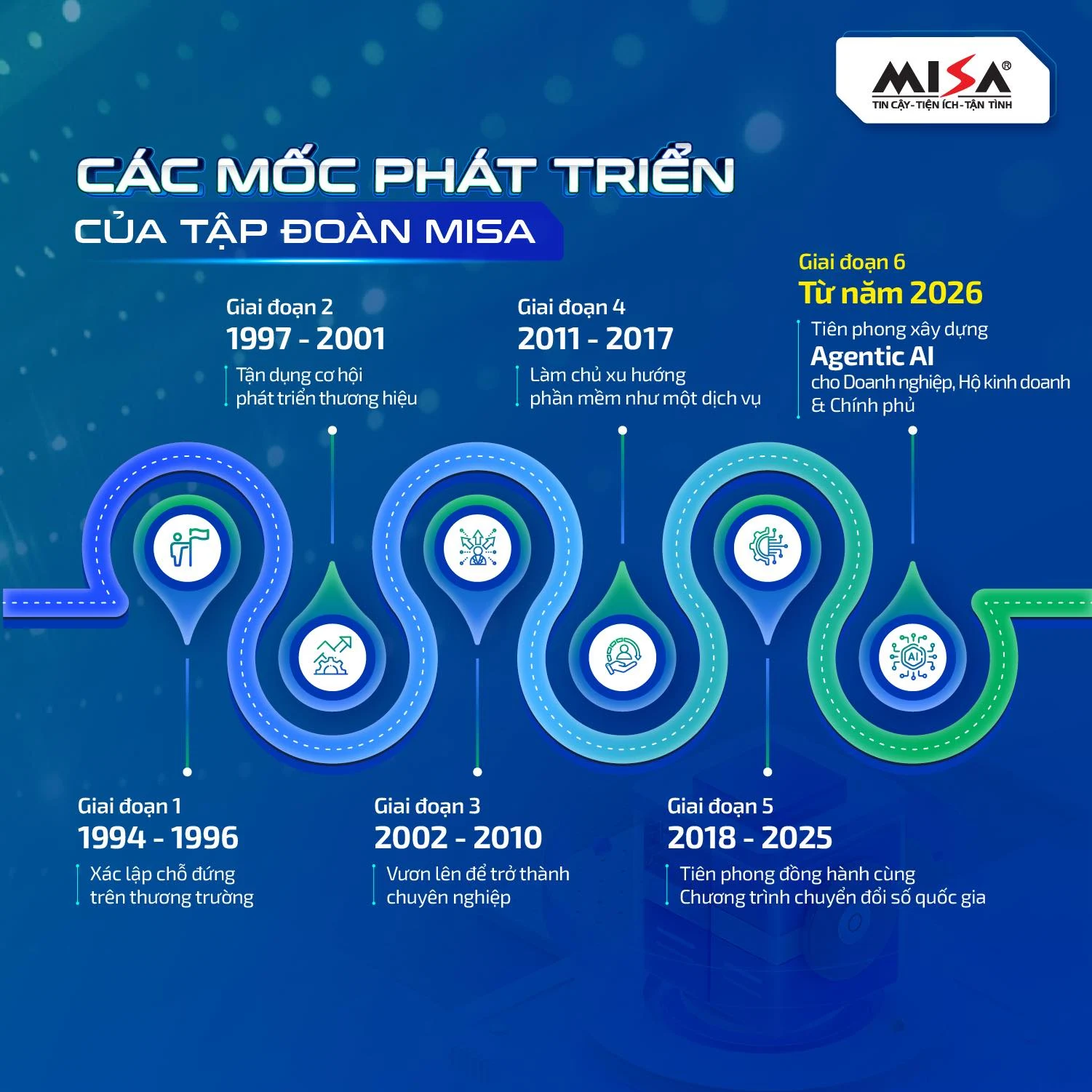
Vietnam’s enterprise AI market is consolidating around two distinct bets: commercialization at scale versus research depth. MISA, with 30 years of business-software data and a 40-application ERP suite, is pushing hardest toward what it calls the Agentic Enterprise model, where AI agents run sales, finance, and customer service autonomously around the clock. FPT AI and VinAI represent the large-conglomerate path, one optimizing enterprise automation across 200-plus clients, the other publishing at NeurIPS and CVPR while commercializing computer vision in vehicles and healthcare.
What this means for your business
If your organization is evaluating Southeast Asian technology partners or offshore development centers, this landscape matters more than the list format suggests. The practical split is between vendors with deep domain data, MISA’s accounting and ERP corpus is genuinely hard to replicate, and vendors with research credibility that hasn’t fully converted into product revenue. Where you sit on that spectrum determines which player is actually a fit for a partnership conversation versus a reference architecture exercise.
The Agentic Enterprise framing that runs through MISA’s positioning deserves scrutiny before it becomes a procurement category. An AI agent, in this context, is software that takes actions autonomously across a defined workflow, booking an order, routing a support ticket, generating a tax filing, without a human approving each step. That’s a meaningful operational shift, but the claim that a 50-person company can operate like a 500-person company rests entirely on how tightly the agents are scoped and how reliably the underlying data is structured. Most enterprise AI disappointments trace back to unstructured data and ambiguous process ownership, not model quality. MISA’s advantage, if it’s real, is that 30 years of ERP customers have already normalized their data into MISA’s schema. That’s the moat worth testing, not the agent count.
The companies with the weakest entries here, Vietnam AI Company Limited and Aitech, reveal something about the list’s construction. This article is published by MISA and ranks MISA first, which doesn’t invalidate the other entries but does explain why the framing tilts toward commercial deployment metrics rather than independent benchmarks. The CIO takeaway is narrower than the headline implies: VinAI’s research pedigree and Abivin’s 30 percent logistics cost reduction claim are the two data points worth pulling into a vendor briefing. Everything else is a directional signal that Vietnamese AI capability is further along than most Western procurement teams assume, and that assumption gap is closing faster than renewal cycles.
Concept deep-dive: Agentic AI
Agentic AI refers to systems that don’t just respond to queries but take multi-step actions autonomously, deciding what to do next based on a goal rather than waiting for each instruction. Think of it as the difference between a calculator and an employee who runs payroll end-to-end without being asked each step. For enterprise buyers, the business relevance is in process handoffs: agents are only as reliable as the workflows they’re given, which means process documentation quality becomes a direct input to AI performance.
Based on reporting from Top 10 Leading AI Companies in Vietnam Powering Enterprise AI, originally published 2026-01-26 03:00:00.