
Share with your CIO
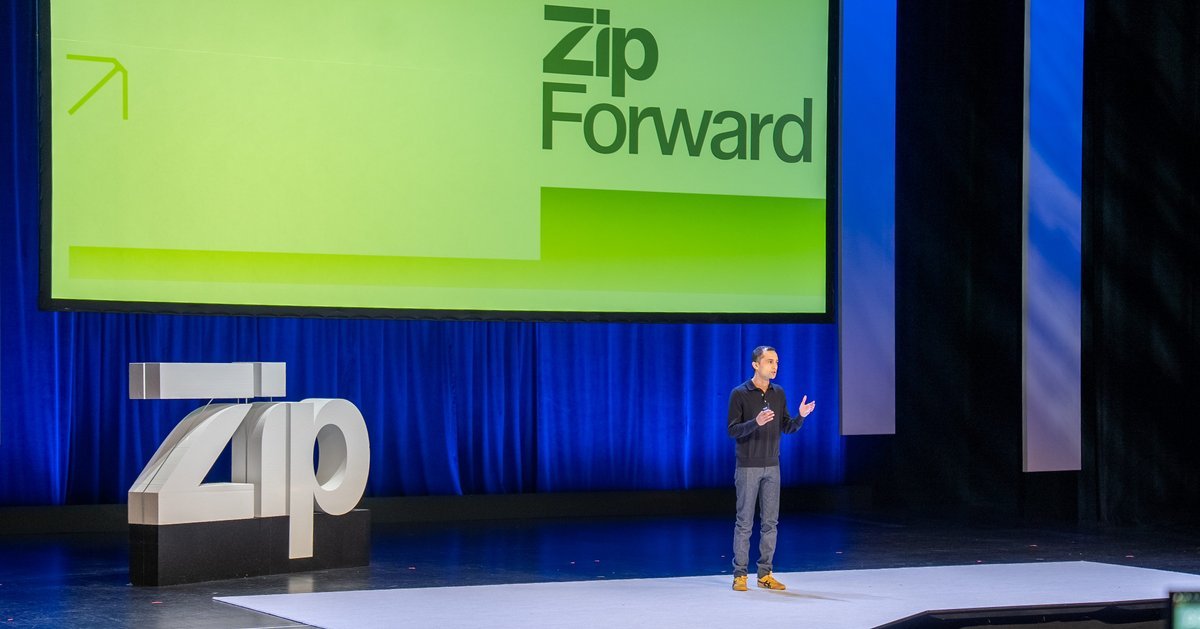
Zip is betting that procurement’s next architectural layer is orchestration, not another point solution, and Gartner’s 2025 Magic Quadrant placement as a Visionary gives that bet some institutional weight. The recognition calls out Zip’s ability to embed integrations directly into workflows, a capability Gartner says is “difficult to replicate in other source-to-pay solutions.” CEO Rujul Zaparde frames the moment as a foundation shift, not an incremental upgrade, pointing toward agentic procurement orchestration as the company’s declared destination.
What this means for your business
If your procurement stack was assembled over the past decade, it almost certainly carries the kind of layered tech debt that makes AI adoption a retrofit project rather than a deployment. Zip’s architectural argument lands hardest for organizations mid-cycle on an ERP or source-to-pay renewal, where the question isn’t “do we modernize” but “do we extend the incumbent or introduce an orchestration layer on top of it.” Enterprises already locked into SAP Ariba or Coupa contracts have less room to maneuver right now, but the renewal conversation just got a sharper competitive alternative on the table.
The “no tech debt” framing Gartner uses is doing real work here, though it deserves scrutiny. Newer platforms always look cleaner before they scale, and Zip, built in 2020, hasn’t yet been stress-tested across the complexity of a Fortune 100 procurement operation at full volume. Gartner, whose advisory revenue flows from the enterprise buyers it ranks vendors for, has an incentive toward optimistic timelines on challengers, which may compress how quickly Zip’s AI roadmap gets treated as production-ready rather than promising.
The sharper risk for incumbents isn’t that Zip wins deals today. It’s that orchestration as a category normalizes the idea that your existing S2P platform is infrastructure, not a strategic system, which commoditizes the workflow logic that vendors like Coupa and SAP have spent years positioning as differentiated. If that framing sticks, the next renewal negotiation shifts from “which platform do we standardize on” to “what do we run on top of everything.” That’s a different conversation, and it favors buyers.
Concept deep-dive: Procurement Orchestration
Procurement orchestration sits above existing source-to-pay systems and connects them, rather than replacing them. Think of it as a conductor coordinating instruments that were never designed to play together: ERP data, approval workflows, supplier databases, contract tools. The business case is that most procurement failures aren’t software failures, they’re handoff failures between systems. An orchestration layer owns the handoffs, which is where AI-driven automation and agentic workflows, software agents that act on your behalf, find the most tractable surface area.
Based on reporting from Zip: The ‘Visionary’ for Enterprise Procurement, originally published 2026-01-23 03:00:00.