
Share with your CHRO
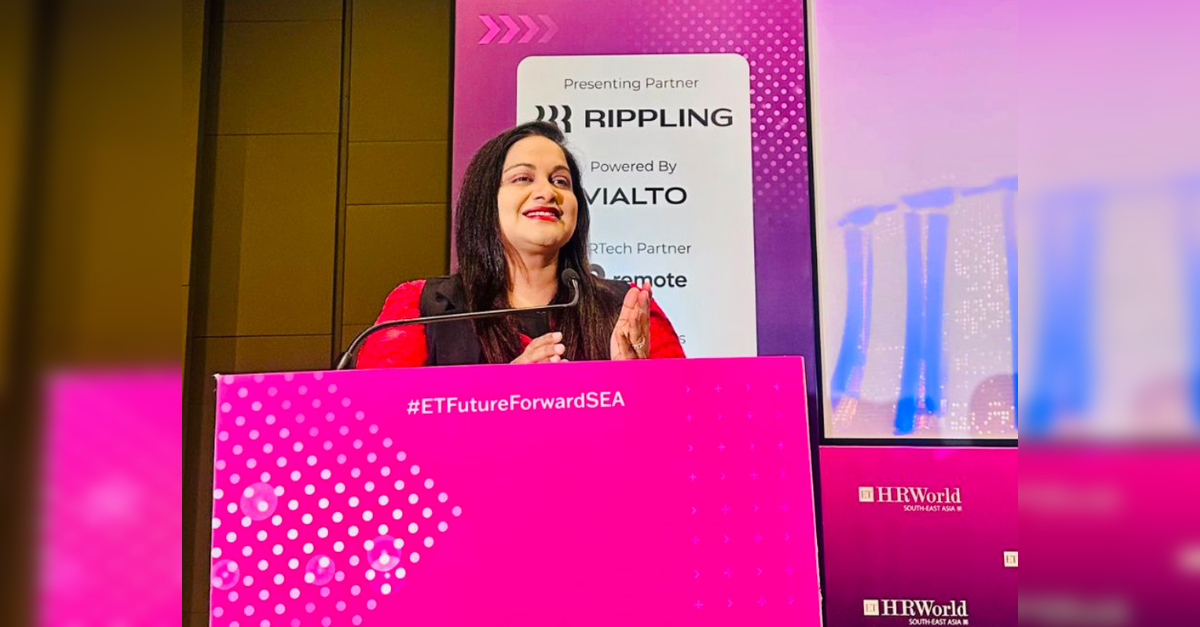
Singapore’s HR leadership class gathered this week at One Farrer Hotel for the ET Future Forward Southeast Asia Summit 2026, convening 200-plus HR leaders, CEOs, and policymakers around a single organizing question: how do you redesign work for an AI-first economy without discarding the human architecture that makes organizations actually function? The agenda ran from AI adoption benchmarking across APAC to a structured debate on net job displacement, with speakers from Unilever, Olam International, Singtel, and Singapore’s Public Service Division representing both private-sector scale and public-sector policy weight.
What this means for your business
The summit’s theme, “Work, Rewritten,” is doing something specific that CHROs should notice: it shifts the frame from AI adoption as a technology project to workforce architecture as a strategic discipline. If your organization is still treating AI rollout as an IT procurement decision with a change management tail bolted on, you are roughly where these conversations started three years ago. The companies represented here are past that. They are debating where to draw the human-AI collaboration line, not whether to draw one.
The session list is a useful diagnostic of where Southeast Asian HR leadership currently clusters its anxiety. Skills as an operating system, AI confidence versus AI readiness, and experience design for belonging all appeared on the agenda, which means the talent-retention consequence of poorly managed AI transitions has become a first-order concern, not a downstream one. When Singapore’s Public Service Division sends its CHRO to a forum like this, it signals that workforce redesign is no longer confined to multinationals with transformation budgets; government agencies are being asked to solve the same equation.
The debate framed as “AI will replace more jobs than it creates, agree or disagree?” is the one worth watching most closely. That question has a definite answer inside each specific industry context, and the organizations that have worked it out concretely, by role family, by workflow, by geography, are the ones that will set compensation benchmarks and talent sourcing strategies for everyone else in their sector. If your workforce planning still treats this as an open philosophical question rather than a modeling exercise with real numbers attached, that gap is worth closing before your next headcount review cycle forces the issue anyway.
Based on reporting from Unlocking the Future of Work: The Economic Times Future Forward Southeast Asia Summit 2026, ETHRWorldSEA, originally published 2026-07-23 22:51:00.