
Share with your CIO
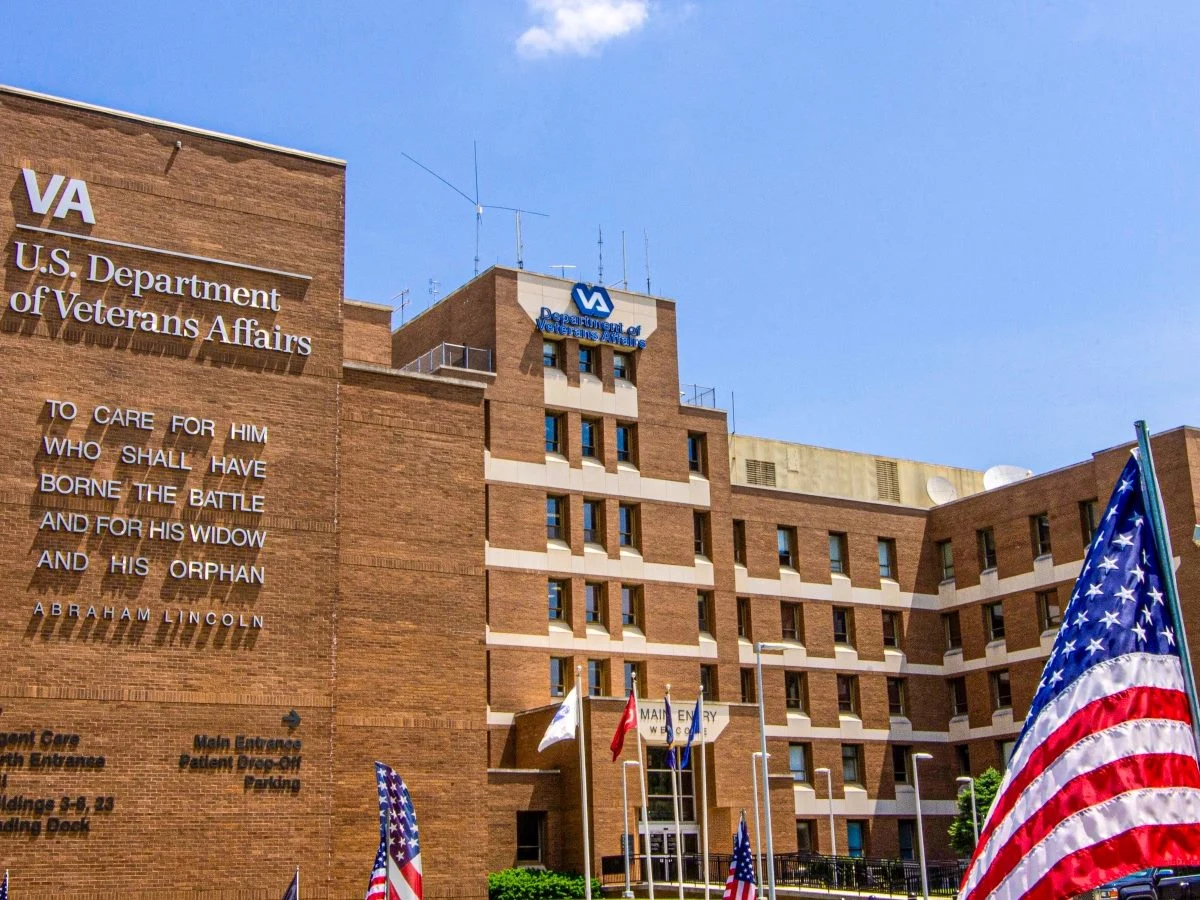
Salesforce is betting that federal agencies will treat CRM and AI orchestration as the connective tissue holding their modernization together, and the VA’s $1.6 billion, three-year Agentic Enterprise License Agreement is the proof of concept. The deal gives the Department of Veterans Affairs access to Agentforce, MuleSoft, Slack, and Tableau with a stated goal of cutting 28-day scheduling waits to minutes for 17 million veterans. It’s Salesforce’s second-largest government close of 2026, behind a $5.6 billion Army IDIQ. Meanwhile NiCE and Genesys are winning the contact center routing layer in parallel deals across the UK, Australia, and Canada.
What this means for your business
The deal structure reveals something most enterprise CIOs are about to confront directly: the government stack is splitting in two, and the private sector follows. Agencies are buying their CRM and data integration layer from one vendor while sourcing their call routing and contact center infrastructure from another. If your own architecture still assumes one platform does both, the VA’s approach is an early signal that assumption is becoming harder to defend, particularly as AI agents need clean data pipelines that CCaaS platforms weren’t built to provide.
The more consequential detail is what Salesforce already had at the VA before this contract was signed. The Veterans Crisis Line, VA Health Connect’s 40 million-plus calls, Slack across 150 medical centers: the $1.6 billion is an expansion, not an entry. That pattern, where a vendor wins a modernization mega-deal because switching costs have already compounded invisibly, is the recurring dynamic CIOs underestimate during procurement. The initial foothold deployment, often modest in scope and budget, is the real competition. By the time the headline number appears, the decision is mostly made.
HMRC makes this structural split concrete: the same agency signed a CCaaS deal with NiCE and Capgemini while simultaneously shopping for a separate CRM provider. That’s not indecision, it’s architecture. The question your organization should be weighing at your next renewal isn’t which single vendor can do everything, it’s whether your CRM data layer and your contact center routing layer are clean enough to procure and evolve independently. Vendors with strong opinions about platform consolidation will push back hard on that framing, which is exactly why it’s worth pressure-testing now.
Concept deep-dive: Indefinite Delivery Indefinite Quantity (IDIQ) contract
An IDIQ is a government contracting vehicle that sets a ceiling on total spend without guaranteeing any of it. Think of it as a pre-approved vendor relationship with a spending limit: the agency can place orders against it over the contract term, or almost none at all. The $5.6 billion Army figure and the $1.6 billion VA figure are both ceilings, not committed revenue. For enterprise buyers, the analogy is an enterprise framework agreement: the ceiling signals strategic intent and competitive exclusion more than it predicts actual cash flow.
Based on reporting from VA’s $1.6B Salesforce Deal Puts 2026’s Government CX Spending Spree in Focus, originally published 2026-07-24 12:08:00.