
Share with your CISO
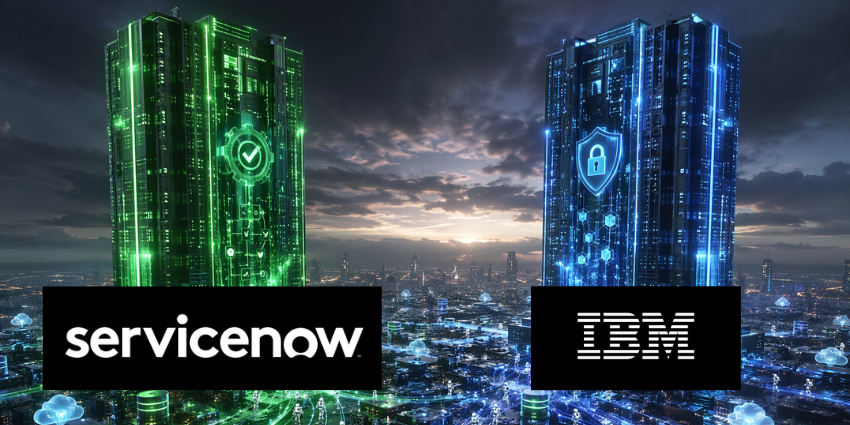
IBM and ServiceNow are each staking out territory in agentic AI governance, but from opposite ends of the control problem. ServiceNow expanded AI Control Tower at Knowledge 2026 into a cross-enterprise command layer that can discover unauthorized agents, monitor runtime behavior, and shut down an agent exceeding its permissions in real time. IBM, meanwhile, extended its Guardium data security platform into agentic AI monitoring, capturing the full chain from user prompt through tool execution to database access. The IBM versus ServiceNow governance split is now a vendor selection question, not a theoretical debate.
What this means for your business
The CISO who still thinks of AI governance as someone else’s problem, a CIO or CDO concern, is about to get a rude awakening from regulators. Once an autonomous AI agent touches a regulated database, the question of what it accessed, on whose authority, and what it did with the output lands squarely in the security and compliance function. Whether your organization leans toward ServiceNow’s operational model or IBM’s evidence model depends less on which vendor has the better demo and more on whether your hardest AI governance question is “what are agents doing right now” or “what did they touch and can we prove it.”
These two products are not competing for the same buyer decision. ServiceNow AI Control Tower is a runtime governance play, policy enforcement, agent discovery, live intervention, built for organizations where ServiceNow already orchestrates workflows. IBM Guardium’s agentic extension is an audit trail play, capturing telemetry across prompts, tool calls, MCP activity (the protocol layer connecting AI agents to external tools), and downstream data access. The recurring failure mode in enterprise AI governance is treating these as substitutes. They’re not. One answers the board when an agent goes rogue. The other answers the regulator when one already did.
The sharper bet here is that large enterprises end up running both layers, and the vendor that wins isn’t necessarily the one with the better product but the one whose contract is already up for renewal when the governance panic hits. IBM holds an advantage in regulated industries where Guardium is already deployed and trusted; the question is whether CISOs in those verticals allow ServiceNow to install a runtime control layer on top of IBM’s evidence layer, or whether they demand a single-vendor story. If your next Guardium or ServiceNow renewal lands before you’ve defined your agentic governance architecture, that’s the moment to pressure both vendors on interoperability, not after the architecture is locked.
Concept deep-dive: Agentic AI telemetry
Telemetry in this context means the structured log of everything an AI agent does during a task: which prompts it received, which tools it called, which databases it queried, and what data it returned. Think of it as the flight data recorder for an AI workflow. Without it, a compliance team reconstructing an AI-driven decision has no chain of evidence. With it, regulators get an auditable timeline. IBM’s Guardium extension is specifically built to capture this chain where it intersects with sensitive or regulated data stores.
Based on reporting from IBM Vs ServiceNow on Agentic AI Governance, originally published 2026-06-17 03:00:00.