
Share with your CIO
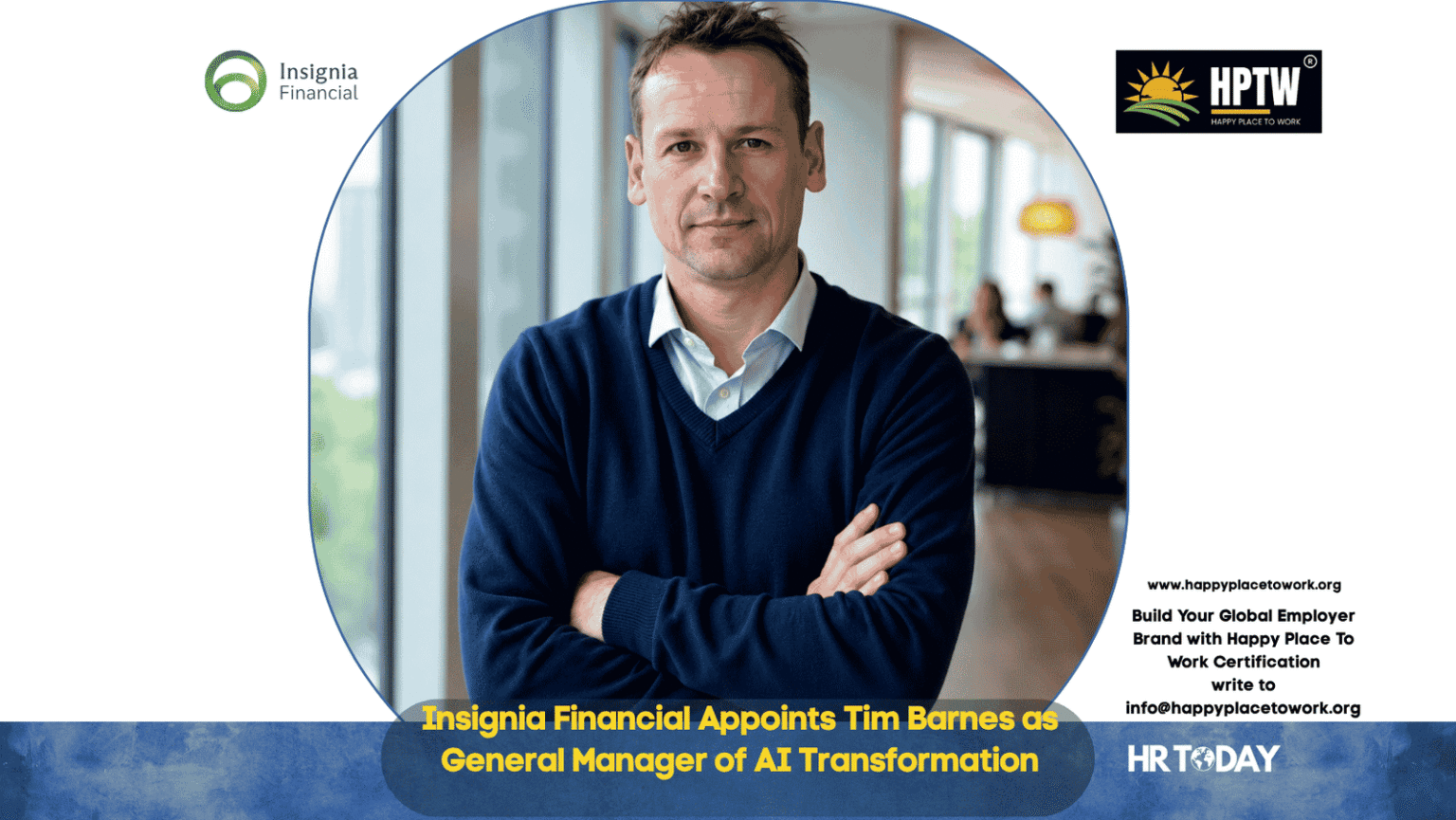
Insignia Financial, a 179-year-old ASX 200 wealth manager, is betting that dedicated AI transformation leadership is the mechanism that closes the gap between AI ambition and operating reality. Tim Barnes steps in as General Manager of AI Transformation, bringing a track record that includes 3 million hours of productivity savings at ANZ and $35 million in recurring value at Telstra. His mandate covers business operations, customer experience, decision-making, and enterprise productivity, with an explicit responsible AI and governance remit from day one.
What this means for your business
The appointment follows a pattern that’s become a genuine inflection point in financial services: the moment an organization stops treating AI as a CTO side project and creates a dedicated general-management role accountable for enterprise-wide outcomes. If your firm is still routing AI strategy through a data science team or a transformation office that reports four layers down, Insignia’s move signals that your peers are making AI a board-visible function, and the gap between you will compound faster than it looks today.
Barnes’s background deserves closer reading than the usual executive hire warrants. He’s not a researcher or a vendor evangelist, he’s someone who ran the AI Foundry at ANZ, chaired responsible AI validation forums, and built governance frameworks explicitly aligned to APRA CPS 230 and CPS 234 (the Australian prudential standards governing operational and information security risk). That’s a deliberate hire signal: Insignia isn’t prioritizing speed-to-deployment over compliance hygiene. In a regulated industry where a single model failure can attract a regulator, this sequencing, governance architecture before broad rollout, is the right call. Organizations that invert it consistently spend more fixing problems than they saved by moving fast.
The executives who should feel the most pressure from this aren’t at Insignia’s direct competitors. They’re at any regulated financial services organization whose AI governance is still a slide deck rather than a functioning framework. Barnes spent time at Australian Retirement Trust building a 2030 AI strategy specifically to shift the fund toward an AI-first operating model, then moved to a larger platform to execute at scale. That career arc suggests the market for executives who can do both, strategy and operational delivery under regulatory constraint, is tightening. If you’re recruiting for this capability in 2026, you’re already late to the candidate pool that was available in 2024.
Concept deep-dive: Responsible AI governance
Responsible AI governance is the institutional scaffolding that determines how an organization decides which AI systems to deploy, what risks to accept, and who is accountable when a model produces a harmful or non-compliant output. Think of it as the change-control board for algorithms, a standing process rather than a one-time audit. In financial services, it maps directly onto existing risk and compliance obligations, which is why experienced practitioners treat it as infrastructure, not a PR commitment.
Based on reporting from Insignia Financial Appoints Tim Barnes as General Manager of AI Transformation, originally published 2026-07-18 13:54:00.