
Share with your CISO
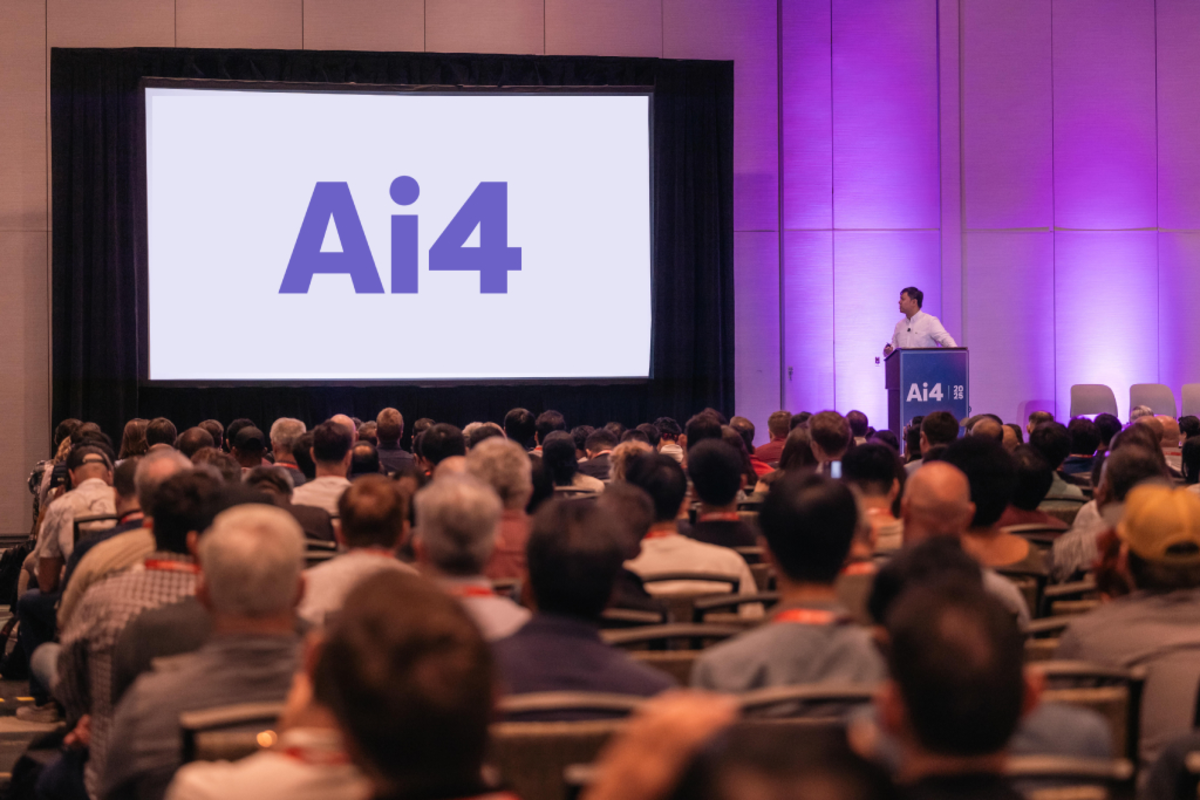
A manufacturing company audited every cloud platform running inside its organization and found more than ten times the AI agents in production compared to what its leadership believed existed. Nobody could identify who built most of them or what they were doing. That finding, surfaced at Ai4 2026 in Las Vegas by Dataiku’s executive team, anchored a three-day conference of 12,000 enterprise attendees where the dominant programming cluster shifted from “what are AI agents” to “who is watching them and how.”
What this means for your business
The 10x agent gap is not a headcount problem. Every AI agent deployed inside an enterprise carries its own credential footprint, meaning tokens, API keys, and service accounts that must be managed and revoked. An organization running ten times more agents than its CISO knows about is running ten times more unmanaged credentials and ten times more unaudited tool-access permissions. That is not a governance embarrassment waiting for a remediation sprint. It is an open attack surface right now, and OWASP’s first Top 10 for Agentic Applications, published in 2026, exists specifically because the industry has started to catalogue how attackers will use it.
The structural reason this gap exists is worth naming cleanly. AI agents propagate at employee adoption speed, not IT governance speed, exactly as spreadsheets did in the 1980s and shadow IT SaaS did in the 2010s. The difference is consequential. A rogue spreadsheet holds bad numbers. An autonomous agent acting on bad numbers can email customers, move money, or call external APIs before a human notices anything is wrong. Dataiku demonstrated this live with a sales dashboard where a single hidden formula error made every metric wrong in a way that was visually indistinguishable from correct output. A broken chart looks broken. A wrong chart dressed as a correct one does not, and an agent downstream of that chart does not pause to check.
The deeper governance failure is architectural, not organizational. An AI agent’s effective permissions cascade through tool calls in ways that are not visible to the team that deployed it, let alone to security. A human employee’s access can be described in a spreadsheet and audited by HR. An agent’s authorization surface, covering what prompts it receives, what APIs it can call, what data it can retrieve, and what actions it can execute, is a different category of problem entirely. Gartner projects more than 40 percent of agentic AI projects will be canceled by end of 2027, citing governance failures as a primary cause. The CISOs who get ahead of this are auditing agent inventories now, before the regulatory window closes. The EU AI Act’s most substantive provisions took effect this month.
Financial stability regulators have separately flagged autonomous AI as the most likely current source of AI-related systemic financial risk in the sector, with 44 percent of experts in one cross-national workshop naming it explicitly. If that framing reaches your board before your agent inventory does, the conversation becomes much harder to own. The question worth weighing differently in your next vendor renewal or security tooling budget is whether your identity and access management stack was designed to handle non-human agents as first-class principals, because most were not, and the agents are already running.
Concept deep-dive: AI agent authorization surface
An AI agent’s authorization surface is the full set of things it can do without asking permission at each step, covering which APIs it can call, which data it can retrieve, which actions it can execute, and which other systems it can trigger. Unlike a human user whose permissions sit in a directory and can be audited in minutes, an agent’s effective reach cascades through tool calls in ways that are often invisible even to the team that built it. That invisibility is the attack surface.
Based on reporting from Ai4 2026 Closes: Enterprise CEOs Are Running 10x More AI Agents Than They Know, originally published 2026-08-06 13:08:00.