
Share with your CTO
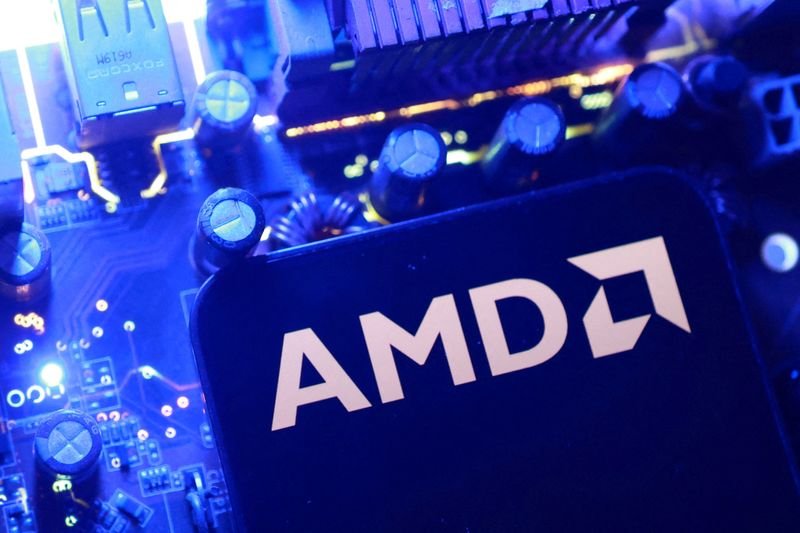
AMD is betting its AI chip business can sustain acceleration, and its Q3 revenue forecast of roughly $13 billion — above Wall Street’s $12.52 billion estimate — suggests it’s winning real infrastructure dollars, not just mindshare. Data-center revenue more than doubled to $6.72 billion in Q2. AMD has locked in a tens-of-billions-dollar AI server deal with Anthropic and 2.5 gigawatts of capacity through Core Scientific, while its second-generation Helios servers begin shipping later this year. The 7% after-hours share drop reflects expectations that outran even a strong print.
What this means for your business
Whether AMD’s momentum changes your vendor calculus depends almost entirely on where your AI infrastructure timeline sits. Organizations planning large GPU (graphics processing unit, the specialized chip that handles heavy AI compute) deployments in 2026 or early 2027 now have a credible second source with committed supply agreements, integrated rack-scale systems, and named hyperscale validation. If you’re locked into Nvidia contracts through 2026, AMD’s current supply constraints courtesy of TSMC’s advanced packaging bottleneck mean the window matters more than the ambition.
The Anthropic deal deserves attention beyond its headline size. AMD isn’t just selling chips; it’s investing up to $5 billion in Anthropic contingent on deployment milestones, which means AMD’s financial incentives are now structurally tied to Anthropic’s inference workloads performing well on AMD silicon. That’s a different kind of customer validation than a procurement agreement. It signals AMD believes its MI450 chips can handle frontier-model inference at scale, and it puts a credible stress test on that claim in public view by early 2027.
The TSMC packaging constraint is the number that should matter most to any CTO evaluating AMD as a primary or supplementary AI chip supplier. Strong demand forecasts mean nothing if supply can’t clear. The recurring failure mode in AI infrastructure planning is treating vendor roadmap commitments as delivery guarantees, and AMD’s own supply chain acknowledged this risk explicitly. The Anthropic and Core Scientific deals suggest AMD is reserving capacity through strategic partnerships first, which means open-market availability for everyone else may tighten as those agreements ramp. If AMD is on your shortlist for 2027 deployments, the time to negotiate capacity commitments isn’t after the Helios systems ship.
Concept deep-dive: Rack-scale AI systems
A rack-scale AI system bundles GPUs, CPUs, networking, and power management into a single pre-integrated unit, the way a commercial kitchen delivers a fully plumbed cooking line rather than individual appliances. It exists because optimizing each component separately creates integration overhead that slows deployment and degrades performance. For enterprise buyers, the business implication is that purchasing decisions shift from chip specs to full-system benchmarks, and switching costs rise once a vendor’s rack architecture is embedded in your data center design.
Based on reporting from AMD forecasts upbeat revenue on strong AI chip demand, but shares fall on lofty expectations | 1450 AM 99.7 FM WHTC, originally published 2026-08-04 16:39:00.