
Share with your CIO
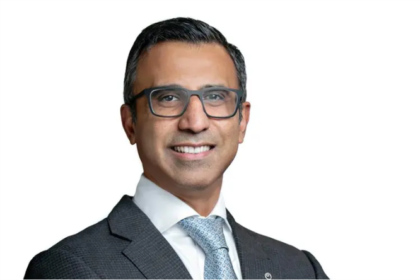
EXL (NASDAQ: EXLS) has closed its acquisition of iMerit, a specialist in AI model training, fine-tuning, and reinforcement learning from human feedback, folding iMerit’s expert-annotator network and its Ango Hub data platform into EXL’s existing enterprise AI services stack. iMerit founder Radha Ramaswami Basu joins EXL’s executive committee, signaling this isn’t a tuck-in but a capability bet. The combined entity positions EXL as a full-stack partner for enterprises trying to move AI deployments from prototype to regulated production, with 68,000 employees across six continents behind it.
What this means for your business
The organizations most exposed to this move are the ones currently stitching together their own AI supply chain from separate vendors: one for model selection, another for data annotation, a third for domain fine-tuning, and a consulting firm to supervise the whole mess. EXL is now pitching itself as the single counterparty for all of it, particularly in insurance, healthcare, and financial services, where regulatory constraints make off-the-shelf model outputs legally insufficient. If you’re a CIO in one of those verticals still running proof-of-concepts, this deal sharpens the question of whether you’re building internal capability or outsourcing the production layer entirely.
The acquisition logic is grounded in a real bottleneck. Most enterprise AI failures don’t happen at the model selection stage; they happen when a general-purpose model hits domain-specific data it was never trained to handle and produces outputs that a compliance officer, underwriter, or clinician can’t sign off on. iMerit’s “Scholars” network, which includes physicians, engineers, and linguists who generate and evaluate domain-specific training data, directly addresses that gap. EXL is betting that domain-calibrated training data, produced by subject-matter experts rather than crowdsourced workers, is the defensible differentiator in enterprise AI services. That’s a credible thesis, and it’s harder to replicate than another AI dashboard.
The risk EXL doesn’t address in this announcement is commoditization from above. Foundation model providers, OpenAI and Anthropic among them, are aggressively building fine-tuning and evaluation tooling directly into their platforms. If that tooling matures fast enough, the middle layer EXL is assembling, domain data curation plus enterprise deployment, gets squeezed from both directions: cheaper offshore annotation on one side, first-party model APIs on the other. I’d revise this competitive picture if EXL discloses multi-year, outcome-based contracts with named regulated-industry clients rather than capability announcements, because that’s when the moat becomes measurable.
Concept deep-dive: Reinforcement learning from human feedback
Reinforcement learning from human feedback, commonly called RLHF, is the process of having human experts score or correct an AI model’s outputs so the model learns which responses are actually useful, accurate, or safe in a given context. Think of it as hiring domain experts to grade the AI’s homework, repeatedly, until it stops making the errors that would matter in a real workflow. In enterprise settings, the quality of those human graders determines whether the model can be trusted in a regulated environment.
Based on reporting from EXL completes acquisition of iMerit, accelerating enterprise AI leadership, originally published 2026-08-03 08:03:00.