
Share with your CTO
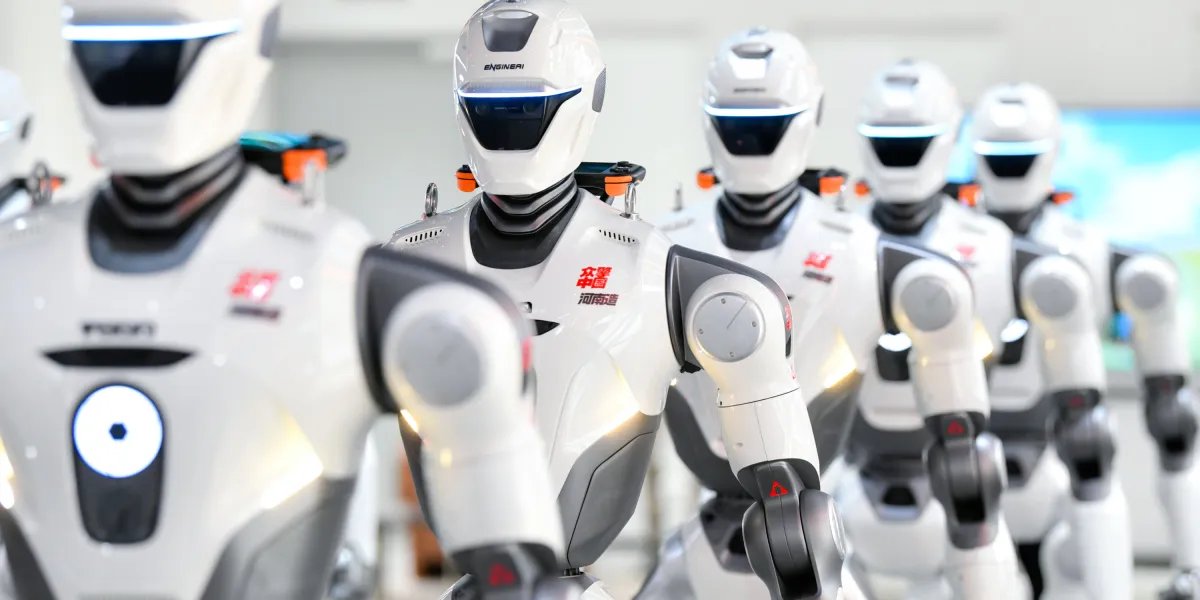
The FTC has issued a sweeping ban on foreign imports of advanced robots, including humanoids and quadrupeds, citing both national security data risks and the need to protect a nascent domestic industry. The move lands as the Trump administration escalates its AI protectionism campaign beyond frontier labs to embodied AI, and the timing matters. Unitree, China’s leading humanoid maker, is targeting a $6 billion IPO this week, while US competitors like Figure and 1X are still pre-scale. The price gap is the real problem: a Unitree quadruped runs around $4,600 versus $278,000 for a comparable Boston Dynamics unit.
What this means for your business
If your company runs or funds robotics research, the ban lands on your procurement immediately. Ninety percent of recent US university robotics research papers relied on Unitree hardware, according to the Association for Advancing Automation, and that dependency exists precisely because Chinese robots offer the best price-to-capability ratio in the market. Companies building internal automation fleets or partnering with academic labs now face a supply constraint they didn’t budget for, and the carve-outs in the FTC order are still unclear enough that legal review, not assumption, is the right posture.
The deeper problem is that this ban could slow the very industry it claims to protect. Robotics today is trained through repetition at scale, with fleets of physical robots running thousands of task iterations, essentially the same data-flywheel logic that made large language models competitive. Starving US researchers of affordable hardware doesn’t create a Boston Dynamics advantage; it creates a data gap. Google DeepMind’s announcement last week of a model to accelerate humanoid task learning shows the AI layer is maturing fast, but the physical training infrastructure that feeds it just got more expensive by regulatory fiat.
The administration is treating embodied AI as a strategic frontier worth protecting on the same terms as semiconductor export controls or the rumored ban on open-source Chinese models, which MIT Sloan estimates could cost US businesses $25 billion annually in foregone savings. That framing will likely harden, not soften. If you’re a CTO evaluating a robotics automation roadmap, the variable to watch isn’t whether US humanoid companies catch up on price; they won’t in the near term. The variable is whether the FTC’s carve-outs create a workable research exemption, because if they don’t, the talent and research momentum advantage the US still holds starts eroding from the hardware up.
Concept deep-dive: Embodied AI
Embodied AI refers to machine intelligence that operates through a physical form, where a robot’s sensors, actuators, and learned models interact with the real world rather than processing data in a server. Think of it as the difference between a chatbot that answers questions and a robot that learns to tie a trash bag by doing it ten thousand times. For enterprises, it’s the layer where AI stops being software and starts requiring supply chains, safety standards, and physical infrastructure investment.
Based on reporting from Trump’s AI protectionism has come for robotics, originally published 2026-08-03 14:43:00.