
Share with your CTO
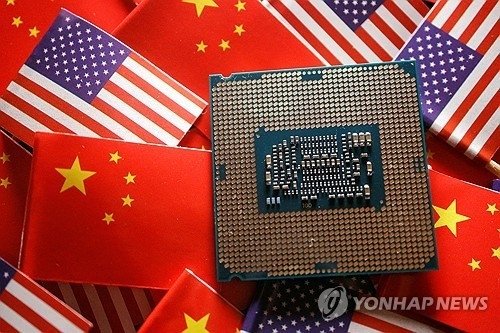
China’s domestic AI chip suppliers are on track to control roughly 79% of the country’s AI server market in 2026, up from 66% last year, according to TrendForce data reported by the South China Morning Post. Huawei and Cambricon are leading the charge on general-purpose AI silicon, while Alibaba’s T-Head and Baidu’s Kunlunxin are scaling custom ASICs (application-specific chips purpose-built for a single workload like model training or inference). Foreign suppliers including Nvidia and AMD combined are projected to hold just 21% of the Chinese market, down from 34% a year prior.
What this means for your business
If your company runs AI workloads on any infrastructure touching China, including cloud regions, joint ventures, or suppliers who do, the hardware stack underneath those workloads is being replaced faster than most vendor roadmaps acknowledge. The companies on the winning side of this shift are not scrappy startups finding a niche. ByteDance and Alibaba, among the most demanding AI infrastructure operators on the planet, are aggressively standardizing on domestic silicon. That’s a stress test, not a pilot program, and it’s passing.
The deeper signal here is that chip self-sufficiency and frontier AI capability are converging faster than U.S. export policy architects assumed they would. The standard argument for aggressive controls was that cutting off advanced chips would cap Chinese AI progress at a level safely below competitive parity. What’s actually happening is a forced-march industrialization of the domestic supply chain, with China’s largest cloud operators providing the volume and feedback loops that previously only Nvidia enjoyed. TrendForce, whose analyst community sells research to the same firms it tracks, has incentive to amplify this narrative for conference audiences, but the directional data is hard to dismiss: a 13-point share swing in one year isn’t rounding error.
For CTOs outside China, the operative question isn’t whether Huawei’s Ascend chips match H100 performance today. It’s whether your infrastructure vendor concentration risk is being priced correctly into multi-year procurement decisions. Nvidia retains 64% of the global AI server market and that position is real, but a world where China’s domestic ecosystem matures into genuine competence changes the long-run negotiating dynamics for everyone. The renewal you defend at your next board review should already account for a market where Nvidia’s pricing power erodes at the margin, not because Chinese chips go global, but because China stops importing.
Concept deep-dive: ASICs vs. general-purpose AI accelerators
A general-purpose AI accelerator like an Nvidia GPU can handle almost any AI workload by design, the way a Swiss Army knife handles most cutting jobs. An ASIC is built for one specific task, running a particular model architecture or inference pattern, the way a scalpel outperforms a knife in surgery. ASICs trade flexibility for efficiency: lower power draw, lower cost per inference, but useless outside their target workload. When a company is large enough to run billions of identical inferences daily, the economics flip decisively in the ASIC’s favor.
Based on reporting from Huawei, Cambricon Eye Nvidia’s Void as China Pushes AI Chip Self-Sufficiency, originally published 2026-06-29 17:10:00.