
Share with your CIO
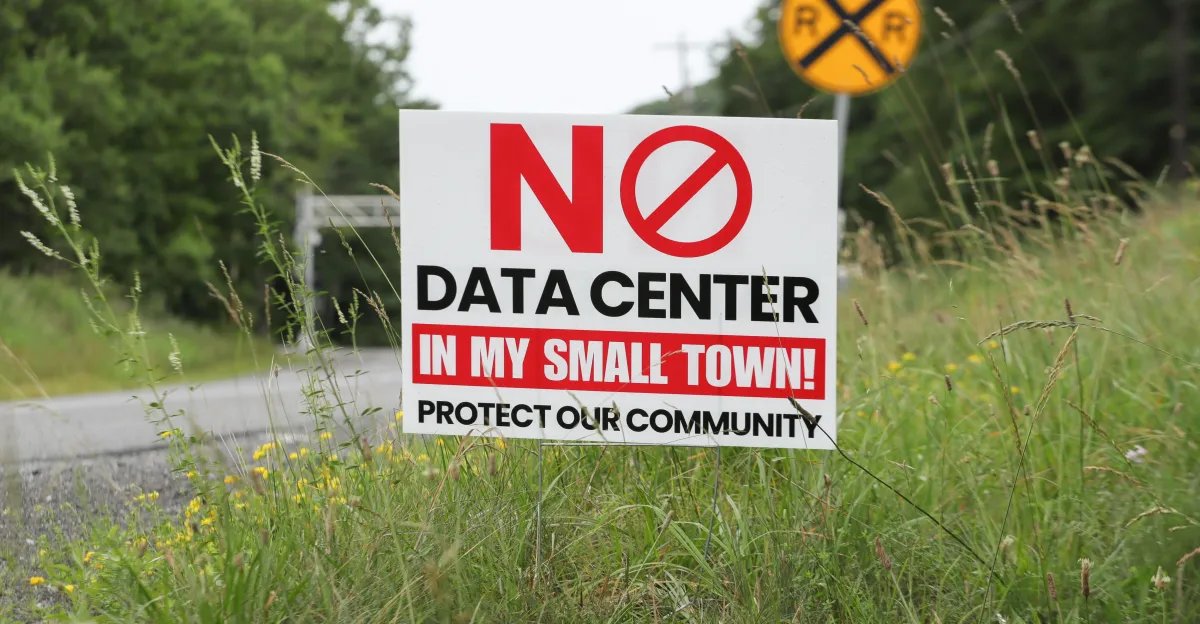
Community resistance to AI data center construction has crossed a threshold that enterprise infrastructure planners can no longer treat as background noise. From January through March 2026 alone, opposition groups blocked or delayed at least 75 US projects worth $130 billion, according to Data Center Watch, while the number of active opposition groups more than doubled to 833 across 49 states. Congress is now debating three competing bills, 28 states have enacted new data center laws, and President Trump’s executive order fast-tracking construction is facing direct legislative pushback from both parties ahead of midterms. The full scope of the buildout opposition is larger than most enterprise planning teams appear to have priced in.
What this means for your business
The organizations most exposed here are those whose AI infrastructure roadmaps depend on cloud capacity commitments from hyperscalers announcing projects in contested geographies. Meta’s $27 billion Louisiana build, Google’s $10 billion Missouri campus, and Stargate’s $500 billion national footprint are all facing community pressure that has already proven capable of stopping a $12 billion QTS campus in Wisconsin and a 2,000-acre Virginia project. If your AI workload timeline assumes new regional capacity coming online by 2027, the delivery risk just got materially harder to ignore.
The policy picture is genuinely unsettled in a way that creates real optionality for enterprise buyers. The Ratepayer Protection Act, backed by members of both parties, would codify that hyperscalers pay their own energy costs rather than passing them to local grids. The GRID Act would go further, forcing data centers off shared grid infrastructure entirely. Either outcome changes the cost structure hyperscalers face, and cost structure changes flow downstream into pricing, capacity allocation, and where new facilities actually get built. An enterprise renegotiating a cloud contract in 2026 or 2027 is doing so against a backdrop where the supplier’s own infrastructure costs are genuinely uncertain.
The Apple Ireland precedent buried in this story is worth sitting with: two determined individuals held up a fully approved, locally supported, 100-percent-renewable facility for three years until Apple simply quit. The current opposition movement is operating at a scale roughly 400 times that, with legal toolkits, petition infrastructure, and now bipartisan political cover. That doesn’t mean the buildout stops, but it does mean any CIO treating hyperscaler capacity timelines as fixed commitments rather than probabilistic ranges is carrying risk that isn’t showing up on any vendor SLA. The indicator to watch is whether the Ratepayer Protection Act advances, because passage would signal that Congress has chosen to manage the conflict through cost allocation rather than through construction limits, which is the outcome most favorable to continued buildout at speed.
Based on reporting from The fight against AI data centers is just beginning, originally published 2026-07-12 08:00:00.