
Share with your CHRO
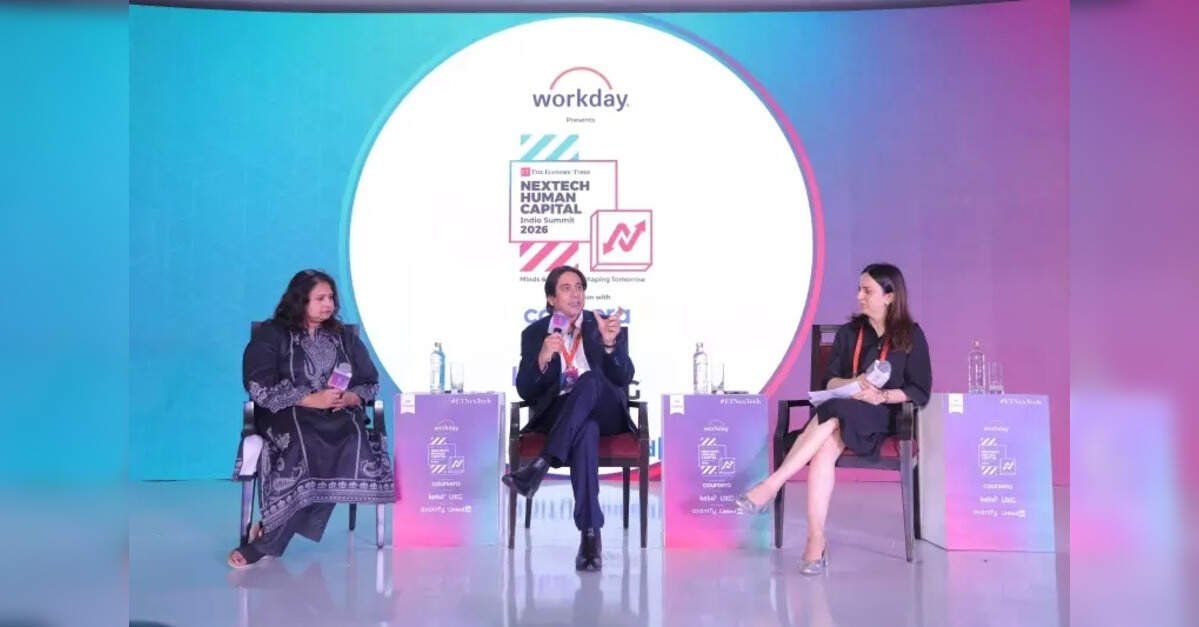
HR leaders at Cyient and EXL are betting that skills, not tenure or job titles, are the new unit of workforce value, and they’re rebuilding talent infrastructure around that premise. At the ET Nextech Human Capital India Summit, Kavita Kurup of Cyient described a three-tier skills framework refreshed every six months, while Rakesh Kumar of EXL outlined a phased AI adoption model moving employees from experimentation to deployment. Workday India’s presence grounded the conversation in platform execution.
What this means for your business
The companies furthest along this path share one structural trait: they’ve made skills visible as an enterprise asset, not just an HR record. Cyient’s approach of mapping every employee across expert, intermediate, and horizon skills every six months is essentially running a continuous talent audit that feeds directly into workforce deployment decisions. If your organization still treats the skills inventory as a one-time onboarding exercise or a checkbox in a performance system, you’re not competing on the same playing field, and AI-driven workforce analytics will expose that gap faster than any annual review cycle would.
The EXL framing on AI literacy versus AI engineering is the more practically useful distinction in this piece. Most enterprise AI rollouts stall not because the tools are wrong but because employees are handed a deployment before they’ve ever experimented freely with the technology. EXL’s “AI playground” model, structured across experience, experimentation, and deployment phases, is a forcing function for building genuine capability rather than surface compliance. The organizations that skip the playground phase and go straight to mandated workflows will hit the same wall every time, adoption metrics that look fine until the moment productivity is actually measured.
The ROI pressure Kurup flagged is the leading indicator worth watching. When boards start demanding measurable returns from skills infrastructure, the vendor conversation shifts from “does it integrate” to “can you prove it changed a business outcome.” CHROs who’ve built skills frameworks primarily for talent branding rather than workforce deployment will find that distinction costly when the CFO comes asking. The budget you’ve already committed to a workforce platform is worth reconsidering not on vendor terms but on whether it can surface skills data in a form operations and finance will actually act on.
Concept deep-dive: Skills-based organization
A skills-based organization structures hiring, deployment, and development around what people can demonstrably do, rather than the roles they’ve held or the years they’ve accumulated. Think of it as replacing a job ladder with a capability map, where an employee’s value is defined by a living profile of verified competencies rather than a static title. The business case is workforce agility: when skills are visible and portable across functions, redeployment becomes faster than external hiring and internal mobility becomes a cost lever, not just an engagement perk.
Based on reporting from From Experience to Currency: HR Leaders Chart the Rise of the AI-Driven Skills-Based Enterprise, ETHRWorld, originally published 2026-02-19 03:00:00.