
Share with your CHRO
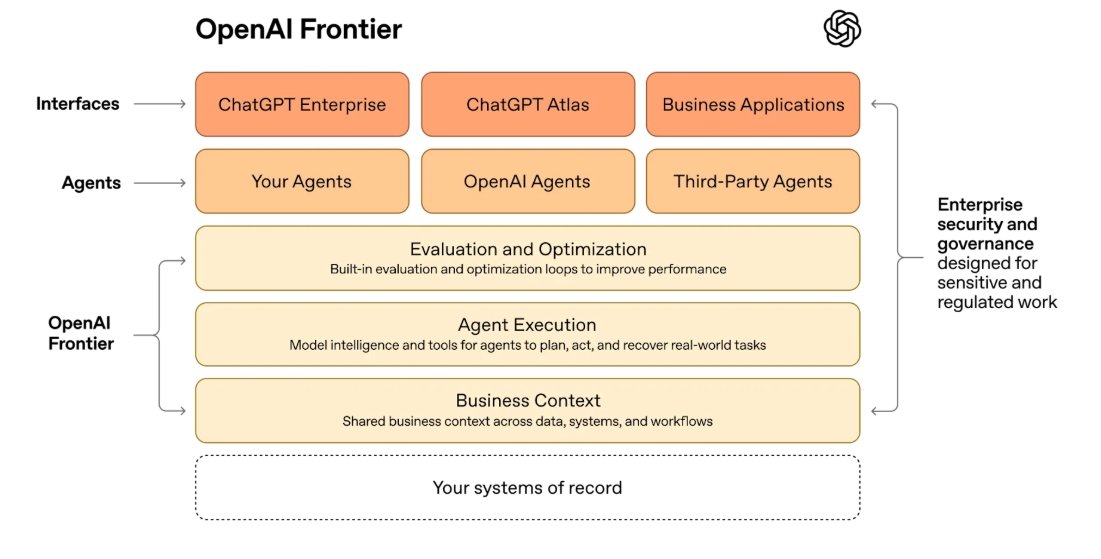
OpenAI is routing enterprise AI deployment through the big consulting firms, and the org chart implications land directly on HR. The company’s new Frontier Alliances program pairs its agent orchestration platform with McKinsey, BCG, Accenture, and Capgemini as the implementation layer for Fortune-scale transformation. Frontier is designed to let AI agents execute workflows across an entire enterprise technology stack, including HR platforms, without human intervention at each step. Oracle and Uber are early adopters. No CHRO appears anywhere in the announcement.
What this means for your business
The absence of HR from this announcement is the tell. When a consulting team walks into a C-suite with an AI orchestration mandate and no explicit CHRO seat at the table, the workflows that get redesigned first tend to be the ones without a visible legal owner in the room. HR’s systems, hiring logic, performance management data, and workforce planning processes are exactly the workflows Frontier is built to touch, and exactly the ones carrying the steepest regulatory exposure if they’re reconfigured by a team optimizing for operational efficiency rather than employment law compliance.
The compliance trap here is structural, not accidental. McKinsey and BCG are world-class at operating model design. They are not employment law firms. AI embedded in hiring or performance workflows triggers obligations under EEOC guidance, a growing stack of state-level algorithmic transparency laws, and the liability theory that courts are now stress-testing in the Eightfold and Workday bias suits. A consulting team can redesign a performance management process around autonomous agents and ship it before anyone flags that the decision logic is opaque to regulators. HR and legal catching that exposure after go-live is the recurring failure mode in enterprise AI deployments, and this partnership structure makes it easier to repeat.
CHROs who treat this as a turf question will lose the argument and deserve to. The case for HR at the table isn’t territorial, it’s that the consulting firms carrying this mandate don’t hold the context that determines whether the deployment is defensible. Cultural change management, employee trust in AI-driven decisions, and the legal perimeter around automated people decisions are not McKinsey’s core product. If the CHRO isn’t positioned as a co-owner of the Frontier rollout before the engagement scope is written, the scope will be written without them, and that’s the moment that actually matters.
Concept deep-dive: Agent orchestration
Agent orchestration is the layer that coordinates multiple AI agents, think of it as air traffic control for software bots, each handling a discrete task across different systems. Rather than one tool doing one job, an orchestration platform like Frontier lets agents pull data from a CRM, trigger an action in an HR system, and escalate edge cases to a human, all in a single automated chain. The business consequence is that entire workflows, not just individual tasks, become candidates for automation.
Based on reporting from How OpenAI alliances with McKinsey, BCG, Accenture impact HR, originally published 2026-02-25 03:00:00.