
Share with your CTO
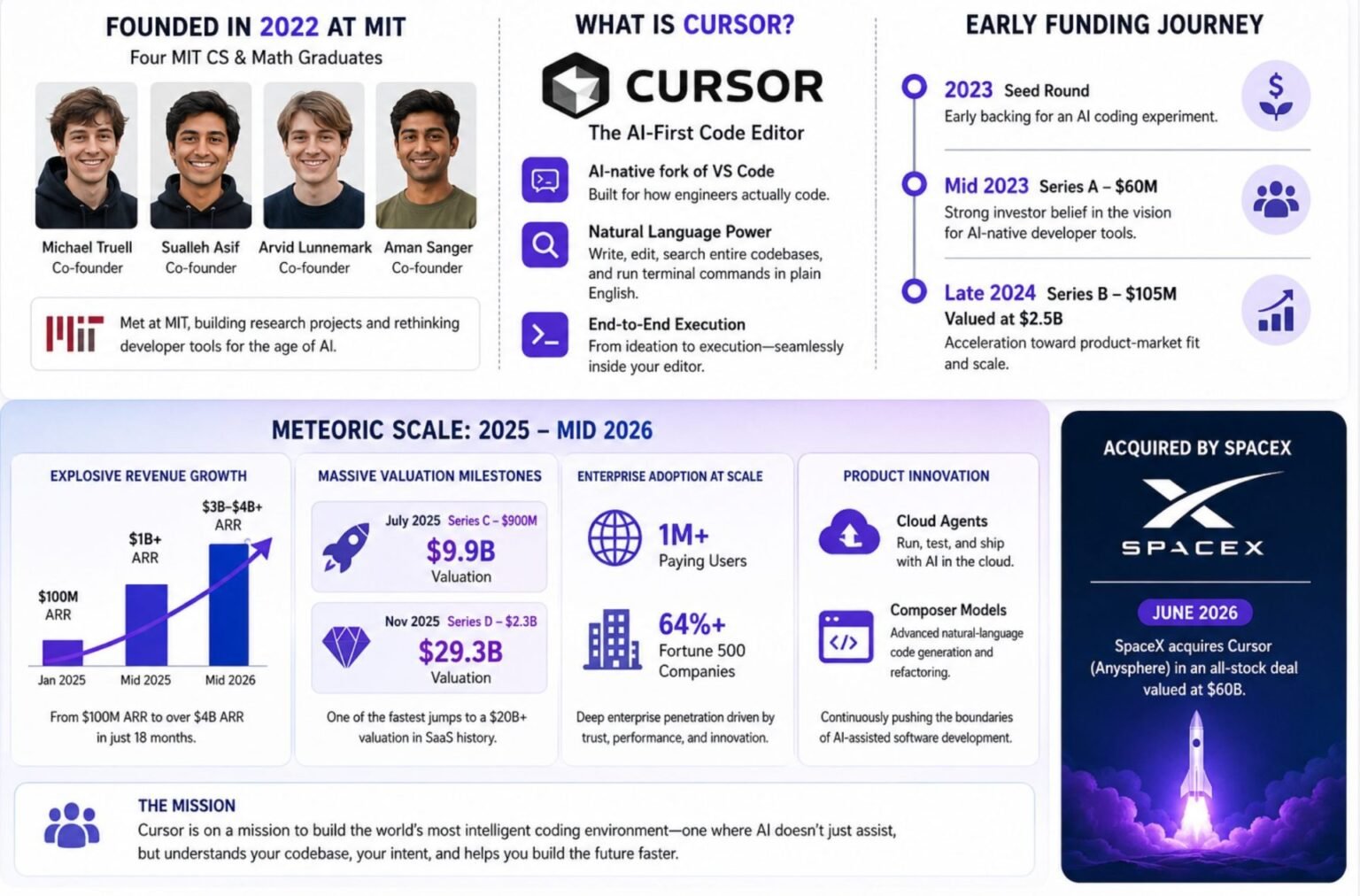
SpaceX is betting that owning the routing layer, not just the models, is where enterprise AI economics get decided. One month after its $60 billion all-stock acquisition of Cursor, the company launched Cursor Router, an intelligent model-routing system that automatically directs each coding request to the most cost-effective AI model for that specific task. Early enterprise partners report 30% to 50% cost reductions while maintaining frontier-level output quality. The system ships in three modes, Intelligence, Balance, and Cost, and is available now on Teams and Enterprise plans.
What this means for your business
Your developers are almost certainly paying frontier model prices for tasks that don’t require frontier models. A code completion or a docstring generation doesn’t need the same compute as architectural reasoning across a large codebase, but without intelligent routing, every request hits the same expensive endpoint. Cursor Router exploits that gap systematically, and 30% to 50% cost reduction on a workload running hundreds of millions of weekly requests is not a rounding error.
The strategic move here is SpaceX using its unique position as a model-neutral intermediary to accumulate routing intelligence that no single model provider can replicate. Because Cursor sits above Claude, GPT-4o, Gemini, and others, it sees which model outputs actually survive into production code versus which get rejected or revised. That production-signal feedback loop is the real asset. It’s what transforms routing from a simple cost-optimization heuristic into a compounding advantage that improves with scale.
The question worth holding: does this routing logic become a moat, or does it become a commodity the moment Anthropic, OpenAI, and Google build equivalent orchestration natively into their own APIs? SpaceX has a time advantage and proprietary training data from real developer workflows, but model providers are not passive infrastructure here. If they start competing on routing quality themselves, Cursor Router’s differentiation collapses faster than the cost savings justify the acquisition price.
Concept deep-dive: Model routing
Model routing is the practice of automatically selecting which AI model handles a given request based on task complexity, required output quality, latency constraints, and cost. It exists because frontier models are overkill, and expensive overkill, for a large share of real workloads. The analogy is airline seat class: you don’t book business class for a 45-minute flight. Routers act as the booking engine. For engineering organizations running AI at scale, routing is where infrastructure cost discipline actually lives, not in negotiating per-token pricing with a single vendor.
Based on reporting from SpaceX Launches Cursor Router to Cut Enterprise AI Costs While Boosting Performance, originally published 2026-07-22 14:57:00.