
Share with your CTO
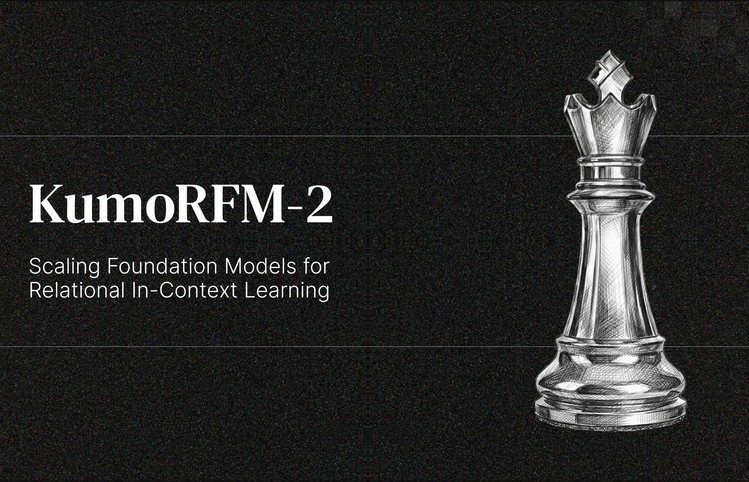
Nvidia has acquired Kumo AI, a four-year-old predictive AI startup, in a deal reported by The Information at roughly $400 million. Kumo’s platform lets enterprises point its models directly at existing data warehouses like Snowflake or Databricks and ask plain-language questions about customer churn, demand forecasting, or inventory behavior, with the models handling data preparation work that traditionally consumes months of engineering time. Customers include Reddit, DoorDash, and Sainsbury’s. All three co-founders have already moved to Nvidia.
What this means for your business
Graph Neural Networks are the core of what Nvidia just bought, and that’s worth sitting with. Where a standard predictive model treats each database row as an isolated fact, a graph neural network maps the relationships between rows, connecting customers to products, products to usage patterns, usage patterns to churn signals. The result is predictions that carry relational context. If your current forecasting stack treats data as a flat table rather than a connected web, you’re working with a structural accuracy ceiling that Kumo was specifically designed to break through.
The acquisition fits a pattern Nvidia has been building for two years: buy the layer that turns GPU compute into enterprise decisions, not just enterprise models. Illumex brought data semantics, Groq brought inference speed, and Kumo brings structured business prediction, the kind that plugs into a CFO’s demand plan or a CMO’s churn model without a six-month data engineering project in between. Nvidia isn’t becoming a software company by accident. It’s assembling the full stack that makes a CTO’s GPU investment defensible to every other C-suite peer.
The vendor risk here is real and immediate. Kumo’s existing customers signed up for an independent platform with a clear integration path to Snowflake and Databricks. Those relationships now run through Nvidia, whose infrastructure ambitions may not align with the neutrality those data warehouse partnerships require. If you’re already evaluating graph-based predictive platforms, the competitive field just narrowed, and the remaining independent vendors in this space will spend the next six months selling hard on exactly that independence. That’s the budget conversation worth having now, before Nvidia’s roadmap for Kumo becomes public.
Concept deep-dive: Graph Neural Networks
A Graph Neural Network (GNN) treats data not as rows in a spreadsheet but as a web of connected nodes, where a customer, a product, and a transaction are all points with explicit relationships between them. A conventional model predicts churn by looking at one customer’s history in isolation. A GNN predicts it by also considering who that customer resembles, what they buy alongside, and how behavior spreads across connected accounts. The business payoff is that context-aware predictions tend to be materially more accurate on complex, interconnected enterprise datasets.
Based on reporting from Nvidia snaps up Kumo AI, a predictive AI startup known for its extreme accuracy, originally published 2026-06-03 03:00:00.