
Share with your CTO
NAVER is making a serious infrastructure bet, scaling its GAK Sejong data center from 55 MW to 200 MW by 2028, with a stated ambition of reaching 1 gigawatt. The capital stack behind this South Korea AI infrastructure expansion is substantial: NVIDIA commits $1 billion directly into NAVER, while Brookfield signs a nonbinding term sheet for up to $9 billion in financing. NVIDIA’s Vera Rubin and Blackwell platforms go in as the compute layer, and NAVER becomes the first Korean member of the NVIDIA Nemotron Coalition for open model development.
What this means for your business
For CTOs outside South Korea, the reflex is to file this as a regional story. That reflex is wrong. What NAVER is building is a sovereign AI factory, compute infrastructure owned and operated by a national internet company rather than a hyperscaler, and the capital structure here is the template other non-US technology companies will follow. If your organization sources AI compute from a hyperscaler today, this deal illustrates a credible alternative path that is starting to attract institutional capital at scale.
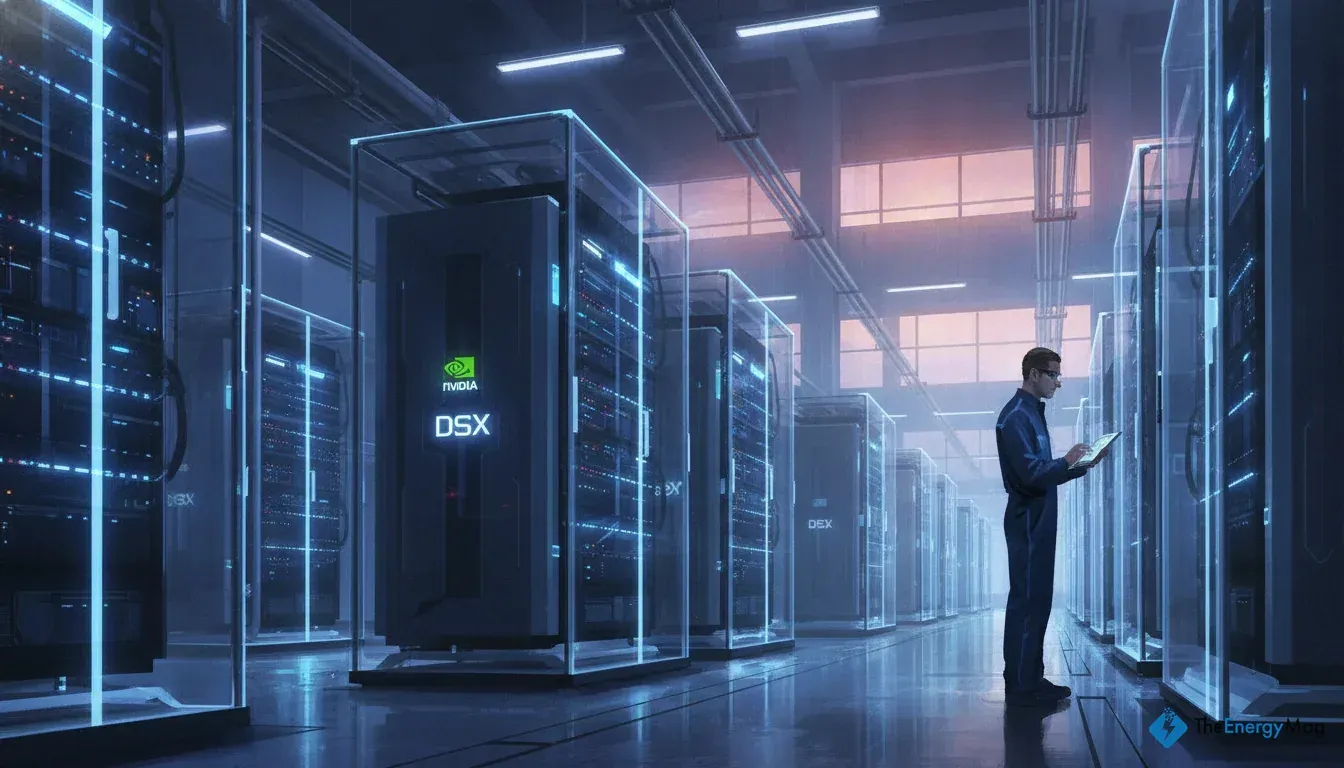
The NVIDIA DSX platform deserves attention as a concept in its own right. It’s not just hardware supply; it’s a full-stack offering covering chips, systems, software, and facility operations, with DSX MaxLPS optimizing throughput per megawatt and DSX OS handling lifecycle and multi-tenant management. NVIDIA is effectively selling a franchise model for AI factories, where the operator gets the brand, the tooling, and the supply chain relationship in one package. That shifts the build-vs-buy calculus for any CTO evaluating large-scale model training or inference infrastructure, because the “build” option now comes with a much more complete recipe than it did two years ago.
Brookfield’s $9 billion term sheet is the number that should focus attention on the budget conversation heading into next planning cycle. Infrastructure capital at that size, flowing toward AI compute outside the US hyperscaler ecosystem, signals that institutional investors have concluded sovereign AI infrastructure is a durable asset class, not a speculative one. CTOs at enterprises in markets with their own large-language-model ambitions, whether in Europe, Southeast Asia, or Latin America, now have a financing precedent to point to when defending a major compute investment. I’d revise this read if Brookfield’s term sheet lapses without conversion, which would suggest the economics don’t survive due diligence at this scale.
Concept deep-dive: AI factory
An AI factory is a data center purpose-built for training and serving large AI models rather than general cloud workloads, optimized from the power delivery and cooling layers up through the networking and software stack. Think of it as the difference between a general-purpose warehouse and a semiconductor fab: both store or process things, but one is engineered around a single, demanding production process. The business relevance is that AI factories require capital commitments and operational expertise that general cloud procurement doesn’t prepare most enterprise teams for.
Based on reporting from NAVER, NVIDIA, and Brookfield to expand South Korea’s AI infrastructure to 200 MW by 2028, originally published 2026-07-25 02:02:00.