
Share with your CHRO
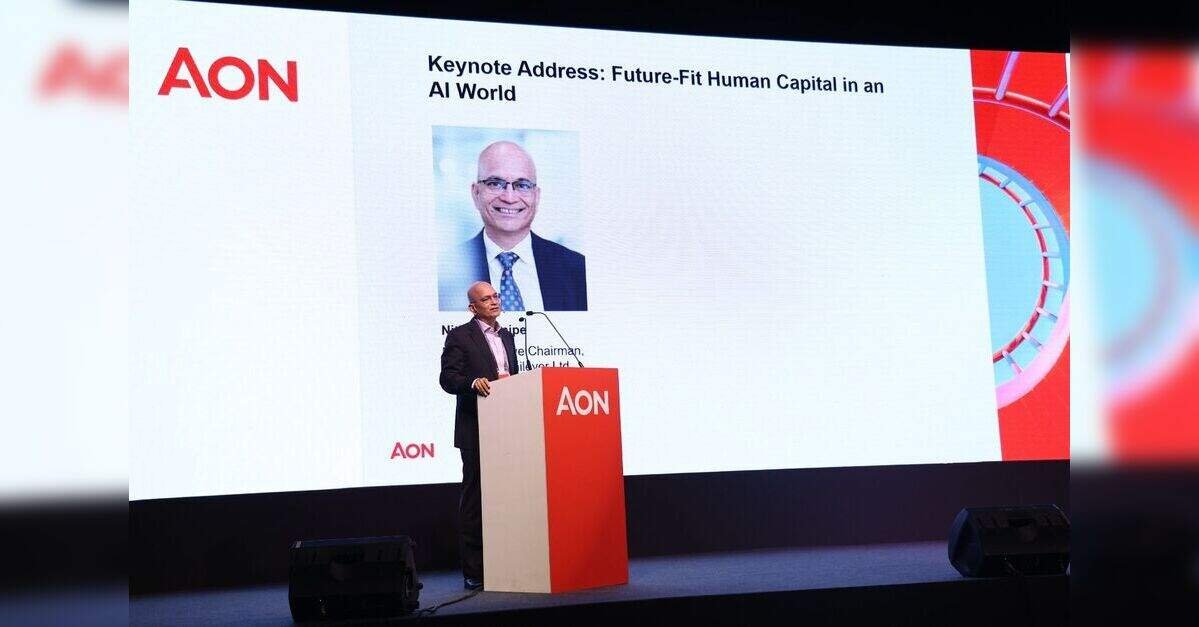
At Aon’s 20th Human Capital Conference in Mumbai, the organizing argument was blunt: AI is no longer a technology deployment problem, it’s an organizational design problem. Nitin Paranjpe of Hindustan Unilever and Aon’s own regional leadership each pushed the same thesis, that hierarchies built for slow-moving information and scarce expertise are structurally mismatched to AI-enabled decision-making. Aon’s research also flagged a tightening squeeze on total rewards strategy, with salary budget growth slowing while healthcare costs rise and employees expect more personalized benefits.
What this means for your business
The companies most exposed here are ones that have AI pilots running but no corresponding change to how leaders are evaluated, how decisions get made, or how work is actually structured. If your performance management system still treats headcount as the primary lever and your leadership competency model hasn’t been touched since your last HRIS upgrade, you’re measuring your people against a job architecture that AI is quietly rendering obsolete. That gap is where workforce strategy quietly fails before anyone names it as such.
The productivity reframe at the conference deserves scrutiny, because Aon, as a firm that sells workforce advisory and benefits consulting across the region, has an obvious interest in positioning AI as augmentation rather than reduction. That tilt probably flatters the timeline on worker transition. But the underlying claim holds regardless: organizations that define AI success purely by headcount reduction are optimizing for a one-time cost event while missing the compounding returns from capability-building. The harder management question is what “higher-value work” actually means for roles below the director level, and very few organizations at the conference appeared to have a concrete answer.
The rewards pressure is the most immediately actionable signal here. Slower salary budgets, rising healthcare costs, and employees demanding personalized benefits aren’t three separate trends, they’re a simultaneous compression on the total comp envelope that CHROs have to resolve before the next annual review cycle. If your benefits architecture is still designed around demographic age bands rather than life stage and health profile, you’re paying for breadth you’re not getting credit for. The CFO will eventually notice the spend; the question is whether the CHRO shapes the redesign first or inherits a cost-cutting mandate instead.
Based on reporting from Transforming Leadership in an AI-Driven World: Insights from Aon’s Human Capital Conference, ETHRWorld, originally published 2026-07-20 03:00:00.