
Share with your CHRO
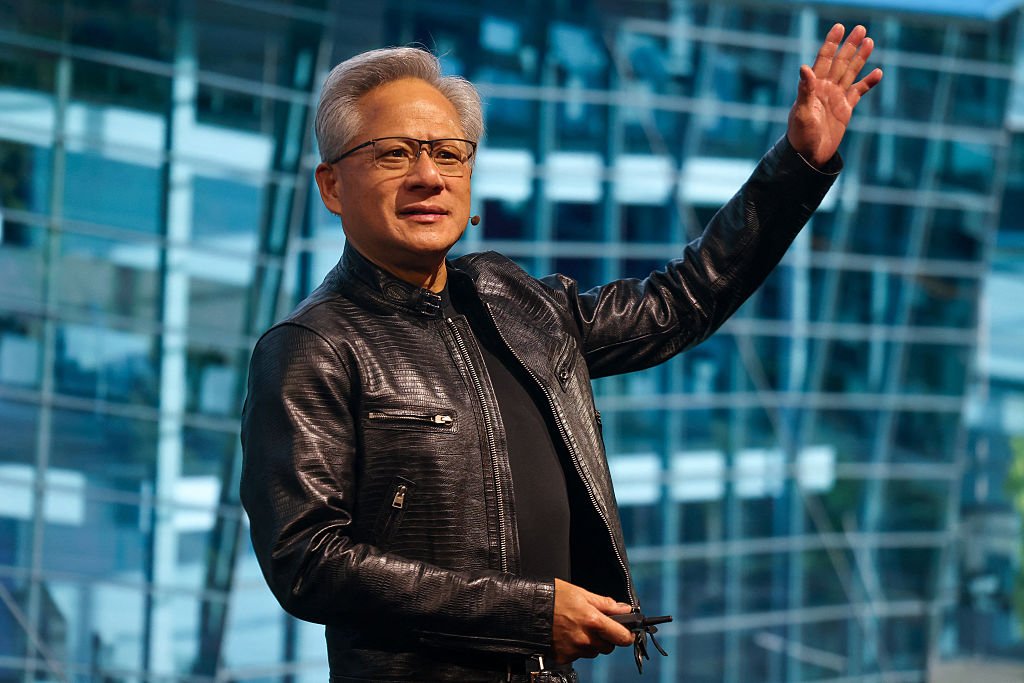
Jensen Huang, speaking at Davos alongside BlackRock’s Larry Fink, is betting that the AI infrastructure buildout will create more high-paying jobs for electricians, steelworkers, and construction workers than for computer scientists. With global tech companies expected to spend $7 trillion on AI infrastructure by 2030, McKinsey estimates the U.S. alone needs 130,000 additional electricians and 240,000 construction laborers by decade’s end. Ford CEO Jim Farley puts current shortages at roughly 600,000 factory workers and 500,000 construction workers, and warns entry-level white-collar hiring has already dropped 50% since 2019.
What this means for your business
If your company is building, co-locating, or expanding data center capacity, the labor constraint isn’t the GPU allocation or the power purchase agreement. It’s the licensed electrician who can actually connect the thing. CHROs at enterprises running significant infrastructure programs are already on the wrong side of this shortage, and the organizations that treat skilled trades sourcing as a facilities problem rather than a talent strategy problem will feel it first in project timelines and cost overruns.
Huang’s framing lands most usefully not as workforce cheerleading but as a supply signal. The trades shortage predates AI investment by years, and a $7 trillion capital wave is now competing for a pool of workers that was already undersupplied. That doesn’t mean wages simply rise uniformly. It means project sequencing matters enormously. Companies that can’t lock in skilled trade contractors early, through preferred vendor relationships, apprenticeship partnerships, or longer-term agreements with construction firms, will find themselves bidding against hyperscalers with deeper pockets and more predictable demand. The infrastructure arms race has a human capital bottleneck at its base, and Huang, whose incentive is to accelerate GPU adoption, has every reason to talk the buildout up while that specific constraint stays invisible in the headline number.
Farley’s warning about white-collar displacement is the other side of this rebalancing, and it lands directly on the CHRO’s planning horizon. If entry-level corporate hiring has dropped 50% since 2019 and AI keeps compressing that further, the internal talent pipeline assumptions baked into most five-year workforce plans are already wrong. The organizations that will navigate this best aren’t the ones that solve “trades vs. knowledge work” as a branding exercise. They’re the ones that audit which roles in their own shop are being hollowed out by AI automation and redirect recruiting investment before the mismatch becomes a retention crisis in disguise.
Concept deep-dive: Power Purchase Agreement
A power purchase agreement, or PPA, is a long-term contract between a data center operator and a utility or energy generator that locks in electricity supply and pricing, sometimes decades out. Data centers consume enormous and predictable amounts of power, so operators use PPAs to hedge against price volatility and guarantee capacity. In the AI infrastructure buildout, securing a PPA is often a precondition for breaking ground, which means energy procurement is now a strategic function sitting squarely in operations and real estate planning.
Based on reporting from Nvidia CEO Predicts a Massive AI Infrastructure Boom. Skilled Trade Workers Could See Six Figure Opportunities., originally published 2026-08-03 11:33:00.