
Share with your CIO
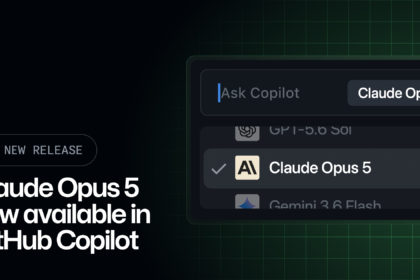
Syracuse University is treating AI fluency as infrastructure, not a pilot program. The university’s Information Technology Services has expanded its campuswide Claude Enterprise license to include Claude Code, an agentic coding tool for developers, and Claude Cowork, an agentic task-delegation tool for non-technical users. Both run under a privacy-first framework that prohibits Anthropic from training on university data. Access is gated by a training video, not a department budget or a waitlist. Chief Digital Officer Jeff Rubin framed it plainly: the goal is comfort with AI tools before the rest of the world forces the issue.
What this means for your business
The deployment pattern here matters more than the institution. Syracuse isn’t deploying AI to one department or one function. It’s running a single enterprise agreement that covers developers writing code and administrators synthesizing documents, with the same governance wrapper on both. That’s the architecture most enterprises claim they want and almost none have actually shipped. The university just made it concrete.
Claude Cowork’s unattended scheduling capability is the detail worth sitting with. An AI agent that can continue running tasks on a schedule, working across files, tools, and systems without a human in the loop, crosses from assistant into autonomous worker. The same playbook ran during the RPA wave of 2016 to 2020, when enterprises discovered that automating multi-step processes created new failure modes nobody had mapped. The difference this time is that the agent can handle ambiguous inputs, which raises the stakes on what data you let it touch and what decisions you let it make without review.
The signal worth watching is whether enterprise software vendors start treating “agentic tier” as a standard license category the way they treat SSO or audit logging. Syracuse structured this as an enterprise agreement upgrade, not a new procurement. If Anthropic can replicate that motion at scale, the competitive pressure on Microsoft Copilot and Google Workspace AI to match the packaging accelerates faster than the underlying model competition does.
Concept deep-dive: Agentic AI
Agentic AI refers to systems that don’t just respond to a single prompt but execute sequences of actions autonomously to complete a goal. They plan steps, use tools, read and write files, call APIs, and loop until the task is done. Think of the difference between asking a contractor a question versus handing them a key and a project brief. The business connection is real: agentic tools can compress multi-hour knowledge-work tasks to minutes, but they also act on your data and systems without per-step human review, which makes the governance layer the actual product decision.
Based on reporting from Syracuse University Bolsters Claude Enterprise Licenses with Claude Code and Claude Cowork, originally published 2026-08-05 11:23:00.