

Share with your CTO
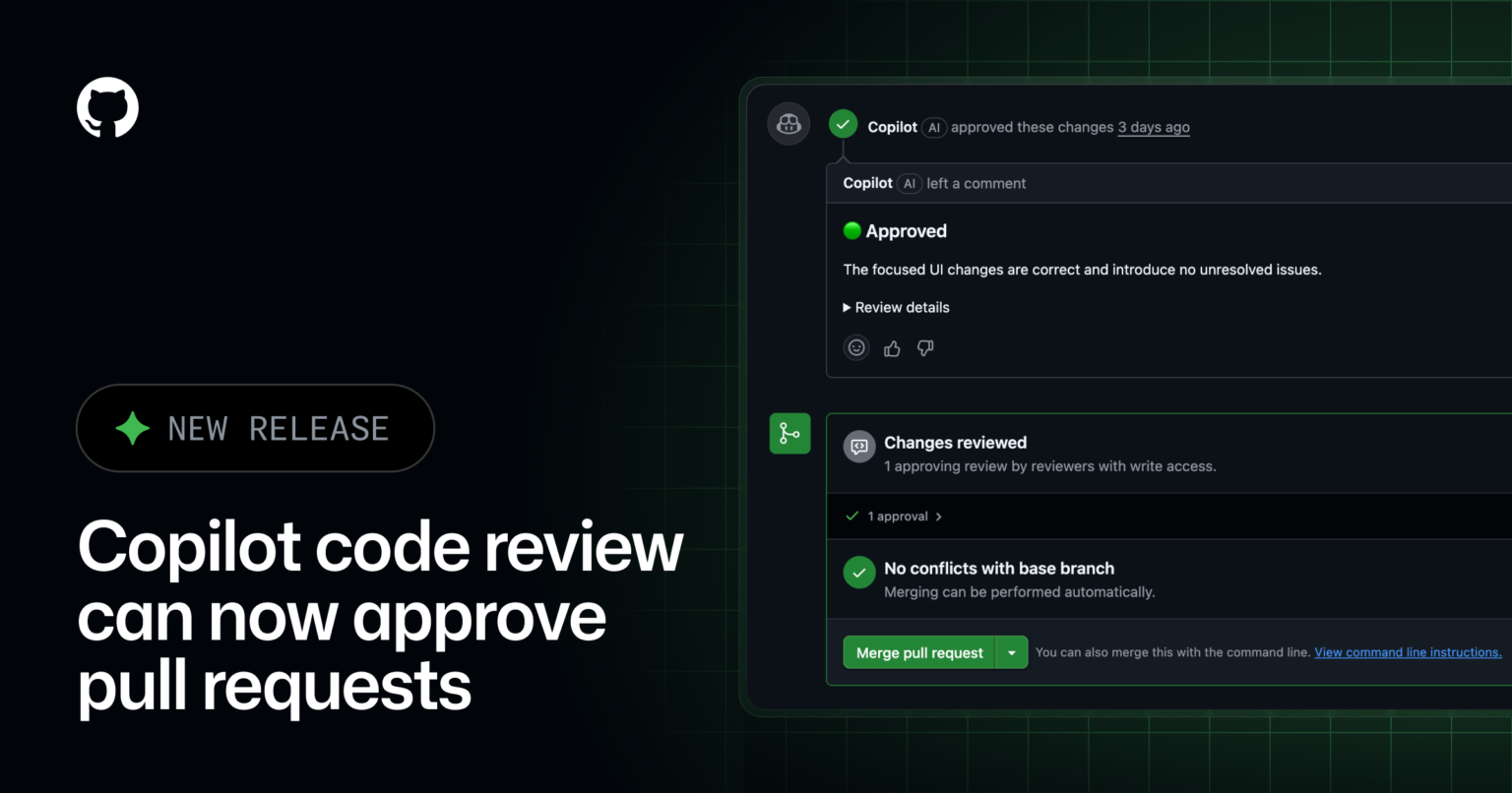
GitHub is letting Copilot do more than flag problems in code reviews. It can now formally approve pull requests, counting toward a repository’s required-approvals threshold. The feature is off by default and configurable at three levels: enterprise, organization, and repository, including path-level restrictions on what Copilot is permitted to sign off on. If new commits arrive after Copilot approves, that approval is dismissed automatically, matching how human reviewer approvals work. Copilot pull request approvals are in public preview across Pro, Pro+, Max, Business, and Enterprise plans.
What this means for your business
GitHub is repositioning Copilot from advisor to gatekeeper. That is a meaningful line to cross. An AI that comments on code is a productivity tool. An AI whose approval unblocks a merge is part of your software delivery control plane. Engineering teams running CI/CD pipelines at scale will feel the difference immediately: routine PRs that currently queue behind busy senior engineers can ship faster, without a human bottleneck at the review step.
The three-level configuration hierarchy is doing a lot of work here, and it deserves scrutiny before any rollout. Path-level restrictions at the repository layer mean you can authorize Copilot to approve changes to test scaffolding or documentation while keeping it off payment processing or authentication code. That granularity is the right design. But most engineering organizations don’t have clean path taxonomies today, and “we’ll configure it carefully” is exactly what gets skipped during a rushed enablement push. The audit question is who owns that configuration and whether it’s version-controlled like the rest of your infrastructure.
The signal worth watching: how GitHub handles Copilot approval logs in compliance-sensitive environments. SOC 2, ISO 27001, and regulated-industry audit trails typically require human attestation on code changes. If Copilot’s approval appears in the commit record as a machine actor rather than a human approver, that may satisfy the tooling but not the auditor. That ambiguity will surface in the first enterprise compliance review that touches a Copilot-approved merge, and it’s better to answer it in policy now than in an audit finding later.
Concept deep-dive: Required-approvals rules
A required-approvals rule is a branch protection setting that prevents a pull request from merging until a minimum number of designated reviewers have formally approved it. It exists because code review without enforcement is advisory at best. The analogy is a four-eyes principle in finance: no transaction posts without two signatories. Copilot’s approval can now count as one of those signatories, which means the AI is no longer just a reviewer in the conversation. It’s a control in the access policy.
Based on reporting from Copilot code review can now approve pull requests, originally published 2026-09-01 15:25:00.