

Share with your CHRO
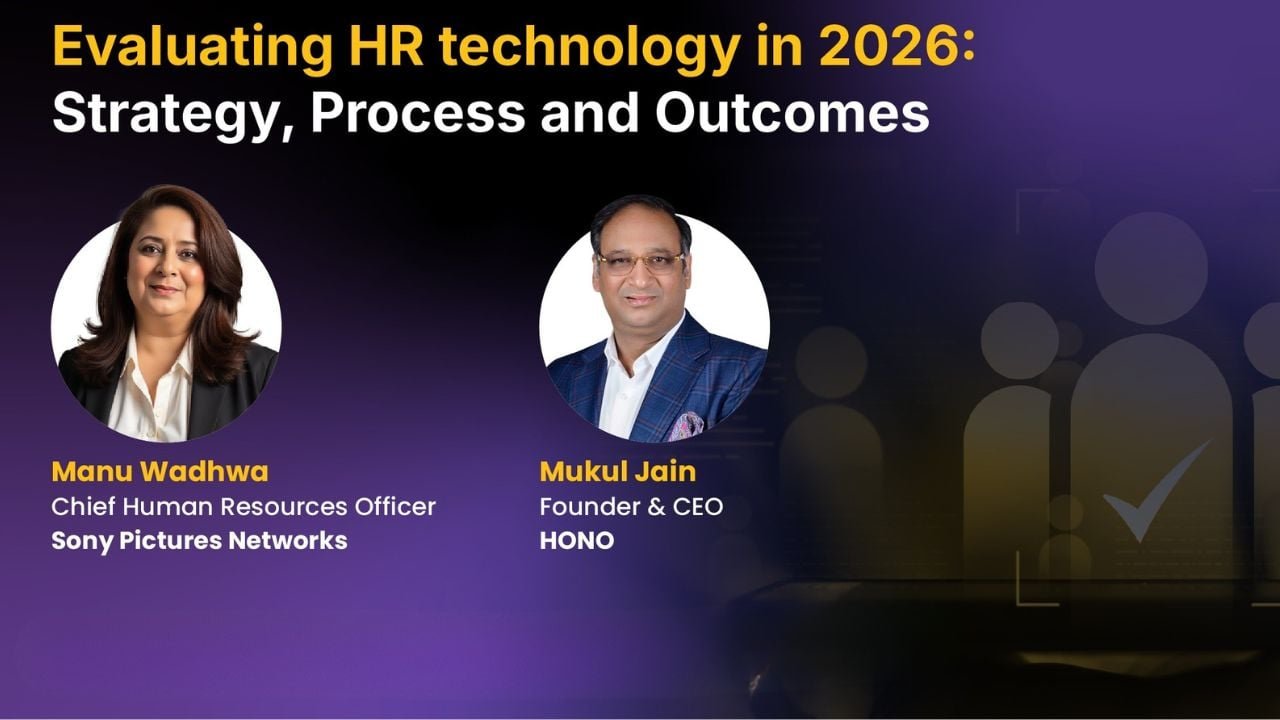
The dominant procurement habit in HR technology, feature checklists and capability grids, is the wrong unit of analysis for 2026. That’s the central argument in this People Matters conversation between Sony Pictures Networks CHRO Manu Wadhwa and HONO founder Mukul Jain. Their case: an HRMS should be evaluated as core enterprise infrastructure, the connective layer linking talent data to capital allocation, rather than as a digitized filing cabinet. The practical threshold Wadhwa sets is usefully concrete: a manager should complete a leave or performance workflow on a Monday morning without asking anyone for help.
What this means for your business
The organizations most exposed to this argument are the ones mid-cycle on an HRMS renewal who are still running the old playbook. If your evaluation committee is scoring vendors on feature breadth, you are optimizing for the wrong variable. The conversation at Sony Pictures Networks points to a different sorting criterion: can this platform sit at the center of a broader data architecture, ingesting signals from finance, CRM, and operations, and return decisions rather than reports? That question cuts differently depending on whether your current system is genuinely integrated or just adjacent to the business.
The data foundation claim deserves scrutiny, because it’s where vendor-sponsored conversations tend to skip the hard part. Wadhwa’s point that you cannot bolt agentic AI, meaning autonomous software agents that execute multi-step workflows without human hand-holding, onto a broken core is correct and widely ignored. The recurring failure mode looks like this: a company invests in predictive attrition tools while its underlying headcount data has duplicate records, mismatched cost centers, and payroll exceptions that nobody has reconciled in three years. The AI layer doesn’t fix that. It amplifies it. The prerequisite isn’t a new platform; it’s data hygiene that most enterprises haven’t budgeted for honestly.
The ROI reframe here, shifting from time-saved to revenue impact per talent decision, is the right direction for a boardroom conversation. But the gap between the argument and the evidence is worth naming. HONO’s participation means this discussion lands closer to a product pitch than an independent audit, which tilts the timeline optimism and softens the implementation risk. The question your renewal conversation should force is not whether predictive talent analytics can theoretically tie to revenue, but whether your organization has the cross-functional data governance to make that connection real rather than a dashboard that flatters HR and informs nobody.
Concept deep-dive: Agentic AI in HR workflows
Agentic AI refers to software that doesn’t just answer questions but takes sequences of actions autonomously, think of it as the difference between a search engine and an employee who reads the search results and then files the paperwork. In an HRMS context, an agent might detect a performance pattern, cross-reference open roles, draft a development plan, and route it for approval without a human initiating each step. The business risk is that agents inherit whatever data quality and access controls the underlying system has, clean or not.
Based on reporting from Evaluating HR technology in 2026: Strategy, process and outcomes, originally published 2026-06-17 03:00:00.