


Share with your CTO
Buildots is betting that construction’s chronic schedule-overrun problem is an AI data problem, not a management one, and $130 million in fresh capital is the proof point. The Israeli computer vision startup, founded in 2018 by three Talpiot program veterans, has now raised $297 million total and counts Intel, Bouygues, and Mortenson among its clients. The funding round was led by O.G. Venture Partners with Lightspeed and Intel Capital participating. The company claims a 15% average reduction in project duration, and its immediate growth target is data center construction.
What this means for your business
If your organization is building or expanding data center capacity, the question this funding round raises isn’t whether Buildots works, it’s whether your construction partners are already using it or will be forced to. The company’s client list skews toward large general contractors and developers, which means the adoption decision may arrive at your door through your vendor’s workflow rather than your own procurement process. CTOs managing capital programs should ask that question before the next site visit, not after the first delay.
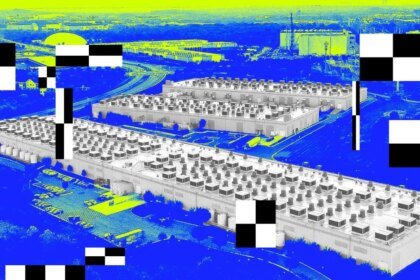
The data center angle in CEO Roy Danon’s quote is deliberate and worth taking seriously. Data center projects are uniquely punishing when schedules slip: committed power delivery dates, hardware procurement windows, and hyperscaler SLAs all stack pressure that a commercial office building never faces. Buildots’ model, comparing photographic site documentation against 3D construction plans every few days to catch deviation early, is essentially a continuous audit of physical progress. Eight years of training data across hundreds of construction types gives the system real classification depth, not a demo trained on a handful of project types.
The investor framing comparing Buildots to Mobileye is a VC talking its book, but the underlying structural claim holds: Mobileye won by embedding into OEM workflows so deeply that the camera became a manufacturing assumption, not a purchasing decision. If Buildots achieves the same with major general contractors, the enterprise buyer’s leverage over the tool disappears. The leading indicator to watch is whether tier-one contractors start writing Buildots into their standard project delivery methodology. Once that happens, the negotiation is over before it starts.
Concept deep-dive: Computer vision progress tracking
Traditional construction progress tracking relies on manual site walks and self-reported updates from subcontractors, which creates a lag between reality and the schedule. Computer vision progress tracking substitutes periodic photography and video, analyzed by AI trained to recognize specific work types (poured concrete, installed conduit, hung drywall) against a 3D building model and a planned timeline. Think of it as a spell-checker for physical construction: it flags what’s missing or misaligned before the error compounds into a structural or schedule problem.
Based on reporting from Israeli AI startup Buildots completes $130m. funding round, originally published 2026-09-15 14:34:00.