
Share with your CIO
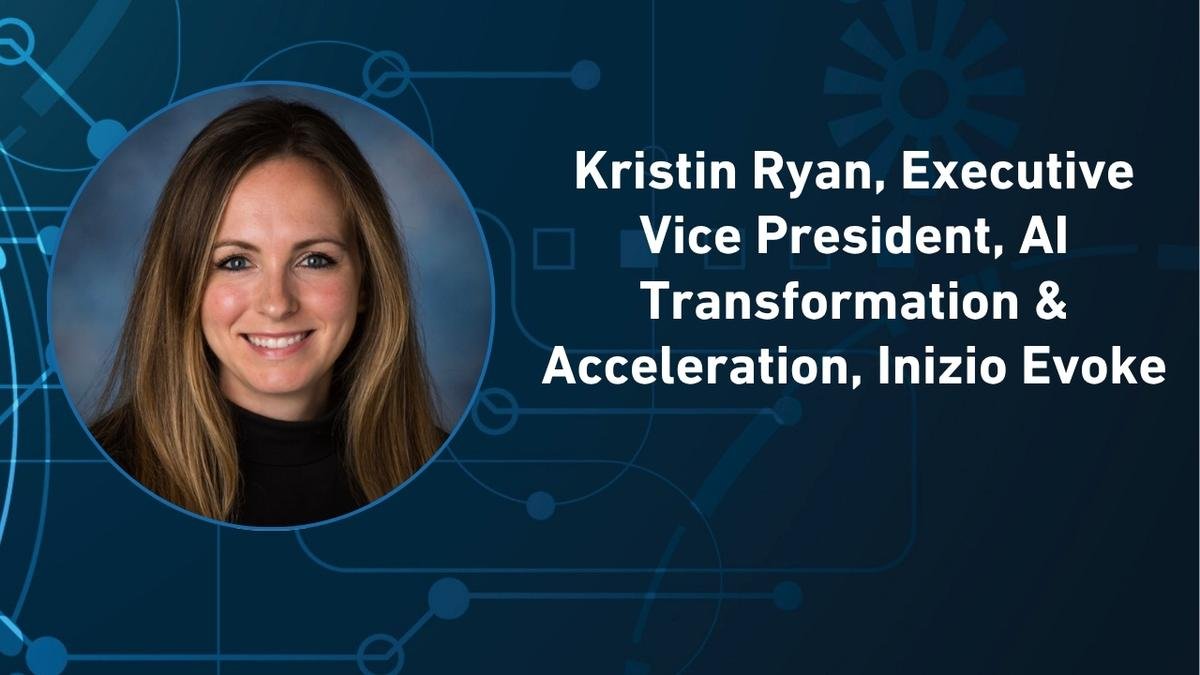
Pharma’s AI deployments are stuck optimizing individual tasks rather than redesigning the workflows that connect them, and Kristin Ryan, EVP of AI transformation at Inizio Evoke, makes the case that this is the actual constraint. McKinsey’s analysis of 270 life sciences workflows found that 75 to 85 percent of pharmaceutical workflows contain tasks AI agents could augment or automate. The FDA and EMA published joint good-AI-practice principles in January 2026, pressing for human-centric design and risk-based oversight as agentic coordination grows.
What this means for your business
The organizations most exposed to this argument are ones that have declared AI success on the basis of time saved per task. If your current AI metrics stop at throughput, that’s the tell. Pharma CIOs who have deployed point tools across medical, regulatory, and commercial functions without connecting them are, by Ryan’s framing, running faster on a treadmill rather than moving forward. The question isn’t whether your tools work; it’s whether the handoffs between them still destroy the context those tools generate.
Ryan’s core claim, written from inside a consultancy that sells AI transformation services and therefore has an incentive to make self-service tool adoption sound insufficient, is still analytically sound. The pattern she identifies, where patient access signals never reach content strategy and field data never feeds back into planning, is a genuine structural failure rather than a capability gap. Agentic AI, meaning AI that can maintain context across steps and coordinate actions across systems rather than just completing a single prompt, doesn’t fix that failure automatically. It amplifies it. A more connected system that still hands off to siloed owners just propagates errors faster and at greater scale.
The FDA-EMA joint principles are the detail most executives will underweight. They apply to drug development contexts, not commercial marketing, but their insistence on clearly defined human responsibilities and risk-based oversight signals where regulators are heading as AI becomes more capable. CIOs building agentic workflows in pharma’s commercial operations today are building ahead of a governance framework that will almost certainly arrive. The ones who embed human accountability at the architecture level now, rather than bolting it on after a compliance event, will own a structural advantage that is genuinely hard to replicate quickly.
I’d revise this read if pharma enterprises start demonstrating measurable outcome improvements, not just efficiency gains, from connected workflow deployments at scale. Until that evidence exists, the safer position is that most organizations are still in the efficiency trap Ryan describes, spending real money to run existing workflows faster while the actual value sits in the redesign they haven’t started.
Concept deep-dive: Agentic AI
Agentic AI refers to systems that don’t just respond to a single prompt but maintain context, retrieve information from connected sources, and execute sequences of actions across multiple tools or systems, think of it as the difference between a calculator and an assistant who reads your calendar before scheduling. In pharma, that means an agent could carry a patient-identified signal through audience research, content strategy, and medical review without losing the original context at each handoff. The governance risk is proportional to the autonomy granted.
Based on reporting from The AI Efficiency Trap: Why Faster Tasks Alone Won’t Transform Life Sciences, originally published 2026-11-06 08:45:00.