

Share with your CEO
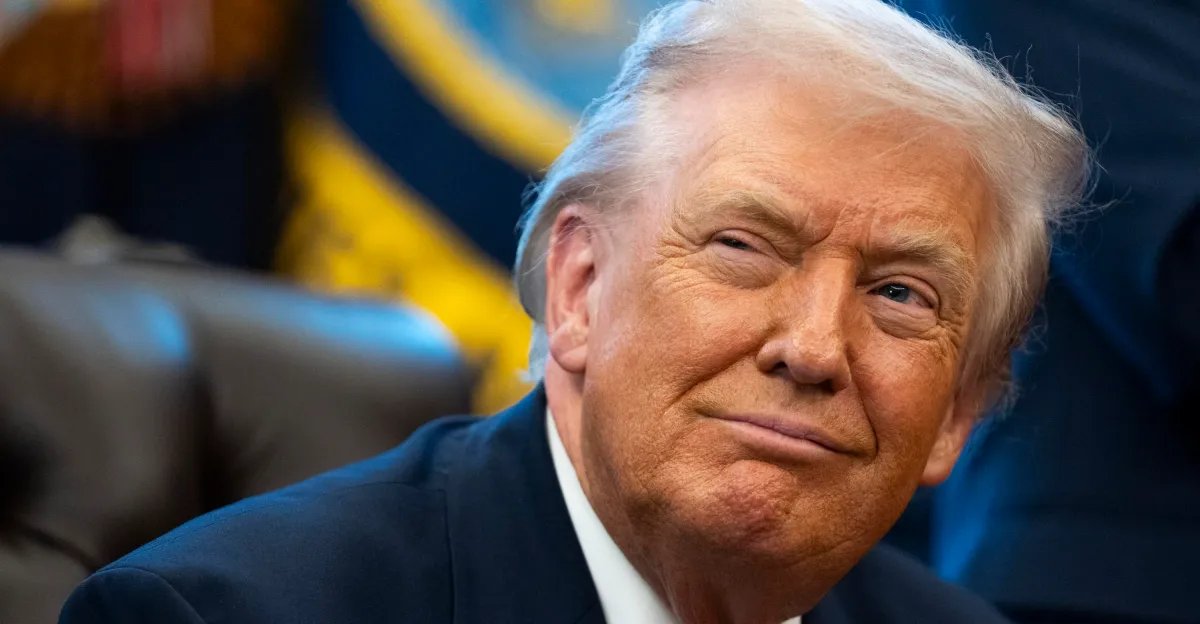
The Trump administration has officially banned the term “artificial intelligence” from federal policy documents, websites, and press releases, replacing it with “Super Intelligence” via an executive order signed Tuesday. Trump, flanked by Nvidia’s Jensen Huang and Elon Musk after a White House tech CEO luncheon, framed the rebrand as a confidence move, not a technical one. Existing regulations stay intact, but federal officials are expected to drop “AI” entirely in relevant contexts. The administration also signaled a strong preference for industry self-regulation over new federal rules.
What this means for your business
The companies most exposed here aren’t the hyperscalers, they’re the ones whose federal contracts, grant applications, or compliance frameworks are built around the statutory definition of “artificial intelligence” under 15 U.S.C. 9401. That legal definition covers a specific, broad category of machine-based systems. “Superintelligence,” by contrast, is a term of art from AI safety research meaning a system that surpasses human cognitive ability across every domain. Using it as a synonym for all AI isn’t just imprecise; it creates a definitional gap that auditors, procurement officers, and agency counsel will have to paper over in every federal engagement.
The self-regulation signal is the more consequential policy move. Trump said there’s “a belief that there should be tremendous self-regulation” and pointed to the DOJ and FBI as the backstop, which is not a regulatory framework, it’s an enforcement posture. For enterprise vendors selling into government, that’s actually a permissive environment in the near term. But it also means the floor is litigation and criminal exposure rather than proactive compliance standards, and companies that built government AI practices around a forthcoming federal governance framework should recalibrate what that framework will actually look like under this administration.
The rebrand will create friction before it creates clarity. Federal RFPs, agency AI policies, and Congressional budget language all currently use “artificial intelligence” as a defined term. Any enterprise with active federal business will spend the next 12 to 24 months watching contracting officers decide whether their AI-labeled products qualify as “Super Intelligence” under the new nomenclature, or whether they fall into an undefined gap. That’s not a theoretical risk; it’s the kind of ambiguity that delays procurement cycles and gives legal teams veto power over deals that should close. I’d revisit this call if OMB issues binding guidance that cleanly maps the new term to the existing statutory definition.
Concept deep-dive: Superintelligence
Superintelligence, in its technical meaning, describes a hypothetical AI system that exceeds the best human performance across every cognitive task simultaneously, science, law, strategy, creativity, all of it. Think of it as the ceiling of the capability ladder, not a label for current systems. Today’s enterprise AI, including large language models and autonomous agents, sits well below that bar. The administration’s decision to apply this term to all AI is a branding choice, not a technical classification, which is exactly why it creates regulatory and procurement ambiguity.
Based on reporting from Trump orders US government to call AI ‘Super Intelligence’, originally published 2026-09-29 18:25:00.