


Share with your CISO
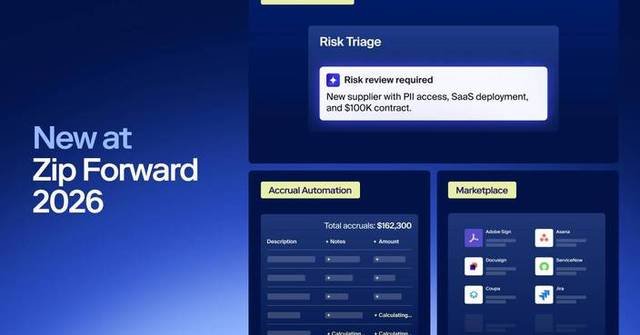
Zip is betting that procurement is the right place to catch AI vendor risk before it becomes a security incident. At its Zip Forward 2026 conference, the company expanded its AI Risk Orchestration offering into a full third-party risk management platform, embedding vendor security scoring, continuous monitoring, and automated reassessment directly into the purchasing workflow. Customers including Mutual of Omaha, Stripe, and Rivian report 85% faster review cycles, 98% questionnaire completion rates, and up to 90% less manual review work since the product launched in 2025.
What this means for your business
The CISO most exposed to this story is running a traditional TPRM program where security reviews happen in a separate queue, disconnected from the moment someone decides to buy. That structural gap is where most AI vendor risk actually enters the enterprise, not through a failed audit but through a purchase that cleared procurement before security ever saw the request. If that pattern describes your shop, Zip’s argument lands squarely on your current process design.
The genuinely interesting claim Zip is making isn’t about speed metrics. It’s architectural. Most enterprises have built vendor risk as a downstream filter, something that catches a purchase after business intent has already hardened. Zip’s thesis is that embedding risk scoring at the intake moment, before the budget commitment is made and before the business unit is emotionally invested in the vendor, changes the negotiating posture and the outcome. The numbers suggest the approach works on throughput. What they don’t yet demonstrate is whether earlier-stage risk visibility actually changes which vendors get selected or merely documents the risk on the ones that get approved anyway.
There’s a second dynamic worth watching. Zip’s customer list now includes Anthropic and OpenAI as procurement platform users, which means the company handling your AI vendor risk reviews is itself deeply embedded in the AI vendor ecosystem it’s helping you assess. That’s not disqualifying, but it shapes what “independent” risk scoring means in practice. The falsification condition here is whether Zip publishes enough about its scoring methodology for enterprise security teams to validate that the risk framework reflects their own policies rather than a vendor-friendly baseline.
Concept deep-dive: Third-Party Risk Management (TPRM)
TPRM is the process of assessing whether the outside vendors a company relies on meet its standards for security, privacy, legal compliance, and operational resilience. Think of it as a background check that keeps running after the hire. It exists because every vendor with access to your data or systems is an extension of your attack surface. The AI procurement context sharpens this considerably, since AI vendors often handle sensitive data, proprietary workflows, and model outputs that can’t easily be audited after the fact.
Based on reporting from Zip Forward 2026: Zip Expands AI Risk Orchestration to Make Procurement the Enterprise’s First Line of Defense Against AI Vendor Risk, originally published 2026-09-16 11:02:00.