
Share with your CDO
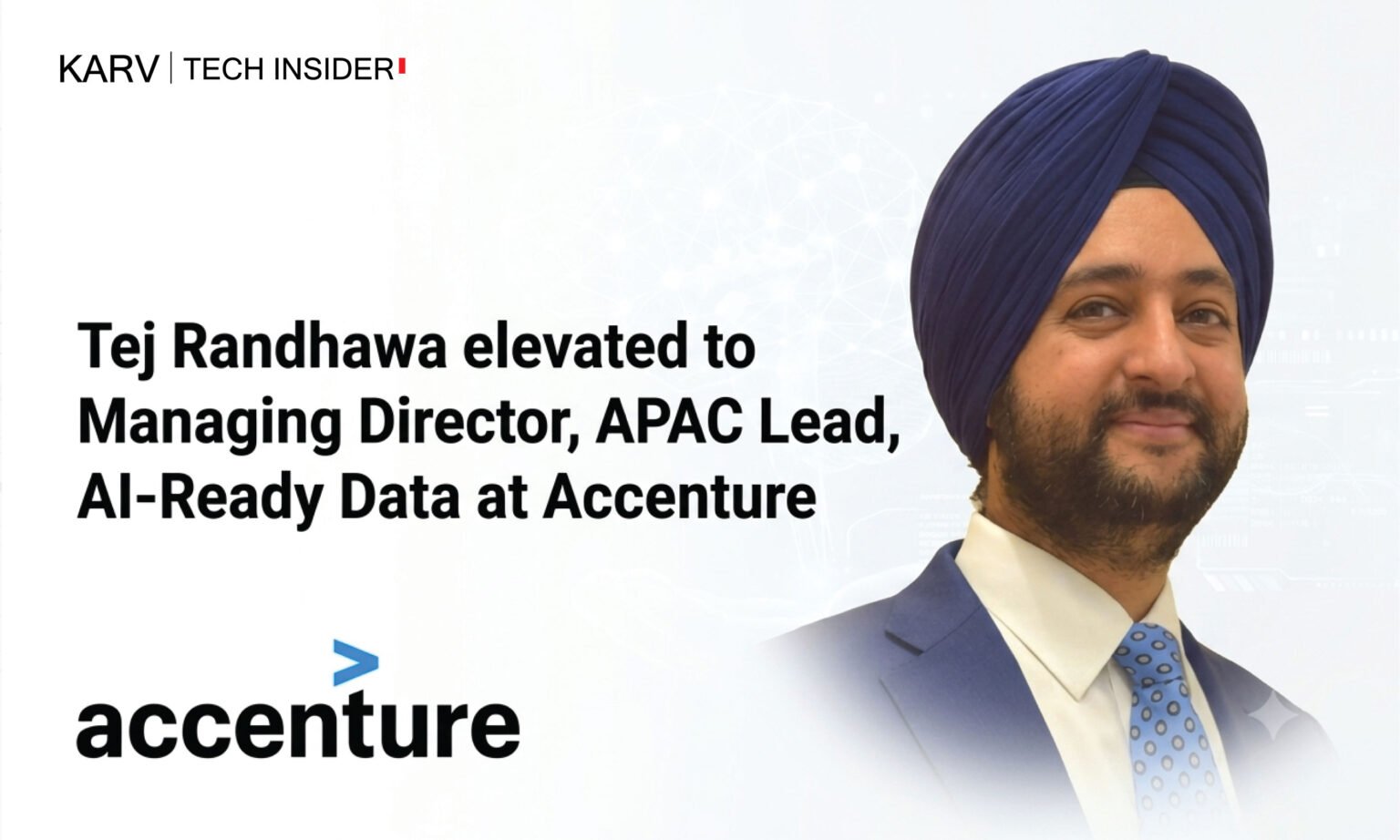
Accenture is betting that the bottleneck blocking enterprise AI scale isn’t models, it’s data architecture. The firm has promoted Tej Randhawa to Managing Director, APAC Lead for AI-Ready Data and Enterprise AI Transformation, giving him a regional mandate to fix the foundational layer that most AI pilots quietly run aground on. His remit covers data platform modernisation, cloud migration, semantic layers (the mapping between raw data and the business concepts AI needs to reason over), and governance frameworks built for agentic AI deployments across Asia Pacific.
What this means for your business
The organisations most exposed to this story are the ones running productive AI pilots that haven’t scaled. That failure pattern is nearly always the same: the pilot ran on clean, curated data that the production environment doesn’t have. If your data estate still has fragmented systems, inconsistent definitions of a “customer” or a “product,” and lineage gaps that compliance would hate, no amount of model investment closes that gap. Randhawa’s appointment is Accenture signalling that APAC clients are finally ready to fund the fix.
The semantic layer angle is worth taking seriously. Most CDOs think of AI readiness as a data quality problem, and it is, but it’s also a meaning problem. A large language model or an AI agent pulling from your data warehouse doesn’t know that “revenue” means booked revenue in finance and recognised revenue in accounting unless something explicitly maps that. Knowledge engineering, building those mappings at scale, is tedious, unglamorous work that consultancies like Accenture are positioned to sell as a managed service. That’s not a criticism of the work’s value; it’s a reason to assess whether your internal team can own it or will end up renting it indefinitely.
The responsible AI framing embedded in Randhawa’s remit deserves more weight than it typically gets in a promotion announcement. Agentic AI systems, where software acts autonomously across enterprise applications, break in dangerous ways when the underlying data has poor lineage or conflicting governance rules. A CDO whose data governance programme was built for reporting and compliance, not for AI agents making operational decisions, is running a different risk profile than they realise. The budget question isn’t whether to invest in governance; it’s whether your current governance architecture was designed for a world where software reads your data or one where software acts on it.
Based on reporting from Tej Randhawa elevated to Managing Director at Accenture, originally published 2026-10-21 20:00:00.