


Share with your CIO
The Magnificent Seven spent the week staking out positions on AI governance, enterprise products, and infrastructure that collectively signal where the next wave of enterprise spending is headed. Microsoft’s Satya Nadella reframed Copilot as a new operating system for work, with governance as the centerpiece pitch. Google quietly rolled Gemini 4 Argon to enterprise cybersecurity partners before any broad release. Amazon and OpenAI launched Bedrock Managed Agents for customer-controlled AI workflows inside AWS. And Nvidia authorized $235 billion in buybacks while Jensen Huang insisted the AI infrastructure buildout is still being underpriced by markets.
What this means for your business
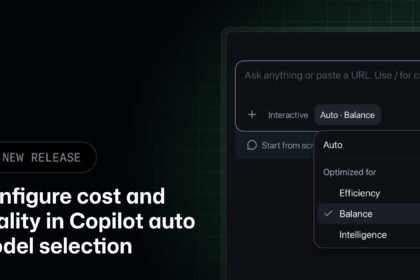
The governance framing is the tell. Nadella’s line, that “everything you observe should be governable by policy,” isn’t a safety pledge. It’s a sales argument targeting CIOs who’ve already been burned by shadow AI deployments running unchecked across collaboration tools. Microsoft is betting that enterprise IT buyers will pay a premium for agentic workflows they can actually audit, and the Copilot reframe is designed to close that sale.
Google’s Fairwind rollout strategy for Gemini 4 Argon deserves more attention than it’s getting. Seeding a frontier model through trusted cybersecurity partners before broad release is a deliberate credentialing move. It builds a reference base in the highest-scrutiny vertical first, then lets that reputation do the selling downstream in legal, finance, and general enterprise. At $2 per million input tokens and $10 per million output tokens, the pricing is competitive with Anthropic and OpenAI, but the distribution strategy is what separates it. Google is trying to win the CIO’s trust before winning the procurement conversation.
The AWS and OpenAI Bedrock Managed Agents announcement is the sleeper story of the week. Running OpenAI-powered agents inside AWS with data residency controls, identity management, and audit logging means enterprises no longer have to choose between best-in-class models and cloud governance requirements. That’s a direct attack on the “we can’t use that model because of data controls” objection. The question worth holding: whether this arrangement signals a broader fragmentation of the OpenAI ecosystem into cloud-hosted, enterprise-governed flavors, or whether it’s a one-off partnership that doesn’t scale.
Concept deep-dive: Agentic governance
Agentic governance refers to the policy and permission layer that controls what AI agents can observe, decide, and act on inside an enterprise environment. It exists because agents, unlike chatbots, don’t just answer questions. They take actions: sending emails, modifying records, triggering workflows. Think of it like the difference between a search engine and an employee with system access. Without governance controls, an agent operating across your CRM, ERP, and communication tools can create compliance exposure before any human reviews the output. Every vendor pitching agentic AI right now is effectively also pitching their answer to this problem.
Based on reporting from Mag 7 Voices: Huang Defends AI Spending, Pichai Ramps Up Gemini, Nadella Calls Copilot A ‘New OS For Work’ This Week, originally published 2026-10-02 16:18:00.