
Share with your CTO
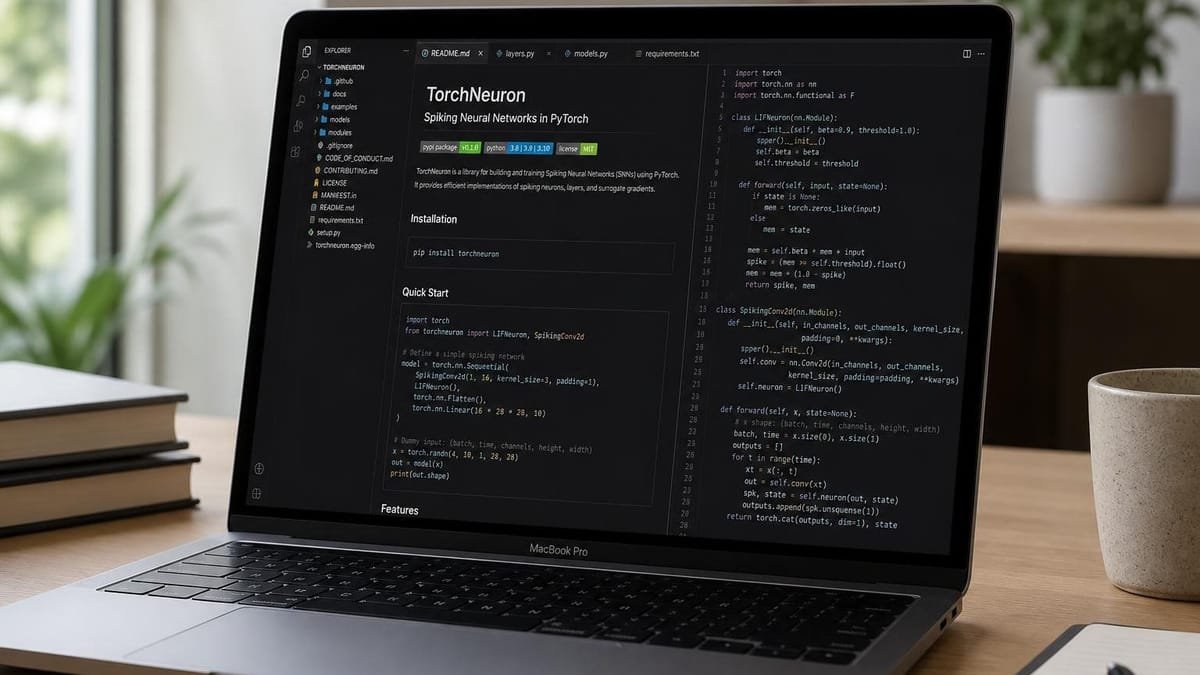
Amazon and Google are both betting that software compatibility, not chip performance, is Nvidia’s most defensible moat, and they’re moving to cut it. Amazon’s TorchNeuron lets PyTorch-built AI applications run on its homegrown Trainium chips without rewriting any code, while Google’s TorchTPU does the same for its tensor processing units. Amazon is also contributing code upstream to PyTorch itself, deliberately decoupling core framework functions from Nvidia GPU assumptions. The full picture of this coordinated ecosystem push is still unfolding, but the strategic intent is unambiguous.
What this means for your business
If your engineering team has standardized on PyTorch, the software lock-in that made Nvidia chips the only practical choice is now genuinely in question. Companies with heavy GPU infrastructure commitments aren’t in immediate danger of disruption, but those still designing their AI compute strategy, choosing between cloud providers or evaluating custom silicon, are now operating in a market where “we have to use Nvidia because everything runs on CUDA” is a weaker argument than it was six months ago.
The upstream PyTorch contribution is the move that deserves the most attention, and it’s being underplayed in most coverage. Nvidia’s advantage has never been purely the hardware. It’s that CUDA, Nvidia’s proprietary programming interface, became so deeply embedded in the default PyTorch experience that switching chips meant extensive reengineering. By submitting code that actively decouples GPU-specific assumptions from the core framework, Amazon is trying to shift the default. If those contributions are accepted and adopted broadly, the cost of trying Trainium or TPUs drops from a substantial engineering project to a configuration change. That’s the real threat to Nvidia, not the alternative chips themselves.
The falsification condition here is straightforward: if TorchNeuron and TorchTPU can’t reliably run the specific model architectures and inference libraries your teams actually use in production, the zero-rewrite promise collapses and Nvidia’s position holds. The vendors most at risk from this development aren’t AI chipmakers. They’re the system integrators and consultancies whose billable hours depend on the GPU migration complexity that Amazon just volunteered to eliminate.
Concept deep-dive: CUDA lock-in
CUDA is Nvidia’s proprietary software layer that lets developers write code taking direct advantage of GPU hardware. Think of it as the operating system between AI software and the chip. Because PyTorch was built with CUDA deeply integrated, most AI code written over the past decade assumes Nvidia hardware by default, even when the developer didn’t consciously choose it. Migrating to a non-Nvidia chip has meant auditing and rewriting those assumptions, which is expensive enough that most teams never seriously evaluated alternatives.
Based on reporting from Amazon Launches TorchNeuron to Challenge Nvidia’s AI Chip Dominance: 5 outlets compared, originally published 2026-10-20 20:11:00.