
Share with your CTO
ASML, the Dutch monopoly supplier of the lithography machines that etch circuits onto silicon wafers, is accelerating faster than the AI chip companies it enables. The company now expects 35-38% revenue growth in 2026 with a 56% gross margin, a guidance figure it has raised twice already this year. Analysts project 68% EPS growth for 2026 and a 36% EPS CAGR through 2028. With no competitor capable of producing extreme ultraviolet lithography systems, ASML sits at the single chokepoint in the AI chip supply chain that neither Nvidia nor TSMC can route around.
What this means for your business
Every AI infrastructure roadmap that assumes compute supply will continue expanding on schedule depends, at some remove, on ASML shipping roughly 48 EUV machines per year. If you are planning GPU cluster buildouts, custom ASIC development timelines, or foundry commitments with TSMC or Samsung, you are downstream of a single-vendor constraint that cannot be substituted. Whether you have a direct procurement relationship with chip suppliers or sit several tiers back as a hyperscaler customer, this bottleneck shapes your lead times whether you track it or not.
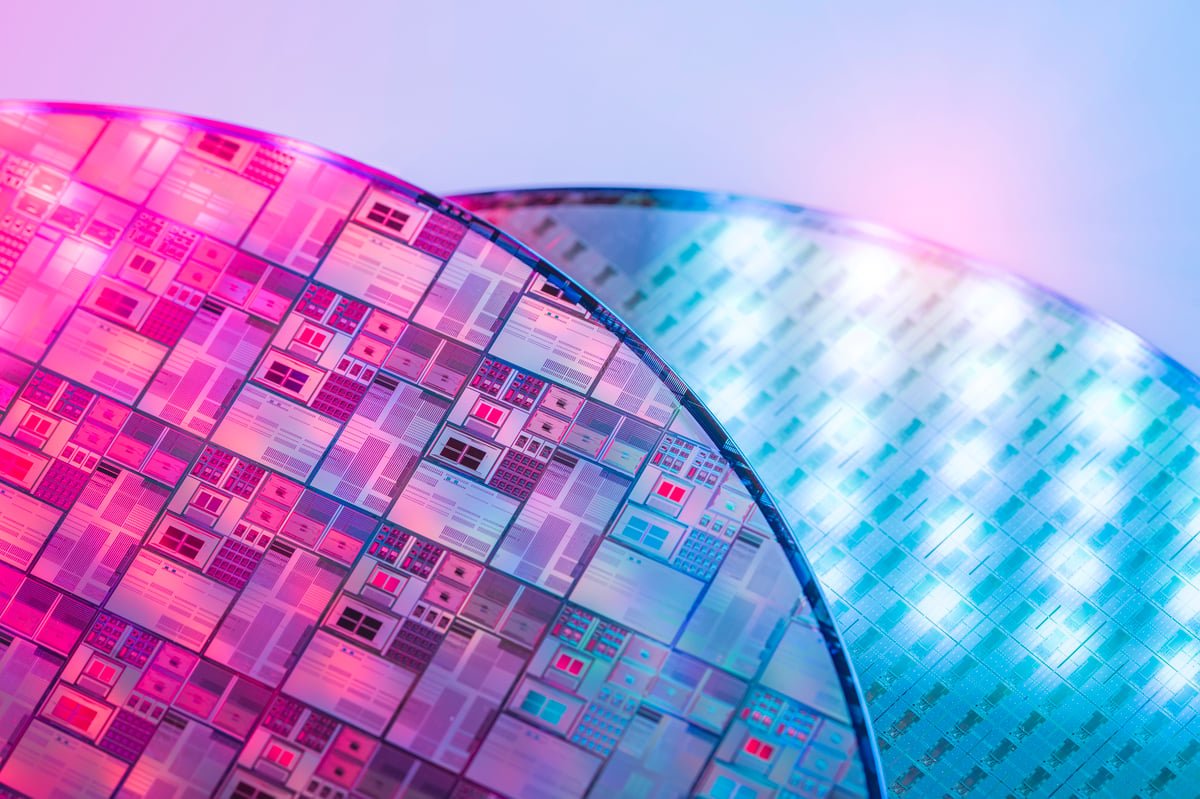
The piece, written for Motley Fool’s retail investor audience and therefore optimistic by construction, nonetheless gets the supply chain logic right. EUV lithography, the process of using extremely short-wavelength light to print transistors smaller than a virus onto silicon, requires machines so complex that each one takes roughly a year to build, uses components from hundreds of suppliers, and requires multiple cargo planes to ship in pieces. ASML spent nearly three decades reaching this position. No competitor has come close, and the capital required to replicate the effort is prohibitive enough that none is likely to. The moat here is not a software patent or a brand premium; it is accumulated manufacturing physics.
The strategic exposure for enterprise technology leaders is not whether ASML’s stock is a good buy. It is that your compute scaling assumptions carry a hidden single point of failure you probably don’t model in your infrastructure risk register. Forty-eight EUV machines a year, split across TSMC, Samsung, and Intel Foundry, is the ceiling on how fast leading-edge chip production can grow. If AI demand continues outrunning that constraint, the first thing to compress will be allocation priority for customers without long-term foundry agreements. Enterprises building proprietary silicon or holding multi-year TSMC capacity commitments are insulated. Everyone else is competing for what’s left after the hyperscalers take their share.
Concept deep-dive: EUV lithography
Extreme ultraviolet lithography uses light at a wavelength of 13.5 nanometers, roughly 40 times shorter than visible light, to print transistor patterns so fine they approach the width of a DNA strand. Think of it as a projector so precise it can trace a city street map onto a postage stamp. Without it, chip density stops improving. Every AI accelerator below 7nm process nodes, including Nvidia’s current Blackwell architecture, requires EUV. ASML is the only company that has ever shipped a working system.
Based on reporting from Not Nvidia. Not TSMC. This Equipment Maker Is the Real Bottleneck in AI Chip Production., originally published 2026-10-16 15:55:00.