
Share with your CTO
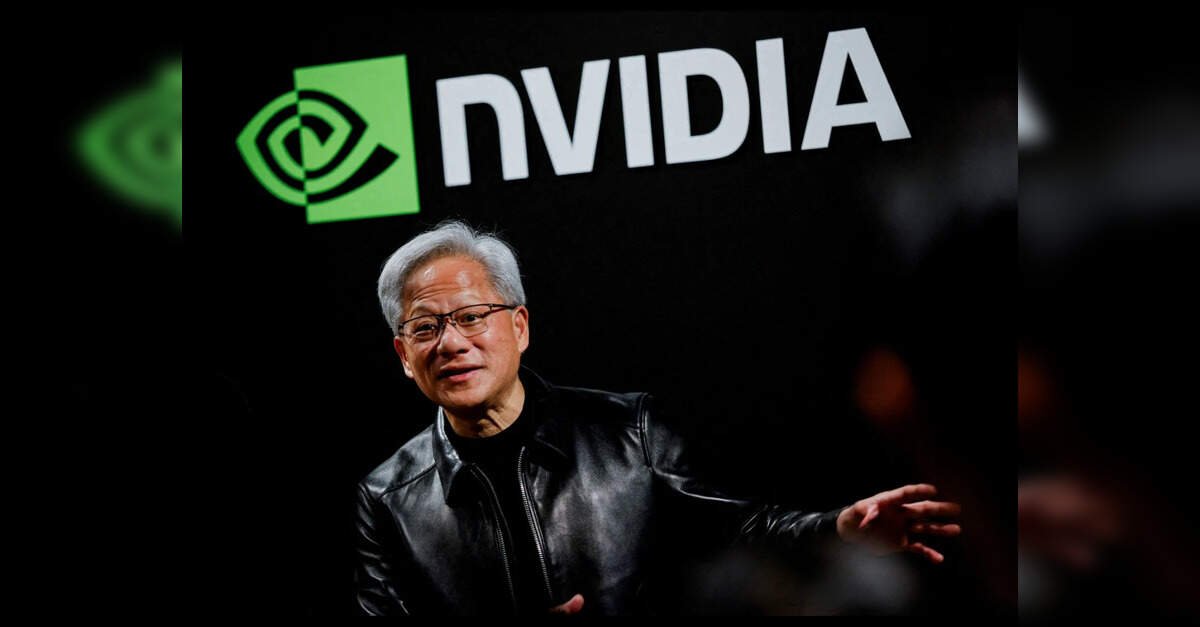
Nvidia’s board convened Wednesday to weigh removing CEO Jensen Huang following Wall Street Journal reporting on two extramarital affairs involving the longtime chief, according to Reuters sources. The timing matters: Huang has no named successor, the company runs on a structure of roughly 60 direct reports with no clear second-in-command, and Nvidia’s AI chip dominance, built on the CUDA software ecosystem and the Blackwell GPU architecture, is entering its most competitively contested period. Analysts quoted in the coverage split cleanly between near-term hardware continuity and long-term strategic risk.
What this means for your business
The near-term hardware calculus is straightforward: Blackwell demand, the Rubin architecture roadmap, and CUDA’s lock-in don’t evaporate with a CEO. Enterprise buyers who have already committed to Nvidia’s stack for model training and inference aren’t suddenly repricing the silicon they need. The more uncomfortable question is whether your procurement assumptions about Nvidia’s strategic behavior, its co-investment in cloud startups, its China access, its positioning against AMD and Broadcom, were priced on Jensen’s specific relationships and judgment rather than on durable institutional strength.
The succession gap is the real exposure. Analyst Shay Booloor’s framing is sharp: Huang didn’t just run Nvidia, he anticipated compute demand before the market recognized it, then built the product and partner ecosystem to capture it. That capability sits almost entirely in one person’s pattern recognition, not in a documented strategy process or a bench of deputies. CUDA’s creator Ian Buck and Arm CEO Rene Haas are floated as candidates, but neither has run a company at Nvidia’s current scale or navigated its particular mix of hyperscaler relationships, geopolitical chip restrictions, and ecosystem co-investment. The transition risk isn’t the next earnings cycle, it’s the next architectural bet.
If you’re a CTO with Nvidia as a primary AI infrastructure vendor, the decision this reshapes isn’t the next renewal, it’s whether your architecture has optionality. AMD and Broadcom are already moving in after-hours trading on the news, and that price action reflects genuine enterprise hedging logic, not just speculation. An Nvidia stack with no viable alternative is a concentration risk that looked acceptable when Jensen’s strategic continuity was priced as near-certain. I’d revise the confidence in Nvidia’s platform dominance through the decade if a new CEO moves away from the co-investment model that has kept the CUDA ecosystem self-reinforcing.
Based on reporting from Nvidia’s Board Members Decide CEO Jensen Huang’s Fate Amid Extramarital Affairs Scandal, ETHRWorld, originally published 2026-11-11 20:57:00.