
Share with your CISO
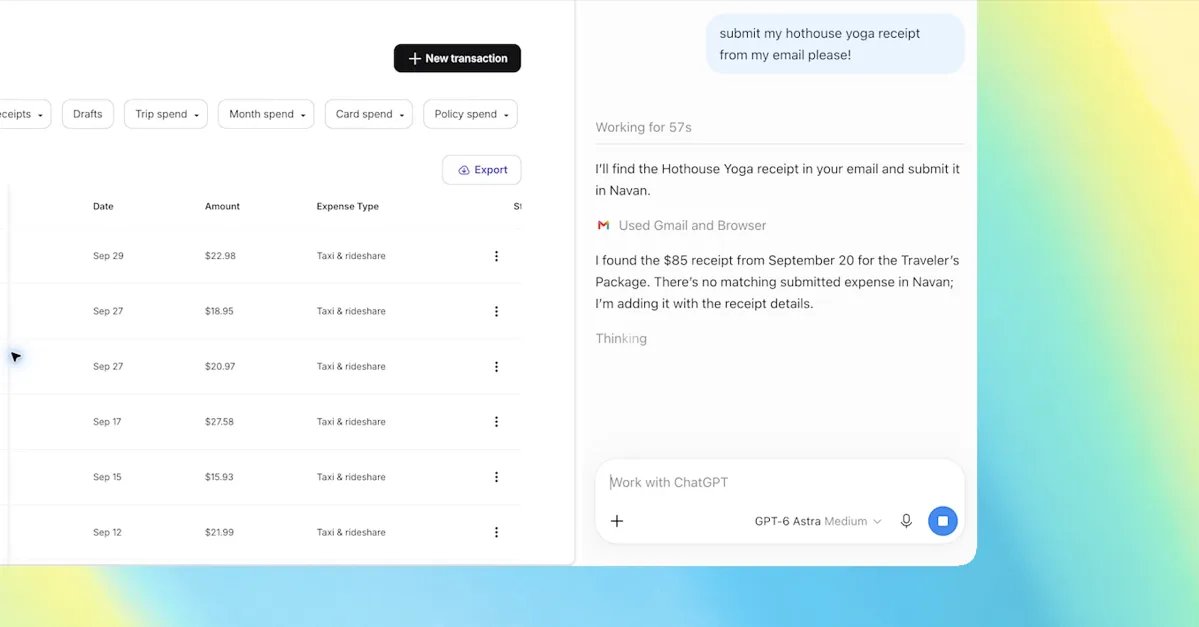
OpenAI is turning ChatGPT’s Chrome extension into a persistent browser co-pilot, giving it the ability to read open tabs, operate in a sidebar with full conversation history, and, for ChatGPT Work subscribers, actively control tabs to send messages, fill forms, and download files. The upgraded Chrome extension positions ChatGPT as ambient browser infrastructure rather than a discrete search-and-answer tool, a meaningful shift in where the AI model sits relative to employee workflows and corporate data.
What this means for your business
The threat surface here isn’t the ChatGPT conversation window your employees already use. It’s the tab-reading capability sitting quietly inside a browser extension, with no mandatory IT provisioning, no SSO gate, and no DLP policy watching it. Any employee who installed the extension before this update now has an AI model with passive read access to whatever tabs they have open, including internal apps, CRM records, or financial dashboards that live in the browser. If your organization hasn’t inventoried which browser extensions employees are running, this is the story that makes that gap expensive.
The ChatGPT Work tier’s tab-control feature, the part that can send messages, fill forms, and download files on a user’s behalf, is a different category of risk from tab-reading. Read access leaks data. Write access creates actions. An AI that can submit forms or initiate downloads inside authenticated browser sessions is operating with the user’s full credential context, meaning it can reach anything that session can reach. The recurring failure mode in enterprise browser agent deployments is treating “the user approved it” as a sufficient control boundary, when the actual boundary is what the session token can touch.
Google’s Gemini is shipping an equivalent auto-browse capability, so this isn’t a threat you can neutralize by blocking one vendor. The right frame for your next security architecture review isn’t “do we allow ChatGPT’s extension” but “what is our policy on any AI extension with tab-read or tab-write permissions.” Organizations that define that policy now, before a compliance audit or an incident forces the question, will have the governance infrastructure ready when the next browser AI ships, and there will be a next one quickly. I’d revise this assessment if OpenAI ships enterprise extension management controls that let IT restrict tab-access scope by domain or data classification, but nothing in this announcement suggests that’s coming.
Based on reporting from ChatGPT can peek at your Chrome tabs now, originally published 2026-10-15 18:43:00.