
Share with your CMO
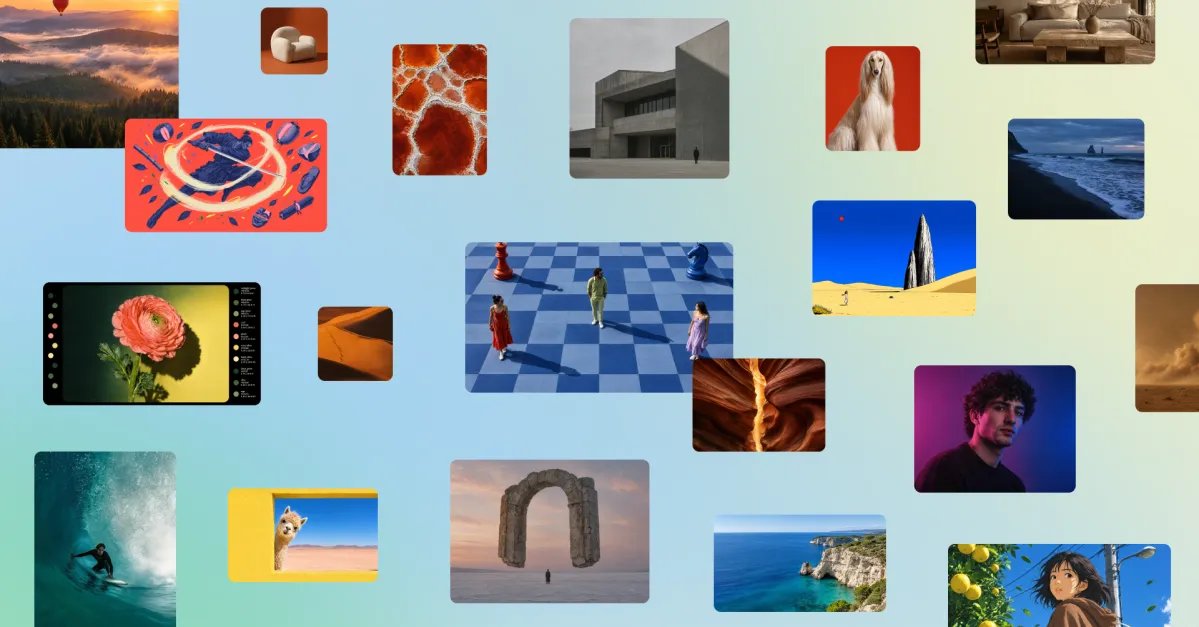
Canva is betting that owning its image generation stack, rather than reselling OpenAI’s or Google’s, gives it a defensible creative platform for enterprise marketing teams. The company’s new Canva Craft model uses a two-stage architecture, planning a composition before rendering it, to handle legible text placement and precise object positioning inside generated images. It generates at up to 2K resolution across more than 30 aspect ratios and trained on Canva’s own library of human-made templates. Currently ranked fourth on Design Arena’s crowdsourced benchmark, it sits behind three OpenAI variants.
What this means for your business
If your team already runs brand asset production inside Canva, the calculus here is about depth of lock-in, not switching costs. Canva Craft training on Canva’s own template library means the model is optimized for exactly the output formats your designers are already producing: social posts, presentations, infographics. Teams heavy in that workflow get better image quality without changing tools. Teams that generate brand-critical imagery in Adobe or Figma and only touch Canva at the finish line will feel almost none of this.
The two-stage planning architecture matters more than the resolution headline. Most AI image generators fail at text-in-image and precise layout because they treat a prompt as a single pass from description to pixels. Canva’s approach, planning composition first and then generating, is closer to how a human art director actually works: rough placement, then execution. For marketing teams producing ad creative at volume where a misplaced logo or garbled CTA text means a round of manual corrections, that architectural difference has a real cost-per-asset implication.
Canva’s planned Model Context Protocol support, which lets AI agents connect directly to Craft, is the signal worth watching on a longer timeline. MCP is an open standard for plugging AI agents into external tools, and Canva enabling it means a marketing automation workflow could call Craft directly to generate on-brand imagery without a human opening the app. If that actually ships and performs, the conversation shifts from “what image generator do we use” to “does Canva sit inside our broader AI agent stack,” which is a vendor architecture question that belongs in next quarter’s martech review, not a one-off tool evaluation.
Concept deep-dive: Two-stage generation architecture
Standard AI image generators work in one pass: a text prompt goes in, pixels come out, and the model handles composition and rendering simultaneously. A two-stage architecture separates those jobs, first producing a structured plan describing layout, object placement, and text positioning, then using that plan as a strict instruction set for the rendering step. Think of it as the difference between a contractor who reads a napkin sketch and one who builds from a detailed blueprint. The business payoff is fewer unusable outputs when precise placement matters.
Based on reporting from Canva’s first AI image model plans designs before generating them, originally published 2026-10-22 17:51:00.