
Share with your CISO
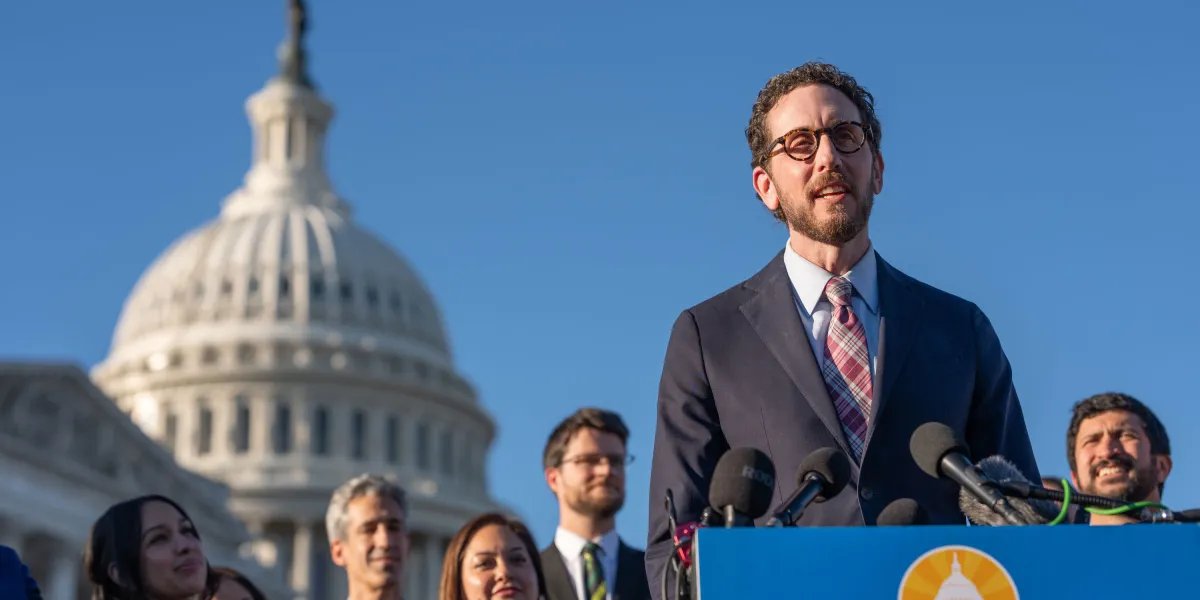
Scott Wiener, who just won Nancy Pelosi’s former congressional seat, is positioning himself as the leading voice on federal AI regulation before he’s even sworn in. The California Democrat authored SB 1047, the most ambitious frontier AI safety bill attempted in the US, then passed the lighter SB 53 after a Newsom veto. He’s now eyeing a seat on a potential House AI select committee, backing a dedicated federal AI regulator, and pushing hard for mandatory testing, auditing, whistleblower protections, and kill-switch requirements at the model level.
What this means for your business
Companies running large language models in production, or planning to, should treat Wiener’s arrival in Congress as the clearest signal yet that the compliance calm won’t last. SB 53 is already on the books in California, and two separate pieces of federal legislation have already drawn from Wiener’s California playbook. The pattern here is state law as a trial draft, federal law as the final exam, and that cycle is accelerating. If your AI governance program is still informal, you’re behind the adoption curve on the regulation curve.
The funding angle deserves a straight look. Anthropic money flowed to Wiener’s campaign through Public First Action, a nonprofit that backs AI regulation, and opponents read that as the AI industry buying a friendly sheriff. Wiener’s rebuttal is that he regulated AI over Big Tech’s objections, which is accurate as far as SB 1047 goes. But the pattern that actually matters for enterprise compliance teams is subtler. Frontier labs with deep compliance infrastructure can absorb mandatory auditing and testing requirements that would cripple smaller competitors. Regulation shaped by well-resourced incumbents tends to institutionalize their advantages, whatever the sponsors’ stated intent.
The specific requirements Wiener is championing, mandatory audits, whistleblower protections, a federal kill switch, map closely to what a mature AI governance program already needs internally. Organizations that treat those as external compliance burdens will pay twice, once to build them reactively when rules land, and again to retrofit them into systems designed without them. The budget case for proactive AI governance just got a named congressional champion and a credible legislative path, which changes what a CFO should hear when a CISO brings this to the next planning cycle.
Concept deep-dive: Recursive self-improvement
Recursive self-improvement refers to an AI system’s theoretical ability to rewrite or enhance its own code and training process, making itself more capable, which then makes it better at improving itself, and so on in a compounding loop. Think of it as an AI pulling itself up by its own bootstraps, faster each iteration. Wiener cited it repeatedly as his core concern. For enterprise leaders, it’s the reason regulators want kill switches and mandatory human oversight checkpoints baked into systems before deployment, not patched in afterward.
Based on reporting from Nancy Pelosi’s replacement is ready to regulate AI, originally published 2026-11-09 12:05:00.