
Share with your CHRO
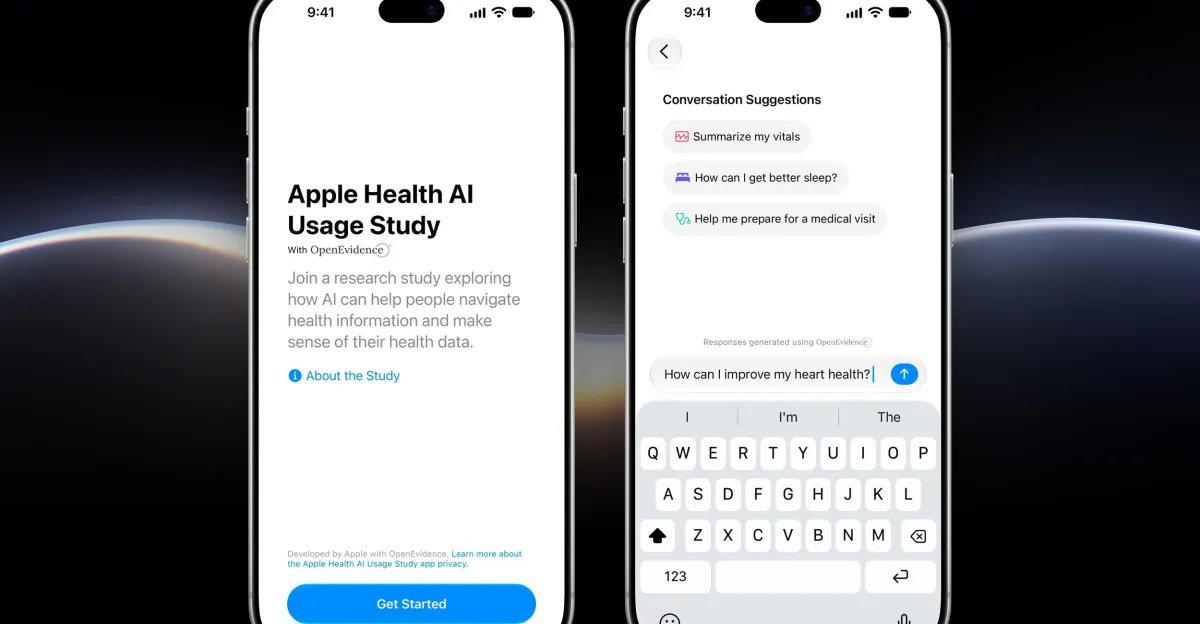
Apple is betting that rigorous research, not faster deployment, is the right foundation for AI health tools that employees and consumers will actually trust. Working with OpenEvidence, a clinical AI platform sourcing answers from peer-reviewed literature, Apple is enrolling up to 200,000 US participants in its Apple Health AI Usage Study. Participants rate AI-generated health responses on accuracy, detail, and relevance, and can optionally share HealthKit data like activity, sleep, or lab results. Data collected won’t be used to train AI models.
What this means for your business
Every major employer running a benefits program is quietly watching whether AI health navigation tools, the chatbots and virtual triage assistants embedded in employee health platforms, can actually be trusted to give accurate, actionable guidance. The organizations most exposed here aren’t the ones that haven’t adopted health AI yet. They’re the ones that already have, without the kind of clinical validation Apple is now openly admitting the industry lacks.
What Apple is effectively publishing, through the study design itself, is a confession that nobody currently knows how well conversational health AI performs at scale across a real population. That’s a significant admission from a company whose HealthKit ecosystem already sits inside millions of corporate wellness programs. The 200,000-participant target isn’t a vanity number. It’s large enough to surface performance differences across demographics, health literacy levels, and condition types, the variables that determine whether a health AI tool helps your highest-risk employees or quietly misleads them.
The vendor you renewed last quarter for employee health navigation probably hasn’t run a study like this. That’s the renewal to look at differently, not because the tool is necessarily wrong, but because “clinically grounded” is about to become a credential with a measurable definition attached to it, and right now most enterprise health AI vendors are operating on vibes and satisfaction scores rather than accuracy benchmarks. I’d revise this view if Apple publishes null or inconclusive results, but the study architecture signals they expect to find something worth building on.
Based on reporting from Apple’s new study looks to improve the effectiveness of AI health tools, originally published 2026-11-15 20:26:00.