
Share with your CTO
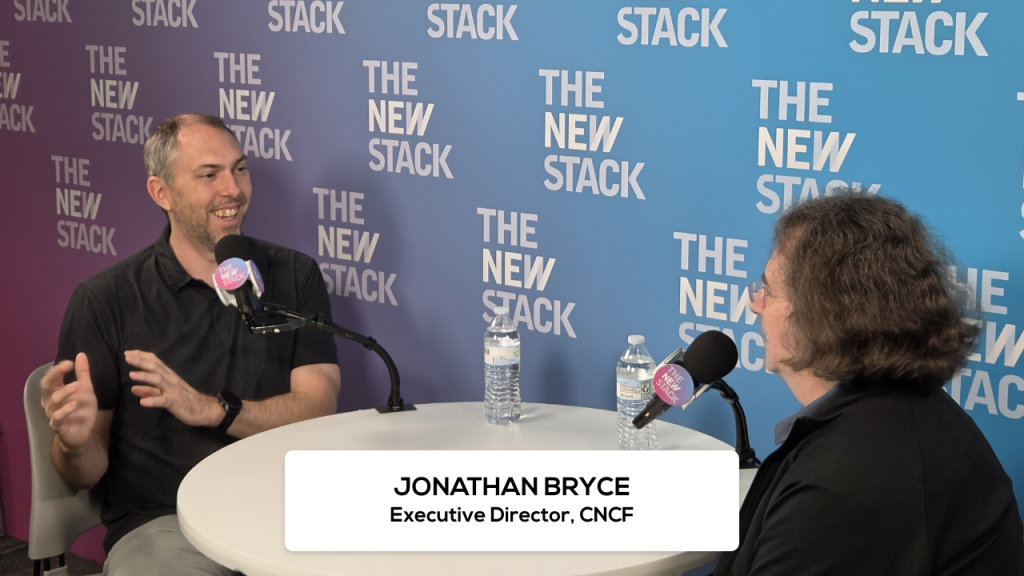
The gap between AI agent hype and production reality is exactly as wide as the infrastructure deficit that created it. Jonathan Bryce, executive director of the Cloud Native Computing Foundation, used KubeCon Salt Lake City to signal what comes next: NVIDIA donated OpenShell and Google donated Agent Substrate to the CNCF, both as Sandbox projects, to address the agent-scale mismatch directly. As Bryce put it, existing systems were built for human speed, not agent speed, and that gap is exposing critical limits in scalability, security, and resource efficiency across enterprise infrastructure.
What this means for your business
The honest state of play: beyond software development, agent adoption in production is still low. Customer service and knowledge-bounded workflows are the exceptions. Enterprises are cautious precisely because the infrastructure layer, identity controls, session management, compute efficiency, wasn’t designed with autonomous, high-frequency agents in mind. That caution is well-founded. An agent with broad access and no policy enforcement isn’t a productivity tool; it’s a liability surface.
The two CNCF donations point at the same underlying problem from different angles. OpenShell enforces what an agent can touch: files, networks, credentials, model endpoints. Agent Substrate manages the lifecycle of agent sessions on Kubernetes, suspending idle agents and restoring them on demand rather than letting them burn compute continuously. Together they represent an emerging infrastructure category that might be called “agent substrate” more broadly: the layer between your Kubernetes clusters and the agents running on them that determines whether those agents are controllable, efficient, and auditable. Right now that layer barely exists in production-grade form.
The signal worth watching: both projects entered CNCF at the Sandbox tier, which means they’re early and unproven at scale. The donation strategy itself is telling. NVIDIA and Google both gain from neutral governance here because broad enterprise adoption of agents depends on shared, trusted infrastructure rather than vendor-controlled black boxes. The question for your organization is whether you’re building agent workflows on top of infrastructure that can actually support them, or whether you’re accumulating technical debt that becomes a rearchitecting project in eighteen months.
Concept deep-dive: Agent session suspension and restore
Agent Substrate’s core capability, suspending idle agent sessions and resuming them on available compute, solves a problem that didn’t exist before autonomous agents. Unlike a web server that handles discrete requests, an agent maintains conversational state: memory of prior steps, partial task completion, environmental context. Keeping that state alive consumes compute even when the agent isn’t actively working. Suspension serializes that state to storage and frees the GPU or CPU. When the agent is needed again, the session restores onto a fresh worker. The business connection is direct: it’s the difference between GPU costs that scale with agent concurrency versus costs that scale only with active work.
Based on reporting from AI agents were all over KubeCon. Production is another story, originally published 2026-11-16 17:08:00.