
Share with your CIO
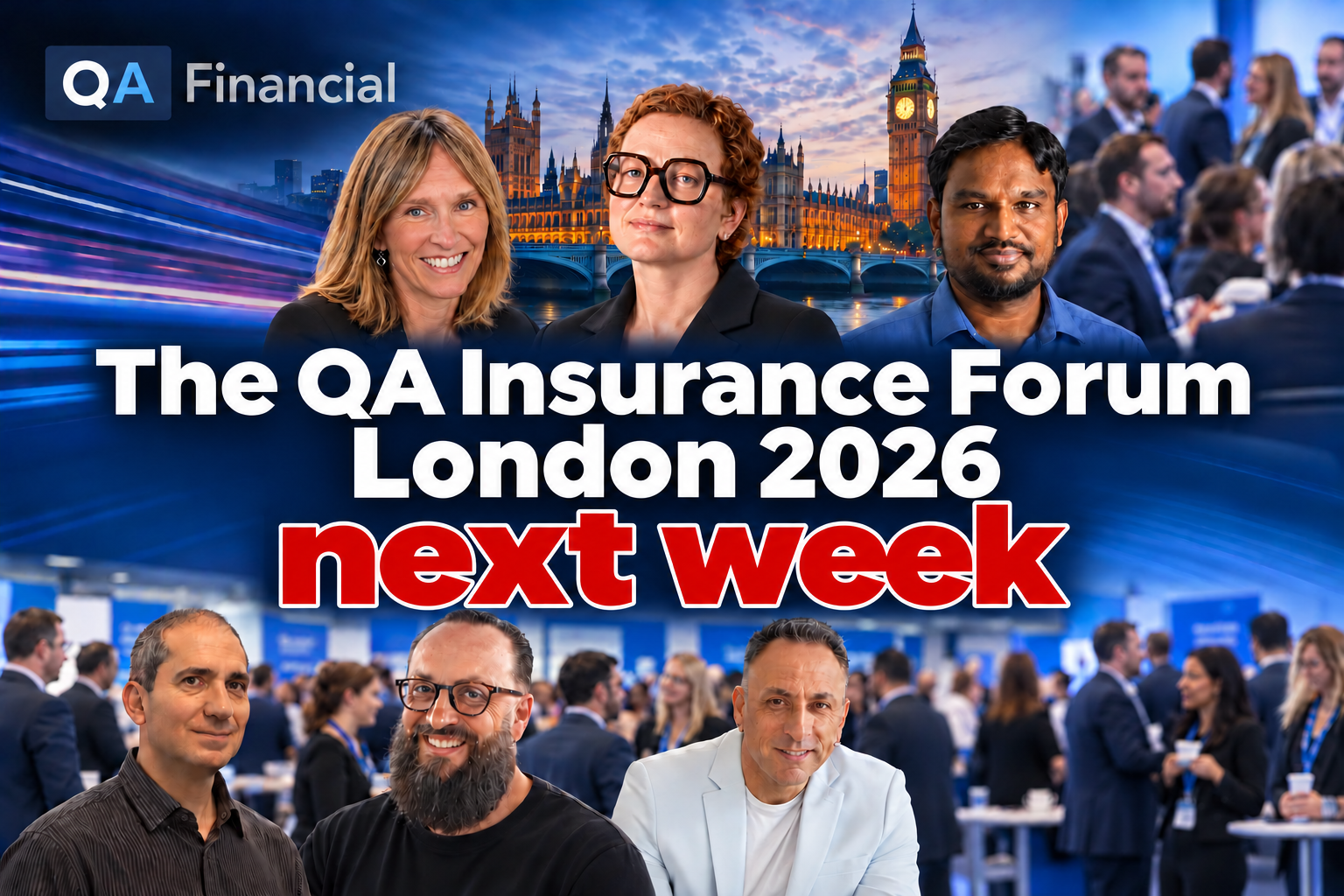
British insurers are moving their AI assurance conversation from theory to production accountability at the QA Insurance Forum London on November 25, with engineering and risk leaders from Hiscox, Aviva, NFU Mutual, Legal and General, and AXA on the programme. The agenda runs from ROI measurement on AI-enabled claims and underwriting through to agentic systems risk, test data governance, and DORA compliance. Hiscox’s live Google Cloud underwriting platform, pricing shipping fleets and terrorism risks since 2023, is the most concrete proof point on offer.
What this means for your business
The forum’s framing tells you where the industry actually is: the hard question isn’t whether to adopt AI but whether anyone can demonstrate that the AI running in production is behaving the way the business assumed when it approved the investment. That gap, between deployment and verifiable assurance, is where most insurer CIOs currently sit. If your quality engineering function still reports separately from your data science and risk teams, the programme’s structure is a signal that peers have already decided that arrangement doesn’t hold for agentic systems.
The Hiscox case study is worth watching closely, not because a live underwriting platform is rare news, but because the specific pairing of quality engineers with data scientists on complex, non-standard risks is a structural choice that most insurers haven’t made. Standard QA playbooks, built around deterministic software that produces the same output for the same input, break down when the system is a model that adapts. The programme surfaces that failure mode explicitly through the Amdocs session on agentic validation, which matters because Amdocs works across financial services at scale and has commercial incentives to position traditional QA as obsolete, a tilt worth discounting slightly while still taking the underlying diagnosis seriously.
Aviva’s Raymond Khor addressing enterprise risk from a “personal perspective” on orchestrating large agent populations across claims and underwriting is the session most likely to produce a reusable governance frame. When a group head of enterprise risk speaks off-script at a practitioner forum, the candour tends to outrun what a prepared keynote would say. The question your team should bring back isn’t what Aviva decided, but which of its emerging risk categories, bias, cyber-attack on agent pipelines, collapse of human oversight, map to exposures you haven’t yet priced into your own AI programme’s risk register. That’s the budget conversation hiding inside a conference agenda.
Concept deep-dive: Agentic assurance
Agentic assurance is the practice of validating AI systems that don’t just answer questions but take sequences of autonomous actions, booking a claim payment, drafting an underwriting recommendation, triggering a downstream workflow. Unlike testing a web form, where the right input always produces the right output, an agentic system’s behaviour shifts with context and accumulated decisions. Assurance here means defining what “safe enough to act” looks like before the agent runs, and monitoring whether it stays inside that boundary once it does.
Based on reporting from Insurance leaders to tackle AI assurance, originally published 2026-11-17 21:23:00.