

Share with your CEO
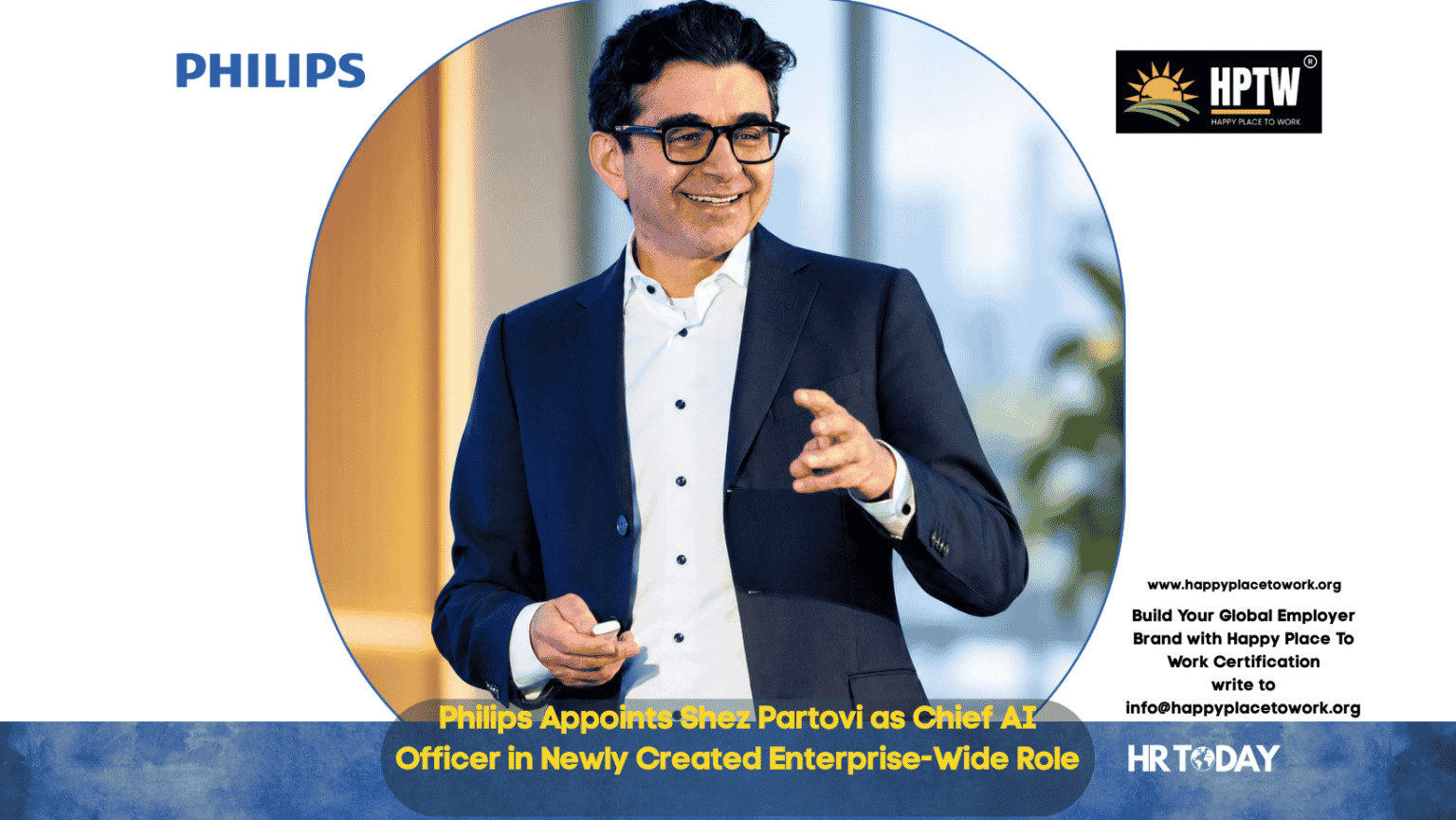
Philips is betting that AI leadership needs to live inside the business, not above it. The company has created a Chief AI Officer role for Shez Partovi, who simultaneously retains command of a $1.5 billion Enterprise Informatics P&L, making him operationally accountable for the revenue the AI strategy is supposed to protect and grow. Partovi brings a rare triple credential: practicing neuroradiologist, serial founder with four acquisitions, and AWS healthcare cloud executive. The newly created enterprise-wide mandate covers both external clinical products and internal operations.
What this means for your business
The structural choice Philips made here is the more interesting signal than the hire itself. Most companies installing a Chief AI Officer separate the role from P&L ownership, which produces a leader with a mandate but no leverage, someone who can advise but can’t force a trade-off. Philips wired Partovi’s AI authority directly into a business unit he already runs. If your company is weighing how to seat AI governance, that design decision is the one worth studying, because it determines whether the CAIO role becomes a coordination function or a power center.
Partovi’s background answers a specific question that health technology companies face and general-purpose AI leaders can’t easily answer: does the person designing AI-augmented clinical workflows actually understand what clinicians are giving up when they adopt them? A former neuroradiologist who later ran electronic health record deployment across a hospital system and then built cloud healthcare strategy at AWS has touched every layer of that stack. The recurring failure mode in clinical AI adoption is a product that optimizes for the metric without respecting the workflow. That biography is a direct hedge against it.
The framing Philips is using, “people-led, AI-powered,” is doing real work beyond the slogan. It signals to regulators, hospital buyers, and clinical staff that Philips intends to position AI as augmentation rather than replacement, which is a defensible posture in a market where FDA oversight of AI-enabled medical devices is tightening and clinician trust is a genuine procurement variable. Competitors without a credible clinical voice at the AI strategy table will find that positioning harder to claim. The CAIO title only holds if the person in it can actually speak to both audiences, and Partovi’s credentials make that argument difficult to dismiss.
Concept deep-dive: P&L-linked AI governance
Most AI governance structures separate the strategy role from revenue ownership, creating what amounts to an internal consultancy. P&L-linked AI governance means the executive setting AI direction also owns the business unit’s profit and loss, aligning incentives so that AI investments compete directly with other resource calls and get held to the same revenue and margin accountability. The design forces prioritization that advisory-only CAIO roles typically avoid, and makes the cost of a bad AI bet visible rather than diffuse.
Based on reporting from Philips Appoints Shez Partovi as Chief AI Officer in Newly Created Enterprise-Wide Role, originally published 2026-09-04 14:30:00.