

Share with your CTO
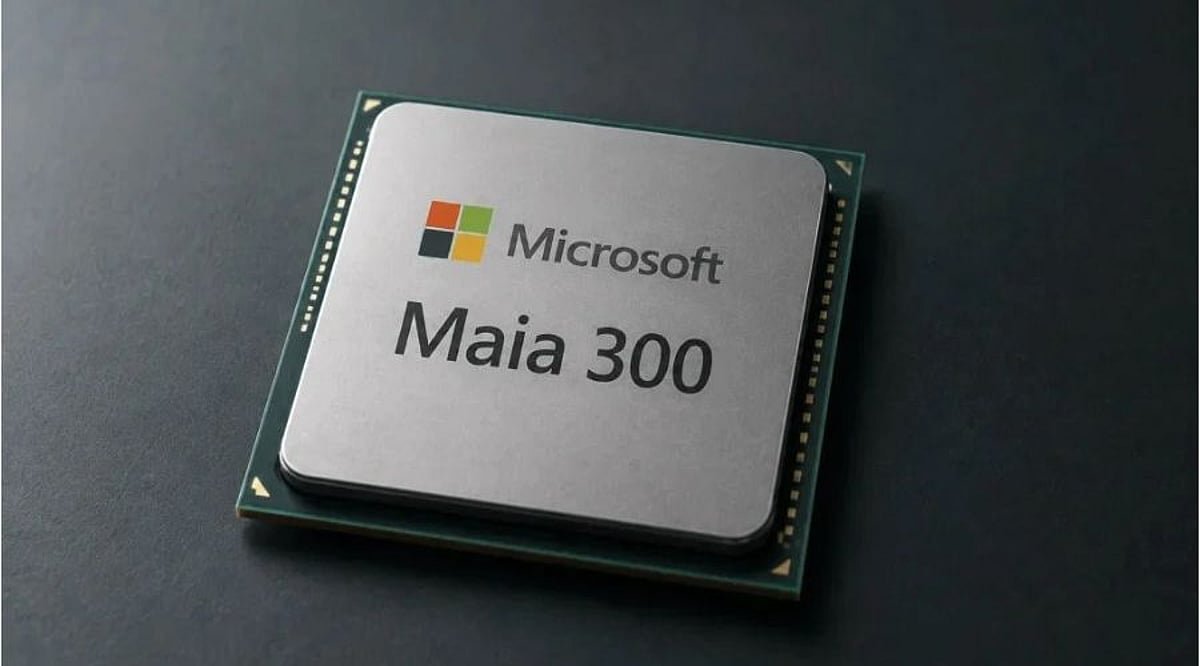
Microsoft is betting that custom silicon can meaningfully reduce its dependence on NVIDIA by targeting the one workload where volume and predictability matter most: AI inference at Azure scale. The Maia 300 accelerator, expected as early as September, is being manufactured by TSMC with a target of 300,000 units by 2027 and a potential ceiling above one million. Its predecessor, Maia 200, claims 30% better performance per dollar than existing fleet hardware and 40% better performance per watt on Microsoft’s own AI models.
What this means for your business
The Maia program is less a competitive strike at NVIDIA than a margin defense play, and whether it matters to your infrastructure roadmap depends almost entirely on how much of your AI compute runs on Azure. If your organization is a significant Azure consumer running inference-heavy workloads, Microsoft’s ability to cut its own inference costs creates genuine room for pricing pressure on Azure AI services. If you’re running training workloads or operating across multiple clouds, Maia is largely invisible to you for at least the next two years.
The production gap between Maia 200 and Maia 300 is the number worth sitting with. Maia 200 topped out in the tens of thousands of units. Maia 300 targets 300,000 by 2027. That’s not iteration, it’s a different program entirely, and Microsoft’s reported effort to bring Anthropic onto Maia suggests the company is trying to validate the chip with third-party workloads before locking in its own services. A hyperscaler convincing an outside AI lab to run on its custom silicon is the credibility signal that transforms internal cost savings into a competitive infrastructure story. That recruitment effort is the real indicator to watch, not the chip specs.
NVIDIA’s position isn’t threatened by Maia in any near-term sense, but the trajectory matters for procurement conversations happening right now. If Microsoft successfully scales Maia 300 and brings inference costs down on Azure, it changes the negotiating posture CTOs can take with NVIDIA on H-series GPU pricing for training and specialized workloads. The GPU market has functioned as a seller’s market because hyperscalers had no credible alternative for volume inference. Maia, if it scales, starts to change that arithmetic, and that’s what your next enterprise GPU renewal should be weighed against.
Concept deep-dive: AI inference
Inference is what happens after an AI model is trained: it’s the act of the model answering a question or generating an output in real time. Think of training as writing a textbook and inference as a student using it to answer exam questions, millions of times a day. Inference dominates enterprise AI compute costs at scale because it runs continuously, unlike training which is periodic. Custom chips optimized for inference, rather than general-purpose GPU training, can deliver significant cost advantages at hyperscaler volumes.
Based on reporting from Microsoft Maia 300 AI Chip: How it Fares Against NVIDIA’s Dominance, originally published 2026-09-06 03:49:00.