

Share with your CTO
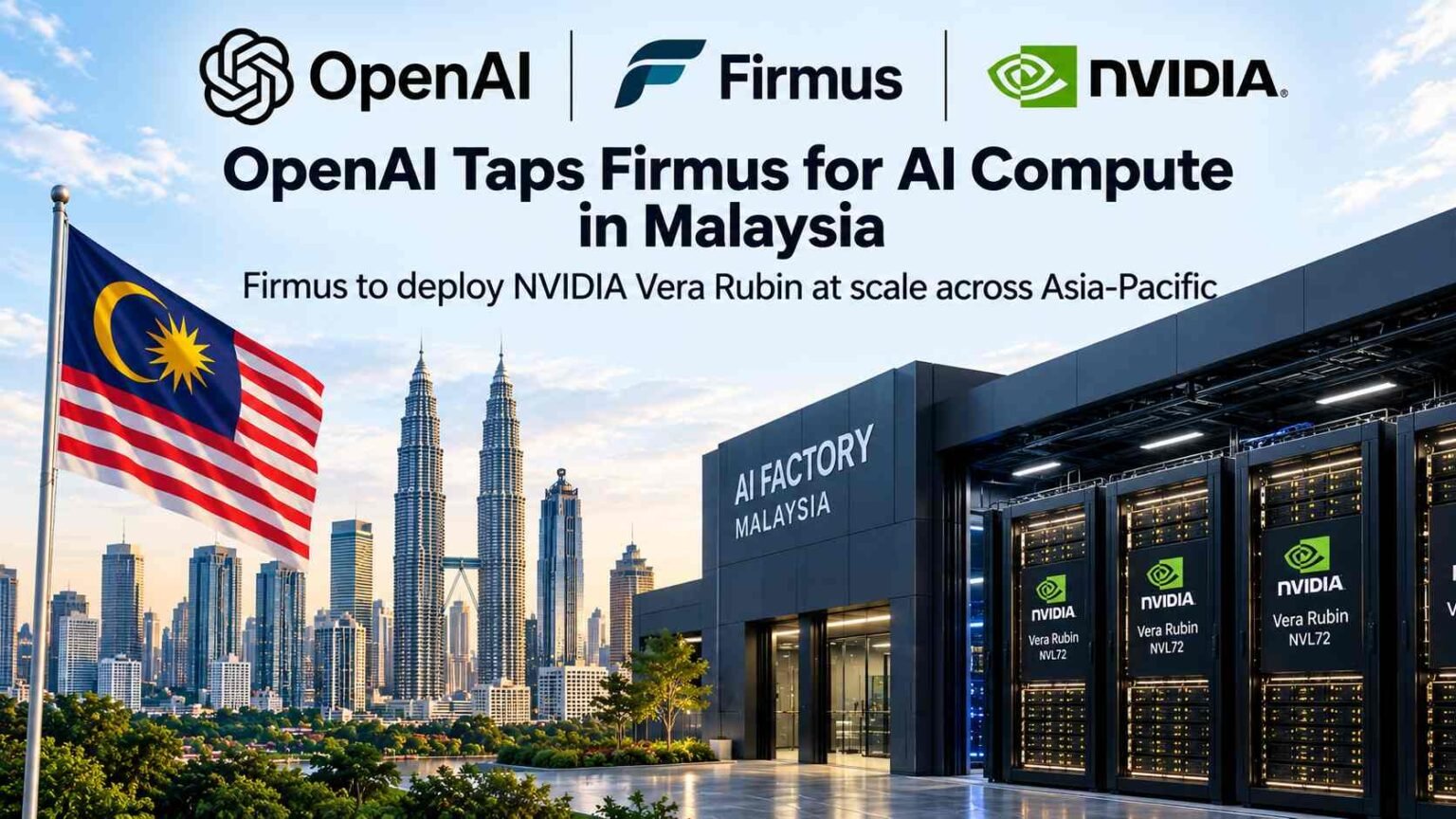
OpenAI is building a distributed compute network across Southeast Asia, and the Firmus partnership in Malaysia is the latest node in that strategy. Australian infrastructure firm Firmus, backed by Nvidia as both equity investor and technology partner, will supply OpenAI with dedicated compute across two Malaysian AI factories, making OpenAI its anchor customer. The deal pushes Firmus’s total contracted capacity past 900 megawatts. The factories will run Nvidia’s Vera Rubin NVL72 rack-scale systems, the generation after Blackwell, though procurement volumes and contract value remain undisclosed.
What this means for your business
The story that matters here isn’t OpenAI adding another data center. It’s that the Vera Rubin generation, Nvidia’s next-generation GPU platform with 288GB of HBM4 memory per unit, is now being committed to at scale across Asia-Pacific by a major anchor customer before the hardware is even in broad deployment. If your organization is planning infrastructure refreshes or model-serving contracts in the 2026 to 2027 window, the lead times and allocation dynamics that shaped the Blackwell cycle are already repeating. Companies that waited on Blackwell capacity learned that anchor deals compress the available supply for everyone else.
OpenAI’s compute strategy is worth reading carefully, because it reveals a structural posture most enterprises haven’t fully absorbed. OpenAI is simultaneously building direct Nvidia capacity at 5 to 10 gigawatt scale and contracting third-party infrastructure providers like Firmus in parallel. That’s not redundancy, it’s deliberate architectural hedging: sovereign or regional compute that sits outside U.S. data center geography, with local anchor economics that make the unit cost predictable. Enterprises running inference-heavy workloads in Asia-Pacific face the same geographic and latency tradeoffs OpenAI is solving here, and they’re largely doing it with no comparable procurement leverage.
Firmus is clearly narrating this deal partly for its upcoming ASX listing, and TradingKey’s financial-investor framing means the analysis tilts toward what moves Nvidia’s data center revenue rather than what the infrastructure shift means operationally. The sharper question for a CTO isn’t whether Nvidia wins the next GPU cycle (it will) but whether the regional compute fabric being built around anchor deals like this one will be accessible to mid-market enterprises on reasonable terms, or whether it will be absorbed entirely by hyperscalers and frontier AI labs. If the latter, your 2027 inference cost assumptions need revision now, not when the capacity constraints become visible.
Based on reporting from OpenAI Signs Multi-Year Malaysia Compute Deal; Firmus to Deploy Nvidia Vera Rubin at Scale in Asia-Pacific, originally published 2026-09-08 02:42:00.