


Share with your CIO
Gareth de Bruyn, CEO of SAP-focused integration firm Debcor Engineering, makes the case that AI harnesses are becoming the connective tissue of multi-agent enterprise workflows, sitting between agentic code and the underlying models to handle routing, access control, context, and audit. The argument is that a single agent working alone rarely needs one, but once an enterprise deploys agents that write orders, update records, or touch financial systems, a harness is what keeps those actions governed and traceable. SAP’s own accounts payable “agent,” he notes, likely runs 10 to 15 agents underneath a single marketing label.
What this means for your business
If your organization has moved past pilots and is now deploying agents that touch transactional systems, the harness question isn’t theoretical. The telling signal is whether your agents are reading data or writing it. Read-only tasks, a badge scanner at a conference, a document summarizer, carry limited blast radius. Agents that create purchase orders, update customer records, or route inventory decisions carry real financial and compliance exposure, and the governance layer that wraps them determines whether you can audit what happened and why.
The vendor market here is still early, and de Bruyn is right to flag the labeling problem, though worth noting his firm builds custom SAP integrations, which gives him an incentive to emphasize complexity and undersell packaged solutions. That tilt is specific and worth tracking: when SAP or a similar vendor sells you an “accounts payable agent,” the honest question to ask is how many agents are actually running, what the harness architecture looks like, and who owns the controls. Buying a black box and calling it governed is not governance. The recurring failure mode in enterprise AI procurement is purchasing outcomes without purchasing the observability that confirms the outcome is correct.
The deeper structural point is that the harness layer is where enterprise AI will consolidate, the same way API management consolidated around a handful of players once microservices proliferated. Whoever controls routing, access policy, and audit trails for multi-agent workflows controls the AI stack in a way that model choice alone never will. If you’re renewing or expanding an AI platform contract in the next 18 months, what to weigh differently is whether the harness capabilities are native to the platform, bolted on, or entirely absent, because that gap is easier to overlook in a demo than to close in production.
Concept deep-dive: AI harness
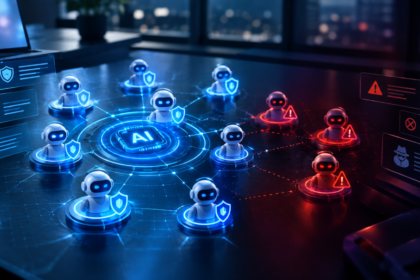
An AI harness is the coordination and control layer that sits between your business applications and the AI agents acting on them. Think of it as air traffic control for agents, deciding which agent handles which task, what systems it can touch, and whether a proposed action clears compliance checks before it executes. It exists because agents working in isolation are manageable, but agents working in concert, on live enterprise data, are not safe without a structured intermediary that logs, routes, and constrains their behavior.
Based on reporting from Harnesses bring coordination and guardrails to enterprise AI agents, originally published 2026-09-14 14:45:00.