

Share with your CHRO
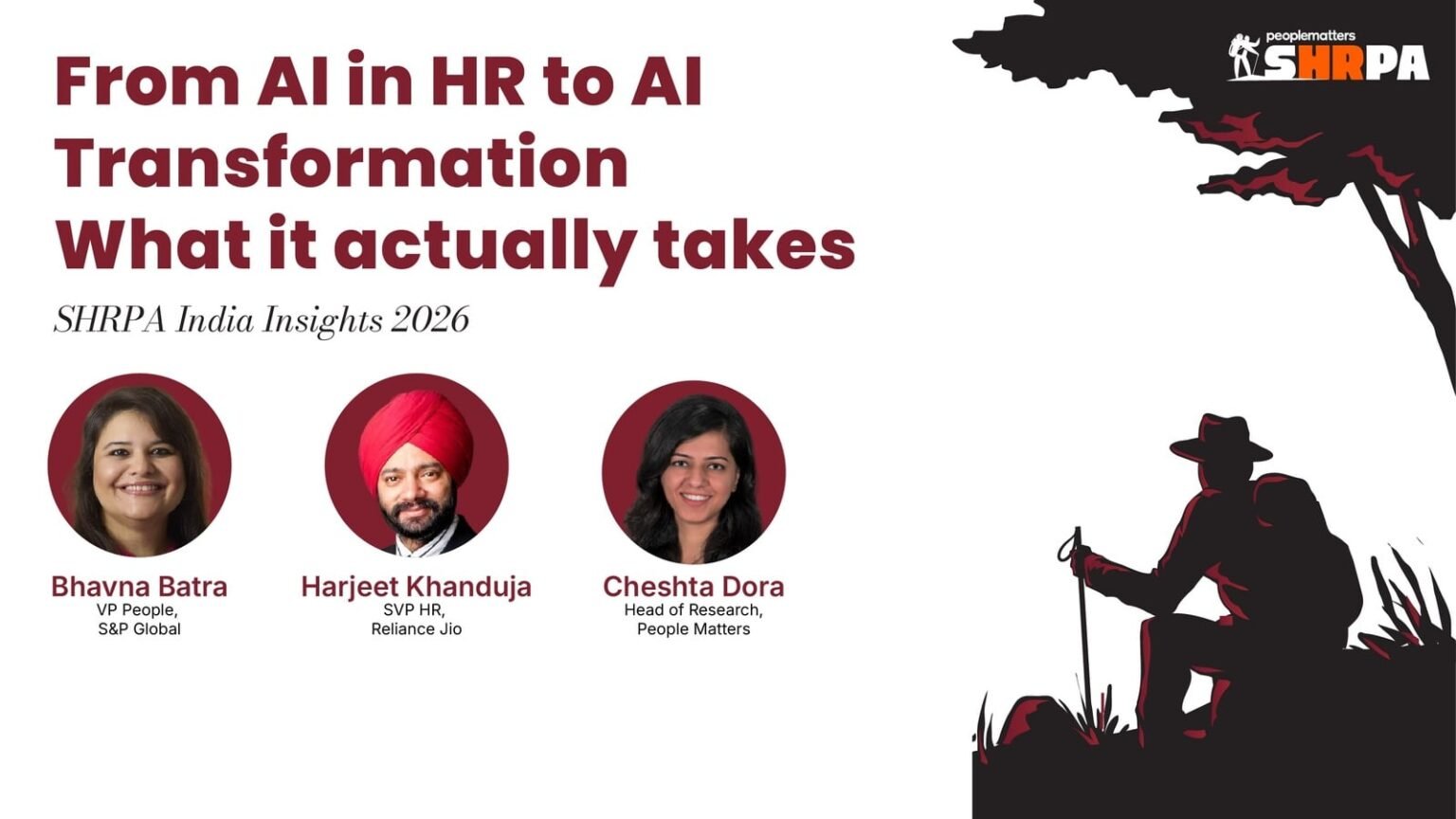
Indian enterprises are stalling at AI’s starting line, and the numbers from People Matters’ SHRPA 2026 research make the problem concrete: 46% of organisations remain in pilot mode, while only 22% have reached genuine enterprise-wide AI deployment. At a recent webinar, HR leaders from S&P Global and Reliance Jio pushed back on fragmented point solutions and short-termism, arguing that sustainable AI transformation in HR demands clean integrated data, business-anchored objectives, and role-specific training over blanket programmes.
What this means for your business
The 46-versus-22 split is a useful diagnostic for any CHRO trying to locate their organisation on the maturity curve. If your AI programme exists as a collection of approved pilots that never seem to graduate, you’re almost certainly in the laggard cohort regardless of how many vendor demos your team has sat through. The research’s short-termism finding is the more uncomfortable one: pressure to show near-term, explainable ROI on AI investments is actively discouraging the longer-horizon bets that produce compounding value.
People Matters, whose research franchise is built around selling into the HR technology buying cycle, has an incentive to frame this as a vendor-selection and capability-building problem, which probably overstates how much ecosystem integration from HR tech providers can substitute for internal data governance discipline. The more durable point, though, is the one about data foundations. Clean, interoperable data isn’t a feature you buy; it’s a precondition you build. Organisations that conflate the two will keep signing new vendor contracts and wondering why the pilots don’t scale.
The specific failure mode here has a recognisable shape: organisations treat AI readiness as a training event rather than a system property. Role-specific AI skill-building, as opposed to generic prompt-engineering workshops, only pays off if the underlying data the AI is reasoning over is accurate and if the workforce has clear usage guidelines. Without both, you’re training people to use a tool that’s giving them confidently wrong answers. The CHRO who figures out that workforce readiness and data readiness are the same investment, not two separate line items, moves first.
The real renewal decision buried in this research is whether your current HR technology stack was bought to solve discrete problems or to function as a coherent system. Most stacks were assembled problem by problem, which explains the 46% stuck in pilots. If your next vendor conversation isn’t starting with integration architecture and data interoperability requirements, you’re likely buying another isolated fix. I’d revise this view if the 22% of AI leaders turn out to have achieved scale through best-of-breed point solutions rather than consolidated platforms, but the data here points the other direction.
Based on reporting from From AI in HR to Enterprise AI maturity : SHRPA 2026 India Insights Webinar, originally published 2026-09-15 09:22:00.