

Share with your COO
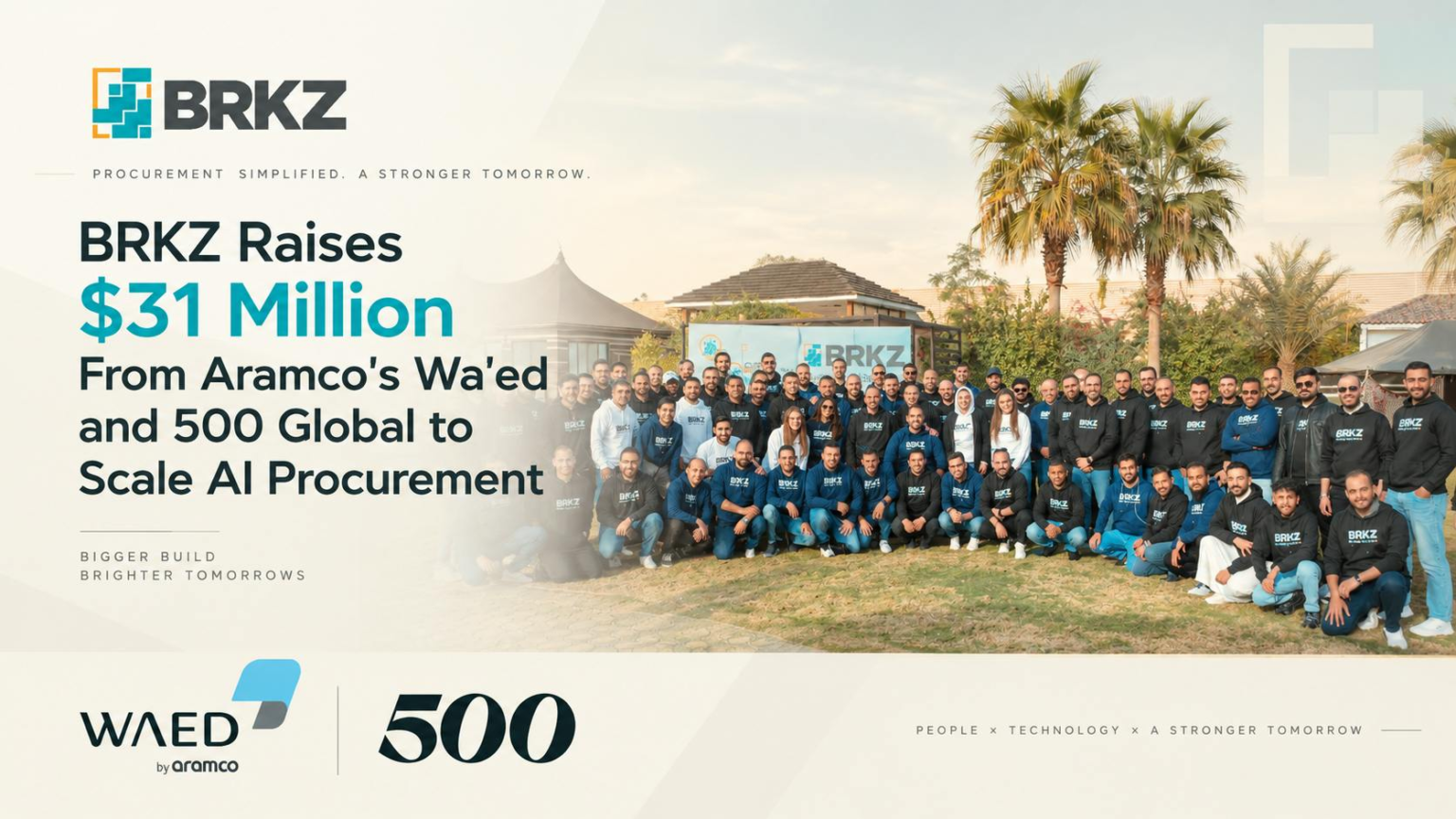
BRKZ is betting that four years of construction procurement data, 38 million structured price points across 13,000 materials and 2,100 suppliers, is now defensible enough to turn into an AI pricing engine worth funding at scale. The Saudi startup has raised a $31 million round split between $13 million in equity co-led by Aramco’s Wa’ed Ventures and 500 Global, and $18 million in growth debt from Stride Ventures. Revenue has grown roughly 30x since 2023 while shipping physical materials across Saudi Arabia’s giga-project sites.
What this means for your business
The construction procurement story matters to operations leaders well outside the Gulf because of what it reveals about where AI actually compounds. BRKZ’s pricing model hits 84 to 89 percent accuracy within a 5 percent margin on quote predictions, not because the model is clever in isolation, but because four years of losing bids stayed in the database. Most enterprise procurement platforms discard the quotes that don’t convert. That discarded data is the moat, and most organizations are sitting on an equivalent pile of it in their own category without treating it as a strategic asset.
The 10 to 1 ratio between quotes processed ($1.37 billion) and materials sold ($133 million) looks like waste until you realize every losing quote is a timestamped price signal attached to a supplier, a city, a product grade, and a week. BRKZ’s AI closes deals faster by using that signal to predict what the market will bear before a human picks up the phone. The same logic applies to any procurement category where prices move, delivery windows shift, and the buyer historically got quotes from four vendors and remembered none of the losing ones. The question for any COO is whether their current vendor or in-house system captures the rejected bids, not just the signed ones.
The embedded financing structure is the part worth watching as a leading indicator of where B2B platforms go next. BRKZ funds the 60 to 90 day payment gap between contractor and supplier itself, using Stride’s debt facility as the raw material. That turns a marketplace into something closer to a supply chain financier, and it locks contractors in more durably than any software feature could. If a contractor already gets 90-day terms through the platform, switching to a competitor means giving up working capital, not just a better UI. Operations leaders evaluating platform vendors in any capital-intensive supply category should treat embedded financing as a stickiness signal, not a fintech add-on, and ask directly whether the vendor’s growth debt is sized to fund that float or whether the terms are aspirational.
Concept deep-dive: Request-for-quotation data as a training asset
A request for quotation, or RFQ, is a formal ask sent to suppliers for pricing on a specific quantity of goods. In most procurement systems, only the winning response gets recorded in a structured way. The losing quotes, which often outnumber the winner four or five to one, get discarded. When those losing responses are captured and stored with timestamps, geographies, and product specs attached, they become the training data for a price-prediction model that can tell a buyer what a fair market price looks like before negotiations begin, which is the core of what BRKZ has built.
Based on reporting from BRKZ Raises $31 Million From Aramco’s Wa’ed and 500 Global to Scale AI Procurement, originally published 2026-09-14 11:31:00.