

Share with your CTO
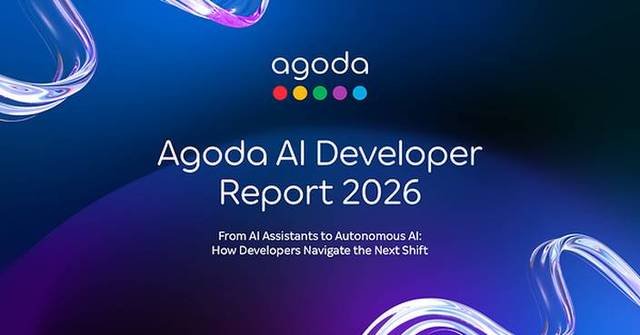
Agoda’s AI Developer Report 2026 reveals a striking gap in Southeast Asia and India: 53% of developers already run AI agents in production, yet only 38% say their codebase is actually ready for full autonomy. Cost has overtaken integration complexity as the primary adoption barrier, cited by 28% of respondents. Four in five developers operate under token quotas or budget caps. Meanwhile, 70% expect AI agents to handle most development work within three years, but 79% still require human sign-off before anything touches production.
What this means for your business
The headline number that deserves attention isn’t the adoption rate. It’s the 15-point gap between deployment and readiness. Organizations are shipping agents into production workflows before the underlying codebases, governance structures, or cost controls are built to support them. Picture a team running an autonomous code-review agent that makes architectural decisions, while the codebase it operates on has no clear ownership boundaries, no testability standards, and no rollback instrumentation. That’s the current median state.
Cost is now the binding constraint, and the report identifies why it’s harder to manage than it looks. AI spend in development isn’t just model API calls. It includes the engineering time required to design agent workflows, validate outputs, handle failures, and maintain the human oversight layer that 79% of teams still need before production deployment. Any CTO running FinOps on AI workloads who counts only inference tokens is systematically underestimating total cost of ownership by a significant margin.
The skill gap between junior and senior developers is the signal worth watching. Nearly half of junior developers feel insecure about their career trajectory, compared to just 17% of CTO and VP Engineering respondents. That’s not a morale problem. It’s a leading indicator of attrition risk in exactly the talent tier that handles high-volume, repetitive development tasks, the same tier AI agents are replacing first. Organizations that don’t actively redefine junior developer career paths around agent orchestration and AI literacy will face a hollowing-out problem within 18 months.
Concept deep-dive: Agentic AI in software development
An AI agent, in the development context, is a system that doesn’t just respond to a single prompt but takes sequences of actions autonomously: writing code, running tests, interpreting results, and iterating without per-step human instruction. It exists because single-turn AI assistance hits a ceiling on complex, multi-file engineering tasks. The analogy is the difference between a calculator and a junior analyst who works overnight and hands you a finished model. The business implication is that the supervision cost doesn’t disappear. It shifts from doing the work to reviewing the work, which changes headcount math but doesn’t eliminate it.
Based on reporting from Agoda Releases AI Developer Report 2026: Agentic AI Adoption Outpaces Enterprise Readiness Across Southeast Asia and India, originally published 2026-09-23 22:30:00.